wayground logo

Free Printable Worksheets

NEW

Font size

S
M
L
XL
Worksheets

Rocks and Minerals

Total questions: 41

Worksheet time: 30mins

Name
Class
Date
1.
How do sedimentary rock form?
a)
by pressure of layers of sediment
b)
by heat from volcanos
c)
by heat and pressure deep underground
2.
The property of luster means..
a)
the hardness of a mineral
b)
the color of the mineral
c)
the streak the mineral leaves
d)
how the mineral reflects light
3.
Hardness, color, and luster are examples of a mineral's ___________.
a)
price
b)
weight
c)
property
d)
name
4.
What type of rock is pictured?
a)
Igneous
b)
Metamorphic
c)
Sedimentary
5.
What are the three types of rocks?
a)
lava, metamorphic, and sedimentary
b)
igneous, sedimentary, and mineral
c)
metamorphic, lava, and igneous
d)
igneous, sedimentary, and metamorphic
6.
A geologist is a scientist who studies_______.
a)
plants and animals
b)
fossils
c)
rocks and minerals
d)
ocean animals
7.

A rock is...

a)

made of 2 or more minerals

b)

something found in nature

c)

all answers

8.
A mineral is...
a)
solid material made from many different kinds of rocks
b)
a solid matter formed in nature and found in earth materials (rocks)
c)
made from layers of sediment
d)
formed from heat of magma
9.
Using the Mohs Hardness Scale, what  mineral is the hardest?
a)
Quartz
b)
Diamond
c)
Feldspar
d)
Talc
10.
Which type of rock results from melting and cooling of magma?
a)
Igneous
b)
Metamorphic
c)
Sedimentary
d)
Extrusive
11.
Which type of rock forms from extreme heat and pressure?
a)
Igneous
b)
Sedimentary
c)
Organic
d)
Metamorphic
12.
Wind, water, and ice breaking down rock is called
a)
Erosion
b)
Deposition
c)
Compaction
d)
Weathering
14.
A metamorphic rock changes into an igneous rock by what two processes?
a)
Melting and cooling
b)
Extreme heat and pressure
c)
Compaction and cementation
d)
Weathering and erosion
14.
A metamorphic rock changes into an igneous rock by what two processes?
a)
Melting and cooling
b)
Extreme heat and pressure
c)
Compaction and cementation
d)
Weathering and erosion
15.
When sediments are pressed together tightly, this is called ____________.
a)
Compaction
b)
Cementation
c)
Weathering
d)
Erosion
16.
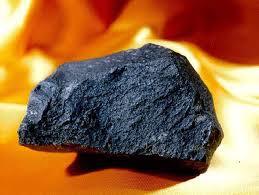
This rock was found near the mouth of a volcano. What type of rock is this?
a)
Sedimentary
b)
Igneous
c)
Metamorphic
17.
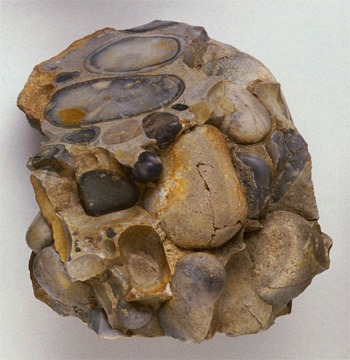
This rock was formed by smaller pieces of rock that settled at the bottom of a lake millions of years ago. What type of rock is this?
a)
Sedimentary
b)
Igneous
c)
Metamorphic
18.
Diamond has a hardness of ___ on Mohs Hardness Scale.
a)
1
b)
5
c)
8
d)
10
19.
Means that a mineral cannot come from something that was once living.
a)
Inorganic
b)
Organic
c)
Naturally Occurring
d)
Not Living
20.
This rock is formed by extreme heat and/or pressure that alters the chemical composition into a new form of rock.
a)
Inorganic
b)
Igneous
c)
Metamorphic
d)
Sedimentary
21.
Gneiss is a rock because it
a)
is hard and round.
b)
has crystals.
c)
is made of minerals.
d)
has mass.
22.
Which statement is true about rocks?
a)
Magma is made of solid rock.
b)
Rocks are made of one or more minerals.
c)
Crystals are made of rocks.
d)
Minerals are made of one or more rocks.
23.
Which sentence BEST describes a process in the rock cycle?
a)
Sedimentary rocks can melt to become metamorphic rocks.
b)
Volcanoes can deposit sedimentary rock to form mountains.
c)
Metamorphic rocks can form by the weathering process.
d)
Igneous rocks can become metamorphic and sedimentary rocks.
24.
What type of rock forms from lava that has cooled at or near earth's surface?
a)
Sedimentary
b)
Metamorphic
c)
Igneous
25.
You can identify a mineral by only one property.
a)
true
b)
false
26.
Hardness is a property that helps identify minerals.  Scientists use a scale of 1-10 to show the hardness of a mineral. 
a)
true
b)
false
27.

The remains of living things that died long ago are often found in what type of rock?

a)

igneous rocks

b)

sedimentary rock

c)

metamorphic rock

d)

all rocks

28.

Hot, molten rock inside the earth is called ...

a)

lava

b)

magma

c)

igneous rock

d)

minerals

29.

Once magma reaches the earth's surface, it is called __________.

a)

a vent

b)

minerals

c)

igneous rocks

d)

lava

30.
This rock formed when lava cooled very quickly on Earth's surface. What specific type of rock is it?
a)
Extrusive Igneous Rock
b)
Intrusive Igneous Rock
c)
Non-Foliated Metamorphic Rock
d)
Biochemical Sedimentary Rock
31.
Two ways to describe types of igneous rocks are _____
a)
Extrusive and Intrusive
b)
Foliated and Non-Foliated
c)
Clastic and Biochemical
d)
Black and Gray
32.
What is the rock cycle?
a)
the steps a rock goes through as it melts into lava
b)
a process in which wind and water break rocks into small pieces
c)
a process in which one type of rock changes into another type
d)
the steps a rock goes through as it grows crystals
33.

True or False: Erosion refers to the movement of rock and soil to a new location.

a)

True

b)

False

34.

Metamorphic rock is the result of...

a)

layers of rock being under heat and great pressure

b)

molten rock cooling over time

c)

pieces of rock and sediment pushing together

d)

fossils forming over thousands of years

35.

True or False? Diamonds and salt are both minerals.

a)

True

b)

False

36.
A rock is a naturally-occuring solid mixture of one or more minerals and ___ matter.
a)
organic
b)
inorganic
37.
What type of rock would you most likely find a fossil inside of?
a)
sedimentary
b)
igneous
c)
metamorphic
d)
diamond
38.

The outermost layer is the ________.

a)

mantle

b)

crust

c)

inner core

d)

outer core

39.

The layer below the crust is the ____________.

a)

oceanic crust

b)

mantle

c)

inner core

d)

continental crust

40.

This layer has the highest pressure (extremely hot) of all the layers.

a)

inner core

b)

outer core

c)

crust

d)

mantle

41.
This layer is directly below the mantle.
a)
Crust
b)
Mantle
c)
Outer Core
d)
Inner Core