
NEW
Font size
S
M
L
XL
 Worksheets
ATOMS, MOLECULES & IONS (PART 1)
Total questions: 30
Worksheet time: 29mins
Name
Class
Date
1.
What is at the center of every atom?
a)
An electron
b)
A compound
c)
A molecule
d)
A nucleus
2.
Which two particles make up the nucleus of an atom?
a)
Protons and Electrons
b)
Protons and Neutrons
c)
Molecules and Compounds
d)
Neutrons and Electrons
3.
What is the role of an electron in an atom?
a)
Electrons live inside the nucleus and carry a neutral charge.
b)
Electrons circle the nucleus and have a positive charge.
c)
Electrons circle the nucleus and have a negative charge.
d)
Electrons live inside the nucleus and have a negative charge.
4.
In an atom, what is the number of protons equal to?
a)
The number of electrons.
b)
The number of neutrons.
c)
The number of molecules.
d)
The number of nuclei.
5.
Which of the following determines the type of element that an atom makes?
a)
The size of the nucleus.
b)
The number of protons.
c)
How much the atom weighs.
d)
The number of neutrons.
6.
A proton is a _____ charged particle.
a)
Negatively
b)
Positively
7.
An electron is a _____ charged particle.
a)
Positively
b)
Negatively
8.
What is an atomic number?
a)
The sum of protons and neutrons in an atom.
b)
The sum of protons and electrons in an atom.
c)
The number of protons in an atom of a specific element.
d)
The number of neutrons in a specific element.
9.
The atoms of any given element ____ have the same number of protons.
a)
sometimes
b)
always
c)
never
10.
Each element ___ its own atomic number.
a)
has
b)
does not have
c)
sometimes has (depends on the element)
11.
What charge does a neutron have?
a)
positive
b)
negative
c)
no charge
d)
neutral
12.
Where are protons located in the atom?
a)
orbitals
b)
nucleus
c)
rings
d)
positive
13.
Where are electrons located in the atom?
a)
Nucleus
b)
Shells/orbitals
c)
rings
d)
center
14.
Where are neutrons located in the atom?
a)
shells/orbitals
b)
rings
c)
center
d)
nucleus
15.
The number of protons plus neutrons.
a)
Mass number
b)
Mass Weight
c)
Atomic number
d)
Atomic weight
16.
all matter is made of what
a)
energy
b)
atoms
c)
electrons
d)
compounds
17.

Which description about the proton is accurate?
a)
Positively charged particle with a mass less than 0 amu
b)
A neutrally charged particle with a mass less than 0 amu
c)
Positively charged particle with a mass of 1 amu
d)
A neutrally charge particle with a mass of 1 amu
18.
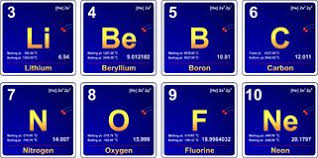
Elements can have the same number of protons?
a)
True
b)
False
19.
The smallest unit of an element that still has the properties of that element.
a)
Atom
b)
Adam
c)
Nucleus
d)
Element
20.
the central region of an atom where its neutrons and protons are is its
a)
nucleus
b)
electron cloud
c)
core
d)
center
21.
The building blocks of matter
a)
Mass Number
b)
Atoms
c)
Nobel Gases
d)
Isotopes
22.

Positively Charged Particle
Mass: 1 amu
Mass: 1 amu
a)
Proton
b)
Neuton
c)
Electron
d)
Isotope
23.

Neutral Charged Particle
Mass: 1 Amu
Mass: 1 Amu
a)
Proton
b)
Neutron
c)
Electron
d)
Isotope
24.

Negatively charged Particle
Mass: Almost Nothing
Mass: Almost Nothing
a)
Protons
b)
Neutrons
c)
Electrons
d)
Isotopes
25.

The total number of Protons and Neutrons.
a)
Mass Number
b)
Atomic Number
c)
Matter
d)
Ion
26.

Number of protons in an atom.
a)
Atomic Number
b)
Mass Number
c)
Isotope
d)
Valence electrons
27.

Electrons in the outermost orbital.
a)
Protons
b)
Neutrons
c)
Valence Electrons
d)
Isotopes
28.

An atom that has become charged by gaining or losing electrons.
a)
Ion
b)
Isotope
c)
Electron
d)
Valence Electron
29.

Atoms of the same element but with different numbers of neutrons.
a)
Ion
b)
Isotope
c)
Mass Number
d)
electron
30.
Which description about the proton is accurate?
a)
Positively charged particle with a mass less than 0 amu
b)
A neutrally charged particle with a mass less than 0 amu
c)
Positively charged particle with a mass of 1 amu
d)
A neutrally charge particle with a mass of 1 amu
Reset

