wayground logo

Free Printable Worksheets

Font size

S
M
L
XL
Worksheets

U.S. History 7 Final EXam Review

Total questions: 114

Worksheet time: 2hrs 13mins
Name
Class
Date
1.
The British don't treat us fairly!
a)
Loyalist
b)
Patriot
c)
Neutral
2.
No taxation without representation!
a)
Loyalist
b)
Patriot
c)
Neutral
3.
I am against all taxes that King George has imposed upon us.
a)
Loyalist
b)
Patriot
c)
Neutral
4.
Britain has helped protect us from the rest of the world.
a)
Loyalist
b)
Patriot
c)
Neutral
5.
Colonists are British subjects and should obey British law.
a)
Loyalist
b)
Patriot
c)
Neutral
6.
Arguments and disagreements make me nervous.  I avoid taking sides.
a)
Loyalist
b)
Patriot
c)
Neutral
7.
According to the Declaration of Independence, where does government get its power?
a)
From the King
b)
From the Supreme Court
c)
From God
d)
From the people
8.
What are our natural rights according to Jefferson?  (He got the idea from John Locke, but he changed the last right.)
a)
Freedom of speech, religion, and press
b)
Life, liberty, and property
c)
Life, liberty, and the pursuit of happiness
d)
Voting, rebelling, and health
9.
The Preamble is...
a)
in the beginning of the Declaration...
b)
the conclusion.
c)
in the middle.
d)
not in the Declaration.
10.
Who wrote a pamphlet called "Common Sense"?
a)
George Washington
b)
Thomas Paine
c)
Thomas Jefferson
d)
Patrick Henry
11.

What document did the colonists write to share their concerns with England and to break away?

a)

Mayflower Compact

b)

Bill of Rights

c)

Magna Carta

d)

Declaration of Independence

12.

What did the Colonists do after the Stamp Act?

a)

Boycott British goods

b)

Made their own goods

c)

Decided they didn't need goods

d)

Stopped paying all of their taxes

13.

Forced colonists to give shelter (house) to British soldiers

a)

Sugar Act

b)

Townshend Act

c)

Quartering Act

d)

Housing Act

14.

Why were the colonists being taxed so heavily?

a)

To pay for the French and Indian War

b)

Because the King felt like it

c)

Because they wanted a revolution

d)

They owed a lot of money to China

15.
"Right to bear arms" (Gun rights)
a)
1st
b)
2nd
c)
3rd
d)
4th
16.
Freedom of speech
a)
1st
b)
2nd
c)
3rd
d)
4th
17.
The first 10 amendments to the Constitution are called the...
a)
Articles of Confederation
b)
Donald Trump
c)
Bill of Rights
d)
Declaration of Independence
18.
Which does NOT apply to the 1st amendment?
a)
press
b)
peace
c)
petition
d)
speech
19.

This famous journalist wrote Common Sense:

a)

Benjamin Franklin

b)

Thomas Paine

c)

George Washington

d)

Thomas Jefferson

20.
In 1775, he became Commander in Chief of the __________.
a)
Navy
b)
Continental Army
21.
When Gen. Cornwallis surrendered to G. Washington at the Battle of Yorktown, it ended the __________.
a)
World War
b)
Revolutionary War
22.
Washington won many battles for his country and became a __________.
a)
winner
b)
hero
23.
The rules for the country to follow are called the ______________.
a)
Declaration of Independence
b)
United States Constitution
24.
The President's cabinet is best described as a:
a)
political party
b)
group of members of Congress
c)
group of the President's advisors
d)
the place where the President keeps his Wheaties
25.
A tax on imports is called a:
a)
whiskey tax
b)
tariff
c)
cabinet
d)
bond
26.
The Neutrality Proclamation stated that:
a)
America would not be involved in foreign affairs
b)
America would not be involved in the war between Britain and France
c)
America would not trade with Britain or France
d)
All of these
27.
What famous river did George Washington cross on December 25th, 1776?
a)
Columbia
b)
Missouri
c)
Sabine
d)
Delaware
28.
What was George Washington's military rank?
a)
Captain
b)
General
c)
Admiral
d)
Lieutenant
29.
Which of the following is an example of a weakness in the Articles of Confederation?
a)
Congress couldn't collect taxes
b)
Weak national government
c)
Provided no common currency/money for all 13 states
d)
All of the  above
30.
The Articles of Confederation created a ________ national government.
a)
weak
b)
strong
c)
both strong and weak
d)
neither  strong nor  weak
31.
What is the name of the first written plan of government for the newly independent U.S.A.?
a)
Constitution
b)
Treaty of Paris
c)
Declaration of Independence
d)
Articles of Confederation
32.
What is one reason Americans wanted to change the Articles of Confederation?
a)
They opposed the Land Ordinance of 1785.
b)
They didn't want the government to have only 1 branch. 
c)
National government was weak, state government had too much power, states were not working together, and there was no leader.
d)
State government was weak and unsuccessful.
33.

What is a constitution?

a)

a plan of revolution

b)

an old letter

c)

any document

d)

a written plan of government

34.
Which of the following is NOT one of the three branches of government? 
a)
Judicial 
b)
Legislative
c)
Democratic 
d)
Executive
35.
This branch is made up of judges and courts
a)
Legislative
b)
Judicial
c)
Executive
36.
This branch of our state government makes the laws.
a)
Legislative
b)
Judicial
c)
Executive
37.
These are the two parts of the Legislative branch: 
a)
Governor and Senate
b)
Senate and House of Representatives 
c)
House of Representatives and Governor
d)
Mayor and Governor
38.
These are the two parts of the Legislative branch: 
a)
Governor and Senate
b)
Senate and House of Representatives 
c)
House of Representatives and Governor
d)
Mayor and Governor
39.
This is the job of the Executive branch: 
a)
To carry out the laws of the state
b)
To make the laws 
c)
To interpret or explain state laws
40.
Together, the Senate and the House of Representatives is called the: 
a)
General Assembly
b)
The Judicial Branch
c)
The Supreme Court
d)
The circuit court 
41.
The 3 Branches of Government are:
a)
Legislative, Judicial, and Executive
b)
Presidential, Judicial, and Legislative
c)
Supreme Court, White House, and Congress
d)
Donald Trump, Paul Ryan, and Hilary Clinton
42.
Who is in charge of the Executive Branch?
a)
Citizens of the United States
b)
The President
c)
Congress
d)
Nine Judges
43.
A group of men and women that are the Presidents advisors are also known as what?
a)
Independent Agencies
b)
President Pro Tempores
c)
FCC
d)
Cabinet 
44.
.  The ________________ contains the supreme laws of the land of the United States of America.
a)
Declaration of Independence
b)
Constitution
c)
Emancipation Proclamation
d)
Magna Carta
45.

What is a proposed law called?

a)

late for supper

b)

a bill

c)

a cabinet

46.

Which branch of government interprets the laws?

a)

the tree branch

b)

the olive branch

c)

the judicial branch

47.
The United States purchased the Louisiana Territory from what country?
a)
Great Britain
b)
France
c)
Russia
d)
Spain
48.
How much did the United States pay for the Louisiana Territory?
a)
$100,000
b)
$1 million
c)
$15 million
d)
$100 million
49.
Napoleon sold Louisiana to the United States so that he could pay for a war against
a)
France
b)
Great Britain 
c)
Spain
d)
Russia
50.
How did the Louisiana Purchase effect the geography of the United States?
a)
it tripled the size of the U.S.
b)
it had no effect
c)
it doubled the size of the U.S.
51.
Who was the French leader who sold Louisiana to the US?
a)
Richard Lee
b)
Prince Phillip
c)
Napoleon
d)
King Louie
52.
Meriwether Lewis and William Clark were which of the following?
a)
Politicians
b)
Explorers
c)
Buyers of the Louisiana Purchase
d)
All of the above
53.
__________ was an important help as guide and an interpreter during the Lewis and Clark expedition
a)
York
b)
Mandan
c)
Sacagawea
d)
Toussaint L'Ouverture
54.
___________________ was the name of the important journey of exploring the Louisiana Purchase
a)
Lewis and Clark Expedition
b)
Tom and Jerry Expedition
c)
West expedition
d)
Pike's exploration
55.
Why was the port of New Orleans so important?
a)
It was the best place to go fishing
b)
It was a party town
c)
It was the Catholic headquaters
d)
It was the main center for trade along the Mississippi river
56.
How did Sacagawea help Lewis and Clark?
a)
She made maps of the Louisiana Territory.
b)
She took care of Clark's children.
c)
She helped guide them through the unfamiliar land.
d)
She collected rocks, plants, and animals for them.
57.
Which President asked Lewis and Clark to go exploring?
a)
George Washington
b)
Barak Obama
c)
Thomas Jefferson
d)
Abraham Lincoln
58.
Which direction were Lewis and Clark exploring?
a)
North
b)
South
c)
East
d)
West
59.
Until the 1800s, how did most families get the items they needed for daily life?
a)
They made tools, clothing, materials, and food by hand.
b)
They bought them from factories.
c)
They bought them on the Internet.
d)
They bought them from stores.
60.
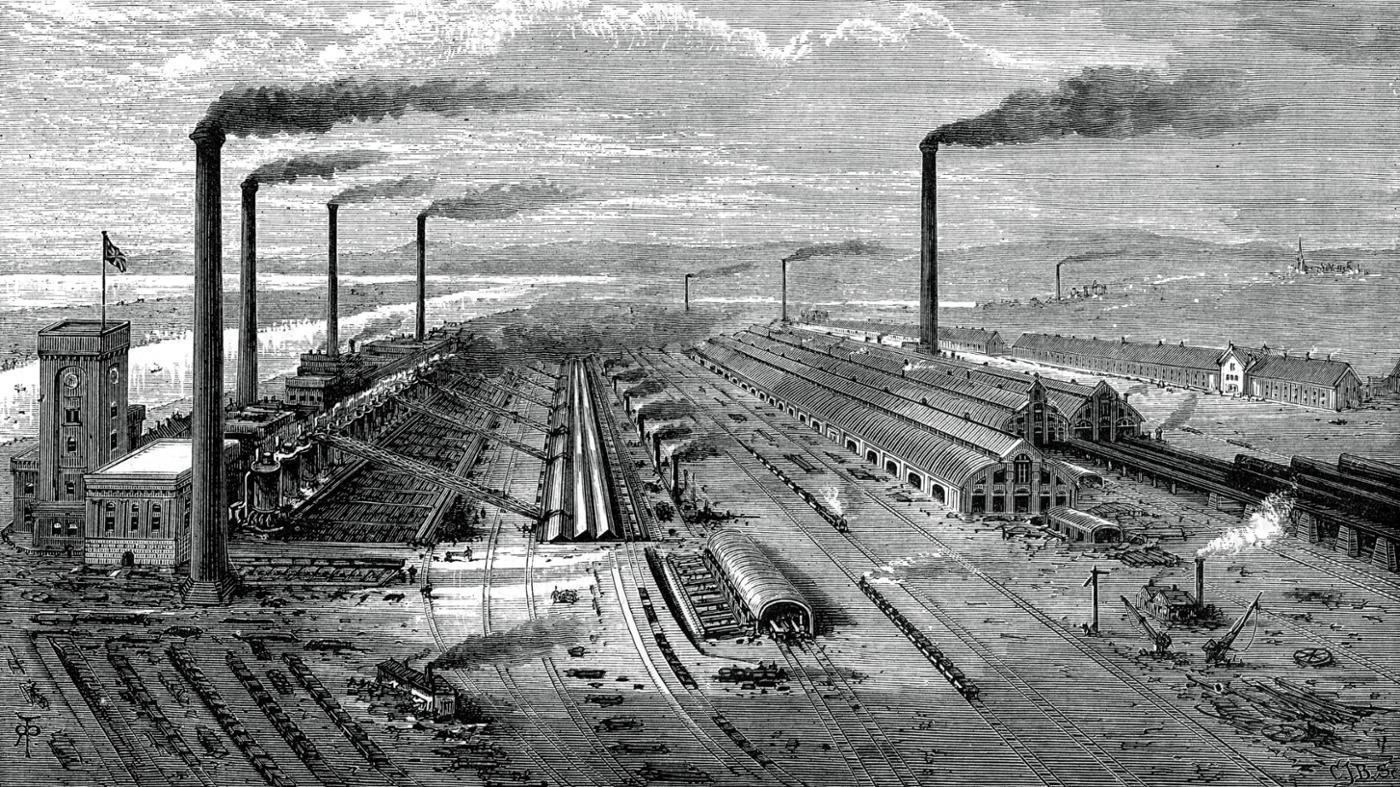
The _______________ is the name for the change from goods being made by hand at home to making them by machine in factories.
a)
French Revolution
b)
Machine Revolution
c)
Industrial Revolution
d)
Technological Revolution
61.
Who invented the cotton gin?
a)
Thomas Jefferson
b)
James Madison
c)
George Washington
d)
Eli Whitney
62.
How did the cotton gin change cotton production in the South?
a)
Cotton was made faster.
b)
Cotton became the most important cash crop in the United States.
c)
It could clean more cotton in minutes than a whole group of workers could clean in a day.
d)
all of the above
63.
_______________ are pieces made to fit many machines or tools.
a)
Interchangeable parts
b)
Fixed parts
c)
Limited parts
d)
New parts
64.
Why did river travel improve during the 1800s?
a)
because of the invention of the steam engine
b)
because of the invention of stagecoaches
c)
because of the invention of the reaper
d)
because rivers were getting faster every year
65.
What did Samuel Morse invent?
a)
the steam engine
b)
the steamboat
c)
the telegraph machine
d)
the telephone
66.
_______________ are people who live in a country in which they were not born.
a)
Pioneers
b)
Immigrants
c)
Merchants
d)
Native Americans
67.
Look at the time line. What would be a good title for it?
a)
How the Cotton Gin Is Made
b)
How the Erie Canal Was Built
c)
Inventions from the Industrial Revolution
d)
Inventors of the Industrial Revolution
68.
Samuel F. B. Morse invented the telegraph. Which area of life was improved by this invention?
a)
communication
b)
farming
c)
industry
d)
transportation
69.
Who Invented the cotton gin and interchangeable parts
a)
Eli Whitney
b)
Robert Fulton
c)
Slater
d)
Lowell
70.
What is the area of the United States where the Industrial Revolution began
a)
South
b)
Midwest
c)
New England
d)
South
71.
The invention of the cotton gin increased the efficiency of cotton production and actually increased the demand for this
a)
Water Power
b)
Coal
c)
FIre
d)
Slaves
72.
He began the factory system in which all manufacturing steps are combined in one place
a)
Eli Whitney
b)
Robert Fulton
c)
Francis Lowell
73.
This agreement maintained a balance between the free states of the North and the slave states of the South in the Senate
a)
Monroe Doctrine
b)
National Road
c)
Missouri Compromise
d)
Adas-Onis Treaty
74.
What word means "the belief in the God given right to move West"?
a)
Manifest Destiny
b)
Land Speculator
c)
Decree
d)
Ordinance
75.
Many Americans moved west 
a)
to start a new life
b)
to settle with the natives
c)
to switch from farming to agriculture
d)
to vote
76.
______ was the time period named for the thousands of gold-seekers moved to California in hopes of striking rich  
a)
California Gold Rush
b)
Forty-niners
c)
Population Boom
d)
Economic BOOM!!!!!!
77.
What was a 2,000 mile trail stretching to the Oregon territory?
a)
Oregon Trail
b)
Santa Few Trail
c)
California Trail
d)
Mormon Trail
78.

The new lands added in the West helped to bring about the American Civil War, what issue could no longer be ignored?

a)

illegal immigration

b)

taxation without representation

c)

slavery

d)

native american rigths

79.

The Journey of the Cherokee who were forced to move from their homes in the Southeast to the Indian Territory became known as the...

a)

Wilderness Trail

b)

Indian Removal Act

c)

Trail of Tears

d)

Louisiana Purchase

80.

What did Native Americans die from on the trail?

a)

Cold and disease

b)

Heat and disease

c)

Cold and frost bite

d)

Heat and lack of water

81.
President Jackson sent soldiers to remove the ____ to the Indian Territory.
a)
Cherokee
b)
Iroquois
c)
Souix
d)
Red Hawks
82.
Gold was discovered in the lands that belonged to
a)
Cherokee
b)
Andrew Jackson
c)
Seminole
d)
Alexander Hamilton
83.
Settlers wanted the Native Americans to relocate so that the settlers could take the land for themselves.
a)
True
b)
False
84.
Where was gold first discovered in California? 
a)
Comstock Lode
b)
Sutter's Mill
c)
San Francisco
d)
Lowell Mills
85.
What was the nickname for people who moved to California during the gold rush? 
a. Coasters
b. Carpet Baggers
c. Surfers
d. Raiders
e. Forty Niners
a)
Raiders
b)
Carpet Baggers
c)
Surfers
d)
Forty Niners
86.
Some store owners became rich selling gold prospectors their supplies.
a)
True
b)
False
87.
Most gold miners struck it rich.
a)
True
b)
False
88.
What were towns called that grew rapidly when gold was discovered nearby? 
a)
Rush towns
b)
Boomtowns
c)
Cities of gold
d)
Ghost towns
89.
In what way did camp life change for miners over time?
a)
Camps grew into towns with shops and restaurants.
b)
Fires spread from tent to tent more quickly and easily.
c)
Immigrants faced less discrimination than before.
d)
Miners began to live in tents instead of in cabins and houses.
90.
Prices during the Gold Rush ___________________ due to supply and demand.
a)
increased
b)
decreased
91.
In the Missouri Compromise, what state was allowed to enter as a slave state?
a)
Missouri
b)
Maine
c)
Kentucky
d)
Ohio
92.

The North's economy was mainly based on what?

a)

Tourism

b)

Agriculture: Cash crops like cotton and indigo

c)

Agriculture: Food crops like wheat and corn

d)

Industry and Trade

93.

The South's economy was mainly based on what?

a)

Tourism

b)

Agriculture: Cash crops like cotton and indigo

c)

Agriculture: Food crops like wheat and corn

d)

Industry and Trade

94.

This region had more railways and rivers that connected cities.

a)

North

b)

West

c)

South

d)

Midwest

95.

The Dred Scott Case was important because the Supreme Court ruled what? (Choose all of the correct answers)

a)

Dred Scott was property and could not sue for his freedom.

b)

Dred Scott would become free since his master died in land where slavery was banned.

c)

Laws that banned slavery were unconstitutional.

d)

Laws that banned slavery were constitutional.

96.

The dramatic shift from handmade to machine-made goods was known as the:

a)

Renaissance

b)

Industrial Revolution

c)

Era of Reform

d)

Manifest Destiny

97.

This crop made the South an economic powerhouse, expanding slavery in the process.

a)

Tobacco

b)

Cotton

c)

Corn

d)

Indigo

98.

What was the MOST important thing children gave up to work in factories?

a)

Education

b)

Family time

c)

Social life

d)

Playtime with toys.

99.

Who invented the steam engine, which would provide easier river travel in the South?

a)

Robert Fulton

b)

Cryus McCormick

c)

Eli Whitney

d)

Francis Cabot Lowell

100.

What was the fastest and cheapest way to move goods in the Northern United States?

a)

Steamboats

b)

Airplanes

c)

Railroad

d)

Stagecoach

101.

Which people primarily worked in Northern factories and mills?

a)

Immigrants

b)

Slaves

c)

Native Americans

d)

Wealthy Planters

102.

Who was the president of the Confederate States of America?

a)

Jefferson Davis

b)

Abraham Lincoln

c)

They never elected a president.

103.

Tell the differences between the Northern economy and the Southern economy before the Civil War?

a)

The North made clothing and cars. The South built forts and made military supplies.

b)

The North had important jobs like teaching and being a doctor. The South did not have jobs.

c)

The North had manufacturing jobs (worked in factories). The South had agriculture jobs (worked on farms/plantations).

104.
Wrote The Liberator, an abolitionist newspaper. Formed the American Anti-Slavery Society.
a)
"Fredrick Douglass"
b)
"John Brown"
c)
"Harriet Beecher Stowe"
d)
"William Lloyd Garrison"
105.
An abolitionist who led a raid at in Harper’s Ferry and led a slave revolt. Captured and hung.
a)
"John Brown"
b)
"Harriet Tubman"
c)
"Harriet Beecher Stowe"
d)
"William Lloyd Garrison"
106.
Was a freed slave and 1st black anti-slavery speaker. Talked about slavery and women’s rights.
a)
"John Brown"
b)
"Harriet Tubman"
c)
"Sojourner Truth"
d)
"Fredrick Douglass"
107.
Wrote Uncle Tom’s Cabin about the cruelty of slavery.
a)
"Harriet Beecher Stowe"
b)
"John Brown"
c)
"Harriet Tubman"
d)
"William Lloyd Garrison"
108.
Was an escaped slave and “conductor” on the Underground Railroad. Known as “Moses”
a)
"John Brown"
b)
"William Lloyd Garrison"
c)
"Harriet Tubman"
d)
"Harriet Beecher Stowe"
109.
Was escaped slave that taught himself to read and write. Wrote The North Star, a newspaper
a)
"William Lloyd Garrison"
b)
"Fredrick Douglass"
c)
"Harriet Beecher Stowe"
d)
"John Brown"
110.
Had a rapidly growing population
a)
"North"
b)
"South"
111.
Depended on slavery
a)
"North"
b)
"South"
112.
Had an economy based on agriculture
a)
"North"
b)
"South"
113.
Had an economy based on industry including shipbuilding, factories, and trade
a)
"North"
b)
"South"
114.
Temperate climate good for growing cash crops
a)
"North"
b)
"South"