Wayground logo

Free Printable Worksheets

Font size

S
M
L
XL
Worksheets

Introduction to Chemistry

Total questions: 25

Worksheet time: 16mins

Name
Class
Date
1.

Atoms are made up of what?

a)

molecules

b)

compounds

c)

elements

d)

subatomic particles

2.

Which subatomic particle has a positive charge?

a)

proton

b)

neutron

c)

electron

d)

midichlorian

3.

Which subatomic particle has a negative charge?

a)

proton

b)

neutron

c)

electron

d)

cybertron

4.

Which subatomic particle as no charge, also known as a neutral charge?

a)

proton

b)

neutron

c)

electron

d)

chakra

5.

What is the center of an atom called?

a)

The headquarters

b)

The centrometer

c)

The hypothesis

d)

The nucleus

6.

The nucleus of an atom contains which subatomic particles?

a)

protons and electrons

b)

protons and neutrons

c)

electrons and neutrons

d)

protons, electrons, and neutrons

7.

Which subatomic particle does the RED(+) circle represent?

a)

proton

b)

neutron

c)

electron

d)

nucleus

8.

Which subatomic particle does the YELLOW(-) circle represent?

a)

proton

b)

neutron

c)

electron

d)

nucleus

9.

Which subatomic particle does the GREEN( ) circle represent?

a)

proton

b)

neutron

c)

electron

d)

nucleus

10.

Typically in an atom, which two subatomic particles are equal in number?

a)

protons and neutrons

b)

all subatomic particles are equal in number

c)

neutrons and electrons

d)

protons and electrons

11.
The Modern Periodic Table of Elements is arranged by
a)
atomic mass
b)
atomic number
c)
valence electrons
d)
number of isotopes
12.
The atomic number tells you what?  READ THE ANSWERS CAREFULLY
a)
only the number of electrons
b)
 only the number of protons
c)
only the number of neutrons
d)
the number of both electrons and protons in an atom.
13.
What does the atomic mass tell you? 
a)
Basically,the number of electrons and protons
b)
The number of neutrons
c)
Basically, the number of protons and neutrons
d)
The number of protons.
14.
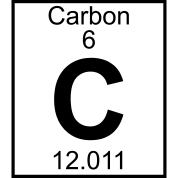
What does the 6 represent?
a)
atomic mass
b)
atomic number
c)
element name
d)
chemical symbol 
15.
What does 12.011 represent?
a)
atomic mass
b)
atomic number
c)
element name
d)
chemical symbol 
16.
What does the C represent?
a)
atomic mass
b)
atomic number
c)
element name
d)
chemical symbol 
17.
These are found on the Periodic Table.
a)
Compounds
b)
Elements
c)
Mixtures
18.

The horizontal (side to side) rows in the Periodic Table are called

a)

groups

b)

families

c)

periods

d)

atomic numbers

19.

The vertical (up and down) columns in the Periodic Table are called

a)

groups

b)

towers

c)

periods

d)

atomic numbers

20.
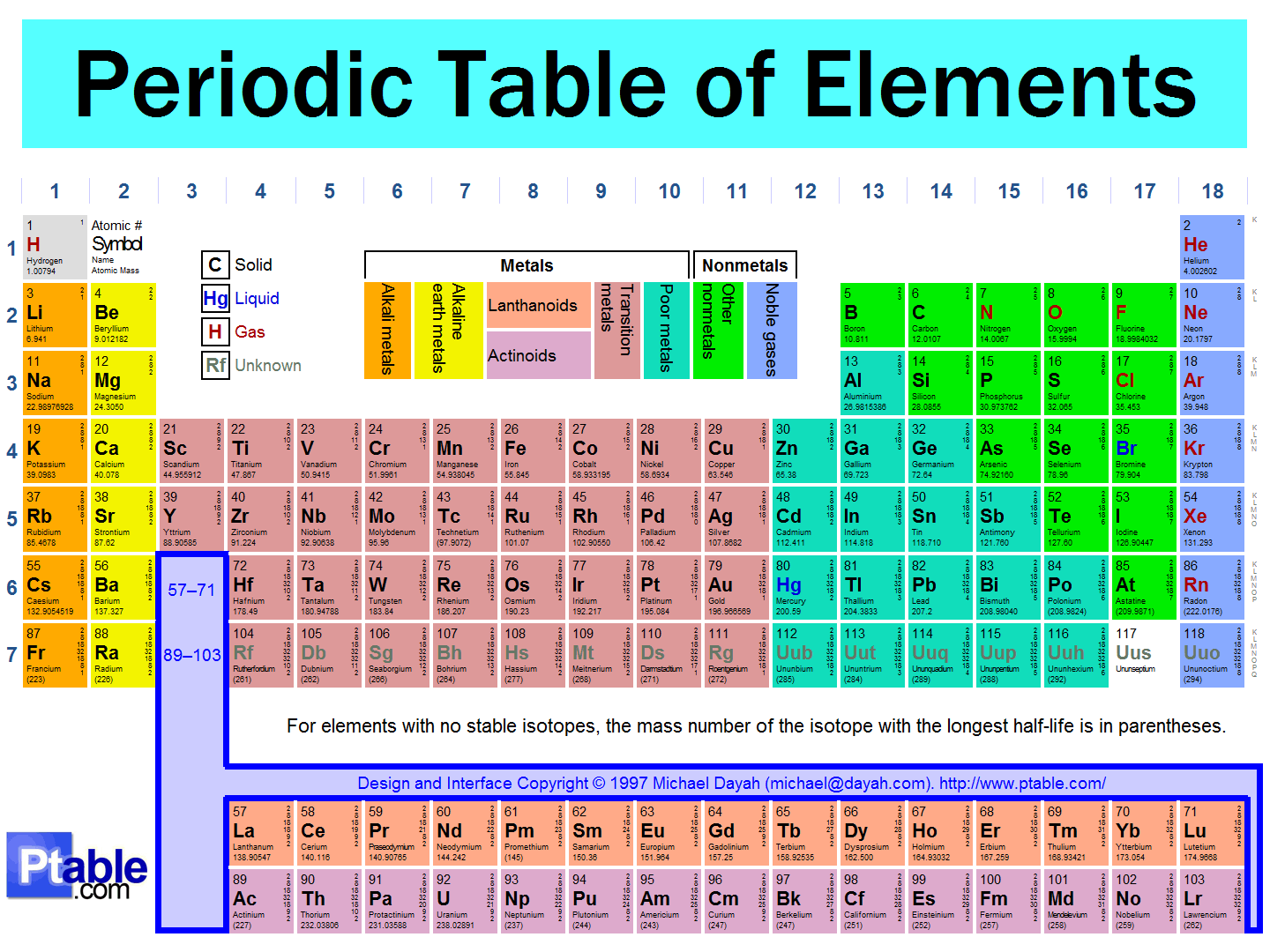
What is the number of protons that the element in this image contain?
a)
14
b)
7
c)
15
d)
18
21.
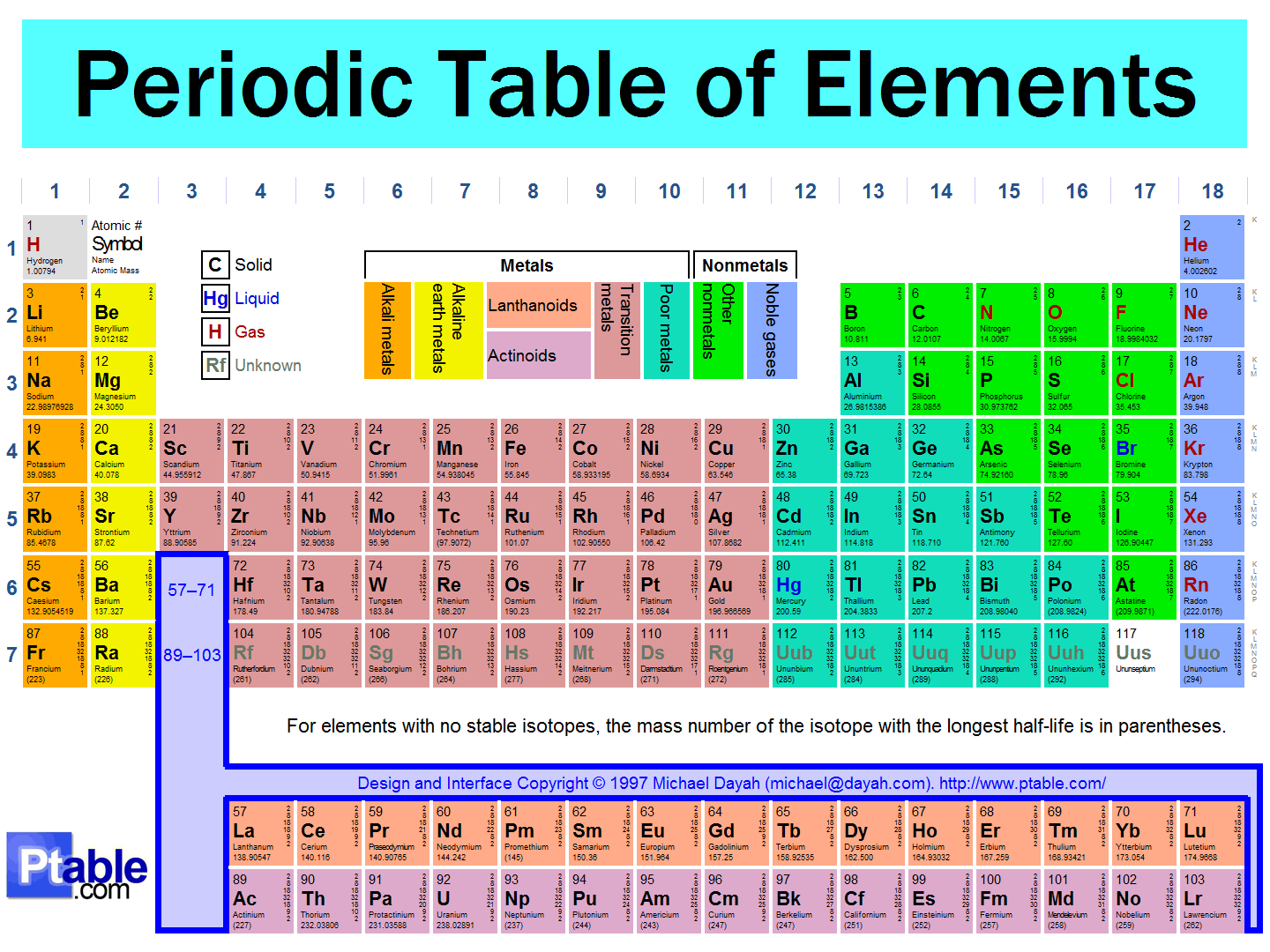
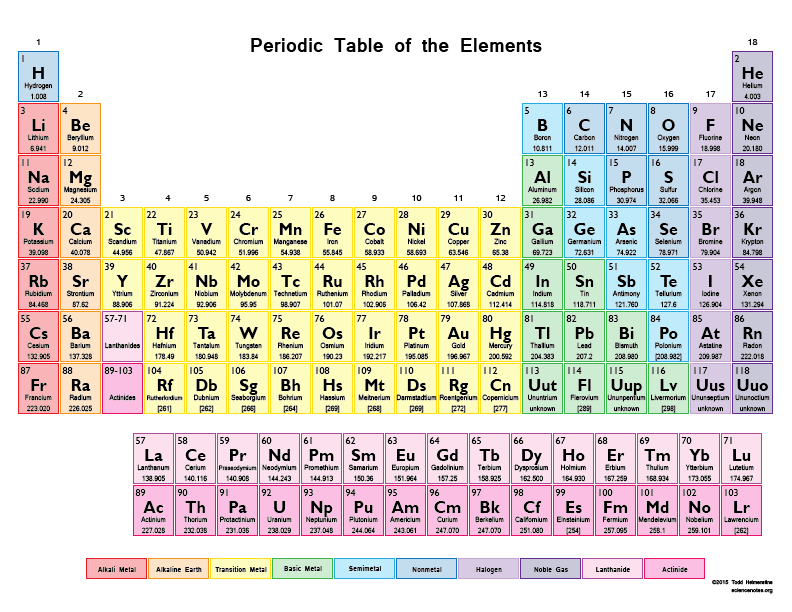
What is the atomic mass of "F"
a)
9
b)
18
c)
17
d)
19
22.
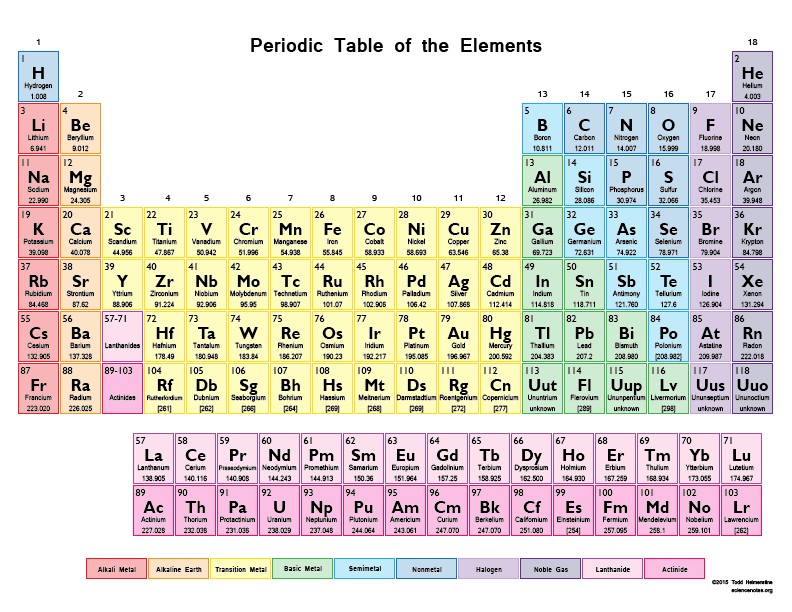
What is the atomic number of Nickel? (enlarge the periodic table)
a)
110
b)
28
c)
46
d)
78
23.
How many protons are in a sodium atom? (tap to enlarge the periodic table)
a)
Sodium has 1 proton.
b)
Sodium has 3 protons.
c)
Sodium has 11 protons
24.
What is the atomic number of Barium? (enlarge the periodic table)
a)
20
b)
38
c)
56
d)
88
25.
An element has the mass number 12 and atomic number  6. The number of neutrons in it is:
a)
6
b)
10
c)
4
d)
8