wayground logo

Free Printable Worksheets

NEW

Font size

S
M
L
XL
Worksheets

8th grade science final review

Total questions: 54

Worksheet time: 1hrs 24mins

Name
Class
Date
1.

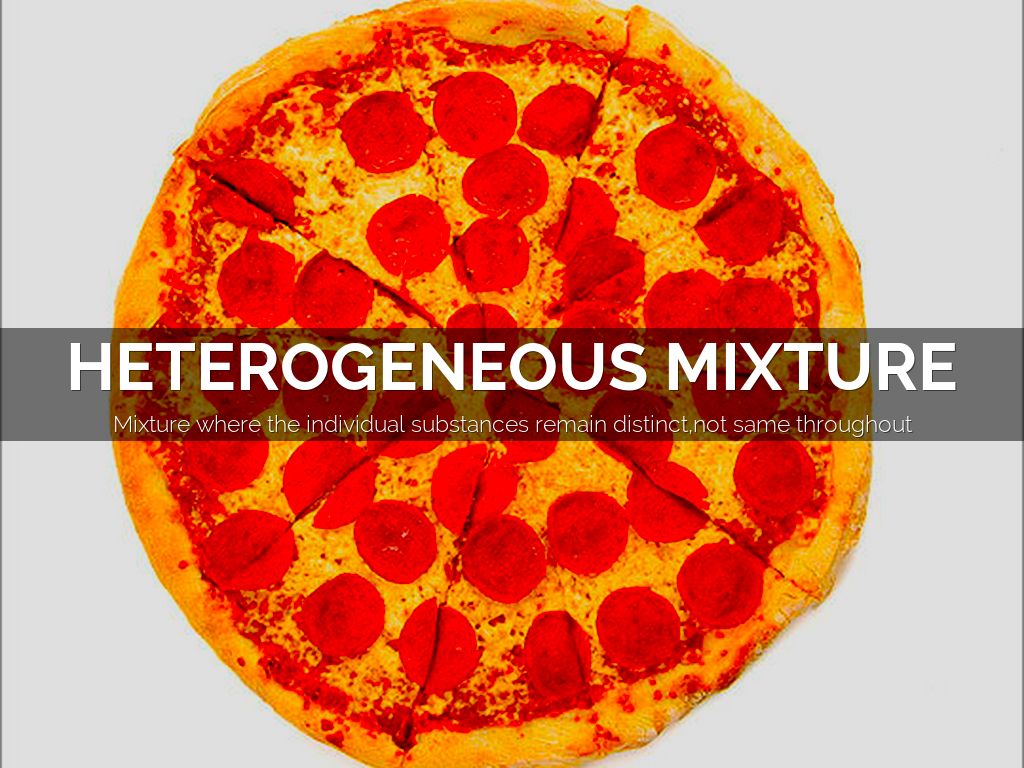
Sweet Tea, everything is mixed evenly and looks the same.

a)

Heterogeneous Mixture

b)

Homogeneous Mixture

2.

2 or more different elements that are bonded together is called...

a)

A. element

b)

B. compound

c)

C. mixture

d)

D. solution

3.
A substance that contains only one type of atom is a(n)
a)
compound
b)
element
c)
heterogeneous mixture
d)
homogeneous mixture
4.

Jay combines water, sugar, and lemon juice to form lemonade. What type of substance was made?

a)

Element

b)

Molecule

c)

Mixture

5.
Which of the following is an example of a heterogenous mixture?
a)
soap
b)
a salad with lettuce, olives, and tomatoes
c)
cup of coffee
d)
water
6.
Heredity is the passing of traits from _____________________ to _____________________
a)
predators to prey
b)
water to rain
c)
parents to offspring
d)
fungi to protists
7.
A characteristic that an organism can pass on to its offspring through its genes
a)
protein
b)
trait
c)
DNA
d)
gene
8.
Which of the following is homozygous recessive?
a)
Tt
b)
tt
c)
TT
d)
T
9.
Looking at the punnett square and B is brown eyes and b is blue eyes.  What chance is there that the offspring will have brown eyes?
a)
25%
b)
50%
c)
75%
d)
100%
10.
Where the better adapted organisms survive to pass traits along to offspring.
a)
Evolution
b)
Natural Selection
c)
Extinction
d)
Artifical Selection
11.
Survival of the Fittest and Evolution were proposed by what scientist?
a)
Charles Darwin
b)
Albert Einstein
c)
Steven Hawking
d)
Isaac Newton
12.
Mutations are a change in what?
a)
DNA
b)
tRNA
c)
genotype
d)
phenotype
13.

A process by which individuals that are better adapted to their environment are more likely to survive and reproduce than other members of the same species

a)

evolution

b)

natural selection

c)

adaptation

d)

scientific theory

14.

In sexual reproduction, how much DNA is given by each parent?

a)

10%

b)

30%

c)

100%

d)

50%

15.
Dominant or recessive?
tt
a)
Dominant 
b)
Recessive
16.

What word describes a trait that helps an organism survive in its environment?

a)

natural selection

b)

mutation

c)

camouflage

d)

adaptation

17.
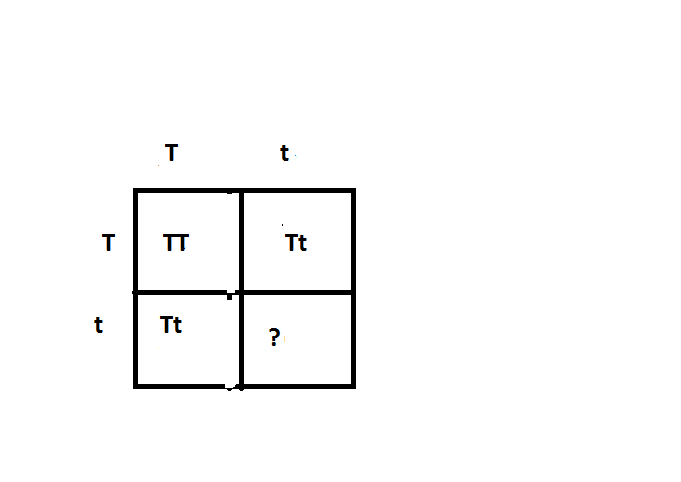
T - tall and t = short
In the punnett square below, what belongs in the missing square
a)
tt
b)
Tt
c)
Bb
d)
TT
18.
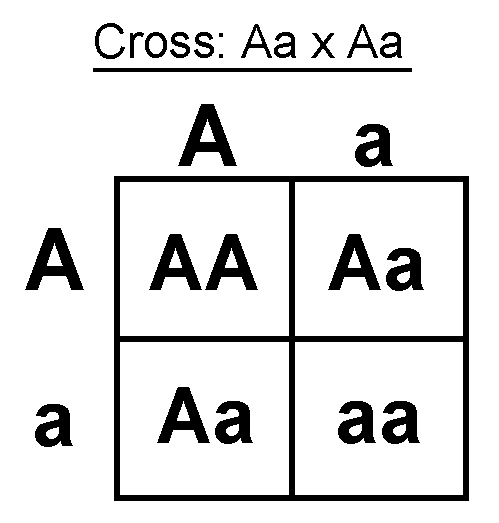
What is the phenotype of the offspring? (A-Brown hair; a-blond hair) 
a)
50 % Brown Hair and 50% Blond Hair 
b)
25 % Brown Hair and 75% Blond Hair 
c)
75 % Brown Hair and 25% Blond Hair 
d)
0% Brown Hair and 100% Blond Hair 
19.
The traits of an organism are passed to its offspring on small coded strands of DNA material called
a)
meiosis
b)
recessive traits
c)
genes
d)
heredity
20.
Aa, DD, bB, yy are all examples of
a)
genotypes
b)
phenotypes
21.
Water boiling is a _______ change. 
a)
Physical Change 
b)
Chemical Change 
22.
Fireworks Exploding are a ________ change.
a)
Physical Change
b)
Chemical Change
23.
What is the definition of "weight"?
a)
measure of the force of gravity on your body
b)
the time it takes to get on a ride 
c)
the amount of matter in an object
d)
the size of an object
24.
A measure of how much matter an object has is--
a)
weight
b)
gravity
c)
mass
d)
volume
25.
What is the SI unit used to measure force? 
a)
pounds 
b)
grams 
c)
newtons 
d)
friction
26.
The force of gravity acting on an object is the object's ______.
a)
mass
b)
matter
c)
weight 
d)
friction 
27.
The amount of matter in an object is 
a)
pressure
b)
weight
c)
mass
d)
force
28.
Two factors effecting the magnitude of the force of gravity between 2 objects are...
a)
mass and distance 
b)
mass and matter
c)
distance and weight 
d)
weight and mass
29.
Freezing
a)
Solid to gas
b)
Liquid to solid
c)
Gas to solid
d)
Liquid to gas
30.
Define a liquid.
a)
Indefinite shape, indefinite volume
b)
Definite shape, definite volume
c)
Found in stars
d)
Definite volume, indefinite shape
31.
The state of matter that has no definite size or shape is
a)
Solid
b)
Liquid
c)
Gas
32.
What does it mean if a mixture is heterogeneous?
a)
you can see the different parts
b)
cannot tell one part from another
c)
very well blended
d)
made of elements
33.
What type of mixture is this?
a)
heterogeneous 
b)
homogeneous
34.
What type of mixture is this?
a)
heterogeneous 
b)
homogeneous
35.
The positive particles of an atom are 
a)
electrons 
b)
positrons 
c)
neutrons 
d)
protons 
36.
A particle that moves around the nucleus is a(n)...
a)
Proton
b)
Neutron
c)
Electron
d)
Quark
37.
A 20 kg bike accelerates at 10 m/s2.  what was the force
a)
25 Newtons
b)
20 Newtons
c)
200 Newtons
d)
10 Newtons
38.
Newton's third law states that any action will have a(n) _______ and ______ reaction
a)
Equal and similar
b)
Equal and opposite
c)
Equal and different
d)
Greater and opposite
39.
Acceleration is a change in ________. 
a)
direction 
b)
speed 
c)
velocity 
d)
distance 
40.
You are walking in a straight line at a consistent speed. Do you have acceleration? 
a)
no
b)
yes 
41.
How long does it take earth to make on complete revolution of the sun?
a)
24 hours
b)
1 day
c)
365 days
d)
365.25 days
42.
What causes the day and night cycle on Earth?
a)
Rotation of the Sun
b)
Revolution of the Earth
c)
Gravitational pull from the moon
d)
Rotation of the Earth
43.
Tides on Earth are the result of the force of...
a)
friction
b)
waves
c)
inertia
d)
gravity
44.
A[n] ___________ tide occurs when the sun, Earth, and the moon are nearly in a line. 
a)
spring
b)
high
c)
low
d)
neap
45.
What is a difference between spring and neap tides?
a)
Spring tides occur when the earth and sun are IN LINE with the new or full moon. 
b)
Spring tides occur when moon in 3rd or 1st quarter phases
c)
Spring tides are LOWER than neap tides
d)
Spring tides occur in Spring and neap tides can occur in any season
46.
What type of tides would this arrangement of earth-moon-sun create?
a)
neap tide
b)
spring tide
c)
new moon tide
d)
full moon tide
47.
What is climate?
a)
What's happening in space at a time and place.
b)
What's happening in our atmosphere at a time and place
c)
The average weather over many years
d)
The average temperature over many years.
48.
What is weather?
a)
What's happening in space at a time and place.
b)
What's happening in our atmosphere at a time and place.
c)
The average weather over many years
d)
The average temperature over many years.
49.
Climates are classified according to which two major factors?
a)
elevation & precipitation
b)
latitude & temperature
c)
elevation & latitude
d)
precipitation & temperature
50.
A rock formed from fragments of other rocks is a(n)
a)
Metamorphic Rock
b)
Sedimentary Rock
c)
Extrusive Rock
d)
Igneous Rock
51.
The process by which metamorphic rocks are formed...
a)
heat and pressure
b)
erosion and deposition
c)
melting and cooling
52.

The place where to plates meet?

a)

Pattern

b)

Plate Boundary

c)

Mantle

d)

Earthquake

53.
What kind of plate boundary is shown here?
a)
divergent
b)
convergent
c)
transform
d)
strike slip
54.

Which correctly identifies the geologic process that formed the Himalayan mountains (The World's Tallest Mountains, including Mt. Everest)?

a)

Two continental plates converging

b)

An earthquake in a subduction zone

c)

A tectonic plate moving over a hot plate

d)

Movement at a transform fault boundary