wayground logo

Free Printable Worksheets

NEW

Font size

S
M
L
XL
Worksheets

Astronomy Review

Total questions: 25

Worksheet time: 16mins

Name
Class
Date
1.

Occurs when Earth is positioned between the moon and the sun and when Earth's shadow crosses the lighted half of the moon.

a)

Solar Eclipse

b)

Eclipse

c)

Lunar Eclipse

d)

Perigee

2.
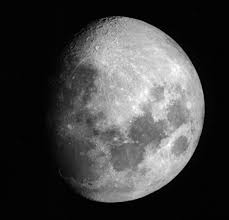
Name the moon phase
a)
waning crescent
b)
waxing crescent
c)
waning gibbous
d)
waxing gibbous
3.
Which moon phase is shown in this diagram?
a)
new moon
b)
first quarter
c)
full moon
d)
last quarter/3rd quarter
4.
Tides are caused by ___________
a)
wind
b)
gravitational pull of moon
c)
waves gravitation toward land
d)
rain
5.
Waxing means...
a)
Growing
b)
Dying
c)
Losing light
d)
Moving
6.
A small object that appears as a streak of light as it enters earth's atmosphere.
a)
Asteroid
b)
Comet
c)
Moon
d)
Meteor
7.
Which outer planets have rings?
a)
Just Saturn
b)
Saturn and Jupiter
c)
Jupiter, Neptune, and Saturn
d)
all 4 of them
8.

Which model of the solar system has the sun in the center with all of the planets orbiting it?

a)

heliocentric

b)

geocentric

9.
Which statement BEST summarizes The Big Bang Theory?
a)
whole universe began as a black hole and rapidly expanded, but is now collapsing
b)
whole universe began as a cool dense point and rapidly collasped, but is now expanding
c)
whole universe began as a hot dense point, rapidly expanded, and continues to expand
d)
the whole universe began as a hot dense point and rapidly expanded, but is now collapsing
10.
What is the name of our galaxy?
a)
Local Group
b)
Orion
c)
Andromeda
d)
Milky Way
11.
As the moon's shape appears to get smaller, we say that the moon is _.
a)
swelling
b)
waxing
c)
waning
d)
disappearing
12.
A shift toward longer wavelengths of the spectral lines emitted by a celestial object that is caused by the object moving away from the earth.
a)
White Shift
b)
Black Shift
c)
Blue Shift
d)
Red Shift
13.
What is the name of baby stars?
a)
Dwarf
b)
Supergiant
c)
Protostars
d)
Nebulas
14.

What 2 things do we use to classify stars?

a)

temp and pressure

b)

size and color

c)

luminosity and temp

d)

temp and color

15.

On an HR diagram, where does a star spend the majority of its life?

a)

as a red giant

b)

as a dwarf

c)

as a supernova

d)

in the main sequence

16.
What is the process that occurs in the core of a star, like the sun, that produces energy?
a)
fission
b)
fusion
c)
decay
d)
convection
17.
The Milky Way Galaxy is a 
a)
spiral
b)
lenticular
c)
elliptical 
d)
irregular
18.

What type of type of star is the our sun

a)

Dwarf star

b)

Main sequence star

c)

Giant star

d)

Super giant Star

19.

Which two element make up most of the sun?

a)

helium and hydrogen

b)

ammonia and methane

c)

hydrogen and oxygen

d)

oxygen and helium

20.

Galaxies are composed of (best answer)

a)

stars

b)

stars and gas

c)

stars, dust, and gas

d)

stars, dust, planets and gas held together by gravity

21.

A blue shift of the light from a star indicates that the star

a)

will soon become a giant star

b)

is moving away from Earth

c)

will soon become a main sequence star

d)

is moving closer to Earth

22.

Planets that are closest to the Sun are identified as

a)

low-density Jovian

b)

low-density terrestrial

c)

high-density terrestrial

d)

high-density Jovian

23.

Compared to the other planets in our solar system, Jupiter, Saturn, and Neptune have

a)

greater eccentricities

b)

shorter periods of revolution

c)

greater densities

d)

shorter periods of rotation

24.

Who discovered three (3) laws of planetary motion?

a)

Galileo

b)

Newton

c)

Kepler

d)

Ptolemy

25.

What are comets mainly made of?

a)

Poisonous liquid

b)

Rusty metal

c)

Hot, liquid rock

d)

Dirty ice and dust