wayground logo

Free Printable Worksheets

Font size

S
M
L
XL
Worksheets

Grade 8 Final Exam Review

Total questions: 98

Worksheet time: 3hrs 32mins

Name
Class
Date
1.
He diligently stuck to the diet guidelines his doctor laid out for him and he lost 15 pounds. 
a)
constant effort
b)
at half effort
c)
unhappily
d)
lazily
2.
Many people worried that the affluent background of the mayor prevented him from fully understanding the needs of the poor.  
a)
wealthy
b)
uneducated
c)
inexperienced
d)
predetermined
3.
There is, however, a chance you may fondly look upon the honeybee and think of friendly bears stealing jars of honey while meandering through winding, animated forests. 
Which word can replace meandering?
a)
journeying aimlessly
b)
moving quickly
c)
pilfering
d)
charging
4.
When she visited the Vietnam Memorial in Washington D.C., Lindsey noticed that her fellow visitors were very quiet and reverential. 
Which word is not a synonym for the word
reverential?
a)
respectful
b)
solemn
c)
admiring
d)
impolite
5.
The salad contained leaves of spinach, lettuce, and escarole.
What does escarole mean?
a)
type of leafy vegetable
b)
chocolate
c)
pork belly
d)
type of organic, wheat bread
6.
The Joker-an enemy of Batman-was hated by everyone for his nefarious deeds.
What does nefarious mean?
a)
type of leafy salad
b)
evil; wicked
c)
confused
d)
heartwarming
7.
Maria is the most consistent student that I have all day.  I know that she will always bring all of her materials and do well because that is what she has done all year.
a)
constant and dependable 
b)
dishonest and deceiving
c)
chaotic and confusing
d)
enthusiastic and positive 
8.
When the teacher spoke the directions verbatim, she also had the exact same thing written on the worksheet she gave to each student.
a)
word for word
b)
in secret
c)
different
d)
loudly
9.

_______________ in fiction is a reasonable conclusion or judgment about some element of a story based on information given in the story and the reader's personal knowledge of how the world works.

a)

A clue

b)

An Inference

c)

A Puzzle

d)

A question

a

10.

Which of the following statements is true?

a)

Writers never leave out any infomration in their texts.

b)

Writers always tell their readers everything that is going on.

c)

Writers sometimes seem to leave out pieces of information in their texts.

d)

None of these

11.
I arrived early for my appointment. The place was busy and smelled of chemicals. I found a place to sit and wait. The lady next to me had a towel around her head. I heard a blow dryer in the distance. It was loud over the music that was playing. Where am I?
a)
The hair salon
b)
A restaurant
c)
At school
d)
At the doctor
12.
An inference is...
a)
Text evidence + what you know
b)
Retelling a text
c)
Making a guess without evidence
d)
Information that is written directly into the text.
13.
"Troy stuttered, blushed and shook as he addressed the crowd."
What can you infer about Troy from this statement? 
a)
Troy enjoys public speaking
b)
Troy is nervous
c)
Troy is an actor
d)
Troy has food poisoning
14.
Many breeds of dogs are used for work. In many cultures, dogs are used to herd sheep. The dogs keep the flock from being attacked by animals such as wolves. They also keep sheep from wandering off. Sheepdogs are known for their loyalty and gentleness. Based on your reading of the text, you can INFER that:
a)
Sheepdogs are not very smart dogs.
b)
Sheepdogs are a popular choice for herding.
c)
There are many breeds of dogs.
d)
Wolves are afraid of sheepdogs.
15.
What two things are being compared in the following metaphor?
The crab was a dancing pair of scissors, clicking across the sand. 
a)
Crab and Sand
b)
Crab and dancing scissors
c)
Scissors and sand
d)
Dancing and sand. 
16.
Your hug is a warm blanket on a cold day.  What does this metaphor mean?
a)
Your blanket is very warm.
b)
You forgot to hug me.
c)
Your hug makes me feel warm inside.
d)
Your blanket is wet.
17.
The term that means a reference to a well known person, place or thing is
a)
Parallelism
b)
Allusion
c)
Diction
d)
Anachronism
18.
The following is an example of what term: Piggy the Panda paid for a purple popsicle.
a)
Irony
b)
Anadiplosis
c)
Alliteration
d)
Syntax
19.
The following example is what term: The fire station burnt down.
a)
Assonance
b)
Antithesis
c)
Imagery
d)
Irony
20.
A figure of speech using implied comparison of seemingly unlike things or the substitution of one for the other, suggesting some similarity. 
a)
Metaphor
b)
Metonymy
c)
Mood
d)
Motif
21.

Similar to mood, this describes the author’s attitude toward his material, the audience, or both.

a)

Thesis

b)

Tone

c)

Transition

d)

Understatement

22.
Authors set a TONE or MOOD in literature by conveying an emotion or emotions through _____________.
a)
pictures
b)
height
c)
words
d)
funny faces
23.
What is the "tone" of a story?
a)
The feeling the passage evokes from the reader
b)
The author, narrator, or speaker's attitude toward a subject
c)
The time and place of the story
d)
The summary of events in the story
24.
"We have some important news for you Mr. President.  We have discovered a terrorist plot against the United States" said the CIA agent.  The President closed the book, set it on the desk, and leaned forward, his eyes fixed straight ahead.  "Tell me everything you know." 
What is the tone of the dialogue?
a)
Informal
b)
Happy
c)
Serious
d)
Optimistic
25.
Lana was bursting with excitement.  She paced up and down, and every few minutes headed to the window to check for the mail carrier.  When he finally showed up, she ran down the path and stretched out her hand for the mail.  She took a deep breath and, hands shaking, ripped open the envelope.  
What word would you use to describe the tone of this passage?
a)
humorous 
b)
persuasive 
c)
anxious 
d)
cheerful 
26.
Read the following passage and answer the question.
Maggie was getting ready to walk to school. She put on her coat and grabbed her backpack. As she was leaving, her mother said, “I love you. Be careful.”
Which of the following is explicitly stated in the paragraph?
a)
Maggie lives close to the school.
b)
Maggie put on her coat and grabbed her backpack.
c)
Maggie is in Kindergarten or 1st grade.
d)
Maggie is never late to school.
27.

Identify the implicit information in the article below.

Maggie was getting ready to walk to school. She put on her coat and grabbed her backpack. As she was leaving, her mother said, “I love you. Be careful.”

a)

Maggie was late to school.

b)

Maggie was in Kindergarten or 1st grade.

c)

Maggie and her mother have a good relationship.

d)

Maggie is excited about going to school.

28.
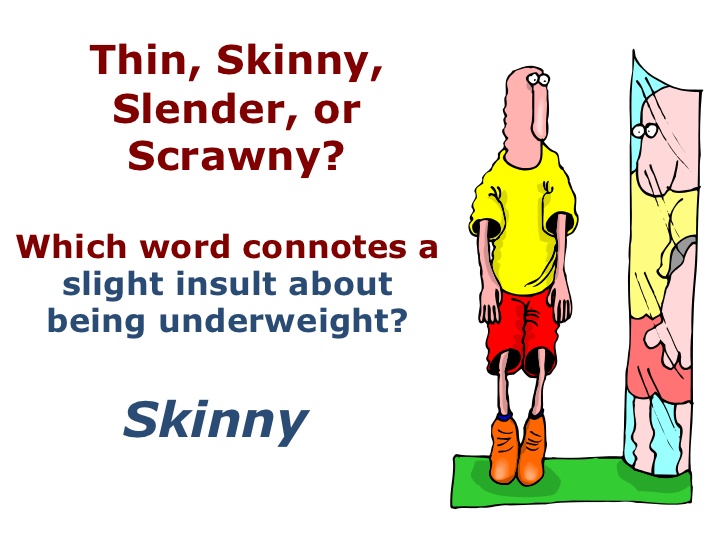
Which connotation is MORE positive?
We saw ______ animals in the animal house.
a)
fascinating
b)
weird
29.
Which connotation is MORE negative?
We bought _____ souvenirs at the amusement park.
a)
cheap
b)
inexpensive
30.
Which connotation is MORE negative?
It made me feel _______.
a)
uneasy
b)
frightened
31.
What is connotation?
a)
Connotation implies or suggests a meaning of a word.
b)
Dictionary meaning of a word.
c)
I don't know!
d)
Unknown meaning
32.
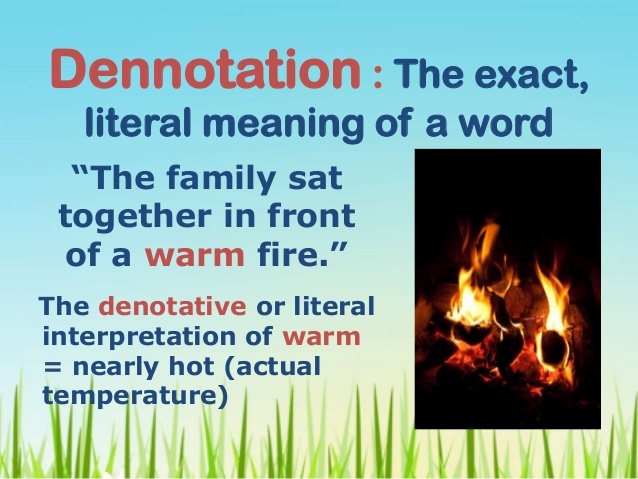
What is denotation?
a)
Direct meaning of a word or dictionary meaning.
b)
It means down.
c)
Let me ask my friend
d)
It means to note the word.
33.
the study of living things
a)
neurobiology
b)
biologist
c)
biopsy
d)
biology
34.
the removal of living tissue from the body for diagnostic examination
a)
bioshere
b)
antibiotic
c)
neurobiology
d)
biopsy
35.
a piece of writing about a person's life written by someone else
a)
biologist
b)
biography
c)
neurobiology
d)
autobiography
36.
What does "bio" mean?
a)
life
b)
light
c)
believe
d)
hear
37.
a)
plural
b)
noun
c)
singular
d)
three syllables
38.
a)

1

b)

2

c)

3

d)

4

39.

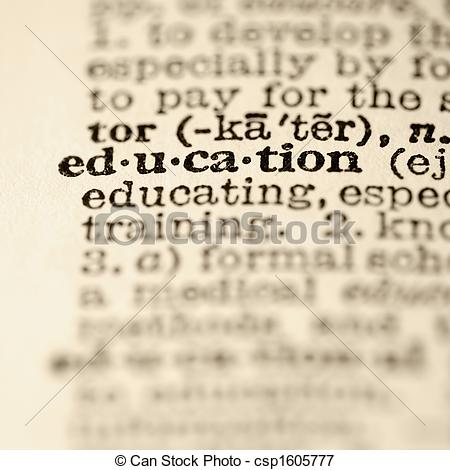
How many syllables are in the word "education"?

a)

1

b)

2

c)

3

d)

4

40.

Which definition of the word "gouge" means the same as in the following sentence?


There was a nasty gouge in my otherwise beautiful apple.

a)

Noun definition 1

b)

Noun definition 2

c)

verb definition 1

d)

Verb definition 2

41.

What is a synonym?

a)

A word that means the same as another word

b)

A word that means the opposite of another word

c)

A word that you find in the dictionary

d)

The definition of a word

42.
The sequence of events that make up a story is called ____________.
a)
Exposition
b)
Climax
c)
Plot
d)
Setting
43.
The people or animals that take part in the action of a story are called ________________.
a)
Characters
b)
Plot
c)
Setting
d)
Author
44.

Setting is the ___________________ of the action of the story.

a)

Problem

b)

Solution

c)

time and place

d)

plot

45.
A brief introduction of the setting, characters, and opening situation. 
a)
Rising Action
b)
Exposition
c)
Climax
d)
Resolution
46.
A struggle between opposing forces. The problem of the story. 
a)
Exposition
b)
Climax
c)
Rising Action
d)
Conflict
47.
A series of main events that leads to the climax. 
a)
Exposition
b)
Climax
c)
Falling Action
d)
`Rising Action
48.
The turning point of the story. 
a)
Expostion
b)
Resolution
c)
Climax
d)
Falling Action
49.
The events that follow the climax, which lessen the conflict.
a)
Exposition
b)
Rising Action 
c)
Falling Action
d)
Resolution
50.
The story's conclusion. The outcome of the conflict. 
a)
Exposition
b)
Rising Action
c)
Climax
d)
Resolution
51.
The central message expressed by the author of a story. 
a)
Plot
b)
Theme
c)
point of view
d)
Character 
52.

What is number 1 on the plot diagram?

a)

resolution

b)

falling action

c)

exposition

53.

Conversation between two or more characters in a story.

a)

dialogue

b)

setting

c)

exposition

54.
Making a prediction is a
a)
guess
b)
my favorite band
c)
using a magic 8 ball
d)
using previous information to determine what comes next
55.
Good readers make predictions by
a)
guessing
b)
using text features
c)
asking their friends
d)
watching the movie first
56.
Another text feature that can help with predictions is
a)
party hats
b)
parrots
c)
pictures and captions
d)
pretending
57.
Katie's mom set the oven to 350 degrees. Katie and her mom rolled the dough into balls and placed them about one inch apart on a baking sheet.
What are Katie and her mom doing?
a)
Katie and her mom are making pasta.
b)
Katie and her mom are making cookies. 
c)
Katie and her mom are making a cake.
d)
Katie and her mom are making meat loaf.  
58.
Mr. Jones finished his breakfast and said good bye to his family.  He grabbed his briefcase and headed out the door.
What most likely is going to happen next?
a)
Mr. Jones is going to work.
b)
Mr. Jones is coming home from work.
c)
Mr. Jones is buying a piano. 
d)
Mr. Jones will make pancakes. 
59.
The cat stretched her paws out in front of her and let out a soft purr.  She curled up on her pillow and closed her eyes.
What probably happened next?
a)
The cat chased a mouse across the room.
b)
The cat ate some food.
c)
The cat scratched the sofa.
d)
The cat fell asleep.  
60.
Good readers make predictions by
a)
guessing
b)
using text features
c)
asking their friends
d)
watching the movie first
61.
During colonial days there were no bathtubs or showers in the houses.  They were not missed, however.  Many people of that time never thought of taking a bath.  Most people thought that water caused many diseases.  Only the hands and face were washed, and that wasn't often.  You can predict that people of today:
a)
take more baths than people of colonial days
b)
take fewer baths than people of colonial days
c)
fear water more than people of colonial days
62.
Before the 1800's people didn't have right or left shoes.  They had shoes of just one shape that they used for both feet.  When people first saw right and left shoes, they laughed.  They called them "crooked shoes."  "What a silly idea," they said.  You can tell that shoes before 1800:
a)
were pretty
b)
didn't look alike
c)
didn't fit very well
63.

Which of the following is true when a text is written in third person limited point of view?

a)

A character is telling what all characters do/say and knows what all characters think/feel.

b)

A narrator is telling what all characters do/say and knows what all characters think/feel.

c)

A narrator is telling what all characters do/say and knows what some characters think/feel.

d)

A character is telling what all characters do/say and knows what some characters think/feel.

64.

Which of the following is true when a text is written in third person omniscient point of view?

a)

A narrator is telling what all characters do/say and knows what all characters think/feel.

b)

A character is telling what all characters do/say and knows what all characters think/feel.

c)

A narrator is telling what all characters do/say and knows what some characters think/feel.

d)

A character is telling what all characters do/say and knows what some characters think/feel.

65.

Which part of speech is most helpful in determining point of view in a text?

a)

irregular nouns

b)

common nouns

c)

pronouns

d)

proper nouns

66.

Which of the following narrators is never a character in the text?

a)

first person

b)

second person

c)

third person

67.

"I can't believe you didn't see what he wrote on the board yesterday before the teacher erased it!" she yelled.

a)

first person

b)

second person

c)

third person

d)

fourth person

68.

I can't believe they didn't see what he wrote on the board yesterday before the teacher erased it!

a)

first person

b)

second person

c)

third person

d)

fourth person

69.

Key words within _______ should not be used to determine point of view.

a)

epilogue

b)

narration

c)

dialogue

d)

prologue

70.
We laughed so hard that milk came out of their noses. From which point of view is the sentence written?
a)
Third Person, omniscient
b)
Third person, objective
c)
First Person
71.
The narrator is the
a)
person telling the story
b)
main character in the story
c)
enemy of the main character in the story
d)
person listening to the story
72.

How would allusion be defined?

a)

a reference to a famous person, place, or event

b)

words that involve one of the five senses

c)

two lines working as a unit

d)

a form or wordplay with similar sounding sounds

73.

Which of the following is not an example of an allusion?

a)

his wife was his Achille's heel

b)

he lies so much, I'm surprised his nose doesn't grow like Pinnochio's

c)

she transformed her backyard to look like the Garden of Eden.

d)

we'll miss him so much because he was the best dog ever.

74.

What type of allusion is this?

a)

Mythological

b)

Biblical

c)

Literary

d)

Historical

75.
My diet was going well until the new chocolate store went in down the street, chocolate is my Achilles’ heel.
a)
literature/mythology
b)
religious
c)
historical
76.
The real estate agent said his new farm listing was like the Garden of Eden. 
a)
literature/mytology
b)
religious
c)
historical
77.
Jana warned her friend Mary against dating Luke because he thinks he is Romeo.
a)
literature/mythology
b)
religious
c)
historical
78.
Everything was going well until that Benedict Arnold, Steve, told everyone where we hid our supply of candy for snacking on during break time. 
a)
literature/mythology
b)
religious
c)
historical
79.
In Greek mythology, Achilles's mother dips him in a river that protects his body wherever it touches. His heel does not get wet, so it is the one part of his body left unprotected. During the Trojan War, an arrow hits Achilles in the heel and kills him.
What is the meaning of the allusion in the sentence below?

Red velvet cupcakes were Stacy's Achilles's heel when she was trying to eat more healthily. 
a)
A source of strength
b)
A sole weakness
c)
A feeling of false strength
d)
All of the above
80.
In Greek mythology, a mythical bird called the phoenix lives for hundreds of years before bursting into flames at its death. However, it soon rises from its own ashes and is reborn.
What is the meaning of the allusion in the sentence below?
Fans debated whether their team would rise from the ashes.
a)
To come back after  destruction or defeat
 
b)
To surprise an opponent 
c)
To think optimistically
d)
None of the above
81.
George Orwell's novel 1984 focuses on a totalitarian society in which the citizens are frequently reminded that their leader, Big Brother, is always watching.
What is the meaning of the allusion in the sentence below?
The headline read: "Smart Phones Becoming
Big Brother." 
a)
A nuisance that distracts people from important tasks
b)
An important system that helps people stay safe
c)
A threatening power that monitors all aspects of people's lives 
d)
All of the above
82.
She was so pretty my eyes popped out!
a)
Onomatopia
b)
Simile
c)
Hyperbole
d)
Hiperbole
83.
What is a hyperbole?
a)
An extreme exaggeration
b)
A little exaggeration
c)
Similar sounds
d)
Compares two things using like or as
84.

What is an idiom?

a)

A comparison not using like or as

b)

An exaggeration

c)

A phrase that is not meant to be taken literally

85.
Similes make comparisons between two unlike things using like or as.
a)
true
b)
false
86.

He was born with a silver spoon in his mouth means...

a)

He was born to a rich family

b)

He was born hungry

c)

He was born with teeth

87.
Which idiom goes the best with this sentence?
I have a problem.
a)
I'm getting a hatI
b)
I'm in a pickle
c)
Don't put all of your eggs in one basket
88.
Carla put her foot in her mouth really means...
a)
Carla takes yoga classes.
b)
She said something embarrassing.
c)
Carla ate a snack.
89.
A figure of speech is...
a)
a familiar expression
b)
a non-literal way of saying something
c)
what the author literally means
d)
something only writers use
90.
Figures of speech mean exactly what the words say.
a)
True
b)
False
91.
A figure of speech has to be interpreted by the reader or listener.
a)
True
b)
False
92.
Two figures of speech that involve comparisons are
a)
simile and metaphor
b)
hyperbole and simile
c)
personification and idiom
d)
alliteration and metaphor
93.
Figure of speech in which the author makes an obvious exaggeration.
a)
idiom
b)
simile
c)
hyperbole
d)
alliteration
94.
Knowing the type of figure of speech is more important than understanding the meaning of the figure of speech.
a)
True
b)
False
95.
When words are literal, they mean exactly what they say.
a)
True
b)
False
96.

Choose the one sentence that is punctuated correctly (check for proper use of quotation marks, apostrophes, commas, periods, question marks, and capital letters):

a)

This week said Mr. Locascio we will study the civilization

of ancient Egypt.

b)

“This week” said Mr. Locascio “we will study the civilization

of ancient Egypt.”

c)

“This week,” said Mr. Locascio, “We will study the civilization

of ancient Egypt.”

d)

“This week,” said Mr. Locascio, “we will study the civilization

of ancient Egypt.”

97.

Choose the one sentence that is punctuated correctly (check for proper use of quotation marks, apostrophes, commas, periods, question marks, and capital letters):

a)

Its supposed that thousands of people worked many

decades moving the stone suggested Ms. Dowson.

b)

“It’s supposed that thousands of people worked many

decades moving the stone suggested Ms. Dowson.”

c)

“It’s supposed that thousands of people worked many

decades moving the stone.” suggested Ms. Dowson.

d)

“It’s supposed that thousands of people worked many

decades moving the stone,” suggested Ms. Dowson.

98.

Choose the one sentence that is punctuated correctly (check for proper use of quotation marks, apostrophes, commas, periods, question marks, and capital letters):

a)

Oko, are you sure asked his mother that you had your keys when you left home.

b)

“Oko, are you sure” asked his mother “that you had your keys when you left home?”

c)

“Oko, are you sure,” asked his mother, “that you had your keys when you left home”?

d)

“Oko, are you sure,” asked his mother, “that you had your keys when you left home?"