wayground logo

Free Printable Worksheets

Font size

S
M
L
XL
Worksheets

Earth/Space Final 4

Total questions: 25

Worksheet time: 20mins

Name
Class
Date
1.
Bobby observed that a metal trash can was covered with rust.  What type of weathering caused the rust on the trash can?
a)
Mechanical weathering 
b)
Wind weathering
c)
Chemical weathering
d)
Erosion weathering
2.
What is likely to cause cracks on the sidewalk?
a)
Repeated freezing and thawing of water
b)
Tree roots or plant roots growing bigger
c)
Both and A and B
d)
Neither A or B 
3.
How are canyons formed?
a)
Wind blows sand into high piles, which form the canyon walls.
b)
Rivers erode soil and rock over time, leaving behind canyon walls.
c)
Gravity causes rocks to fall from mountain sides onto valley floors.
d)
Ice freezes and thaws in cracks of rocks, and the cracks become canyons.
4.
A cliff formed near the ocean.  Which statement best describes how this cliff formed?
a)
Warm air melted the rock.
b)
Sun rays evaporated the rock.
c)
Ocean waves washed away rock.
d)
Plant roots pushed away the rock.
5.
The natural chemical or physical processes that breaks down rock on Earth's surface.
a)
weathering
b)
erosion
c)
deposition
d)
jackhammering
6.
These rocks were made smooth by wind blowing smaller rock particles across their surface.  This is an example of:
a)
ice wedging
b)
chemical weathering
c)
acid rain
d)
abrasion
7.
Potholes forming in the road after a cold winter is an example of:
a)
mechanical weathering
b)
chemical weathering
8.
What is sediment?
a)
the process of rocks being broken down and carried away
b)
bits of rock, sand, and silt caused by the weathering of rocks
c)
the top layer of the soil
d)
decaying plant or animal material 
9.
What happens when weathering and erosion work together?
a)
New Mountains are created
b)
The climate changes overnight
c)
Metal objects become rusty
d)
They change the Earth's surface
10.
A small stream or river that flows into a larger river or stream.
a)
River
b)
Sea
c)
Lake
d)
Tributary
11.

Which of these states is NOT in the Chesapeake Bay watershed?

a)

New Jersey

b)

Maryland

c)

Virginia

d)

Pennsylvania

12.
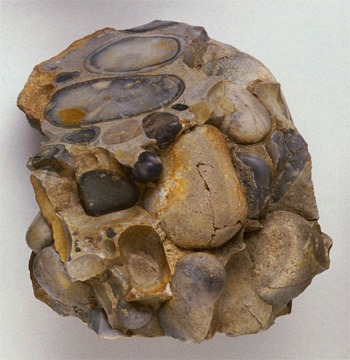
This rock formed when bits of other rocks became pressed into a solid. What type of rock is it?
a)
Sedimentary Rock
b)
Metamorphic Rock
c)
Igneous Rock
13.
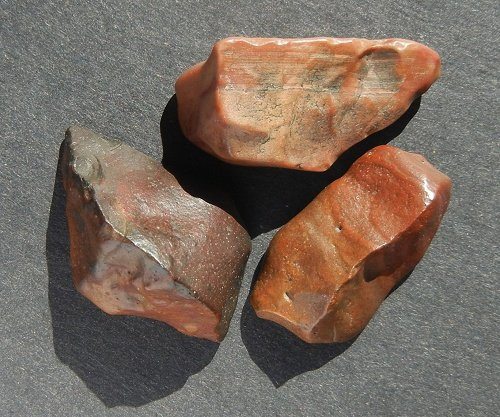
This rock was formed when magma cooled very slowly inside the Earth. What specific type of rock is it?
a)
Intrusive Igneous Rock
b)
Extrusive Igneous Rock
c)
Foliated Metamorphic Rock
d)
Clastic Sedimentary Rock
14.
The individual particles that make up a rock are known as _____
a)
Grains
b)
Textures
c)
Metamorphs
d)
Lava
15.
This rock was formed by smaller pieces of rock that settled at the bottom of a lake millions of years ago. What type of rock is this?
a)
Sedimentary
b)
Igneous
c)
Metamorphic
16.
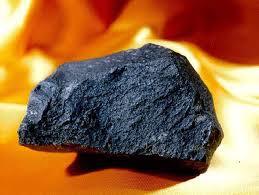
This rock was found near the mouth of a volcano. What type of rock is this?
a)
Sedimentary
b)
Igneous
c)
Metamorphic
17.
What has to increase for metamorphism to occur? 
a)
weathering and erosion
b)
temperature and pressure
c)
melting and cooling
d)
compaction ad cementation
18.

The "_____________________" states that energy cannot be created or destroyed, it can simply change from one form to another.

a)

Law of Conservation

b)

Law of the Land

c)

Law of Momentum

d)

Einstein's Law

19.

How could you describe the 'Rock Cycle?'

a)

molten rock that is stored underground and then erupts

b)

rock material that forms where rocks are broken down into smaller pieces.

c)

The never-ending processes that changes one type of rock into another type of rock.

20.

What is energy?

a)

moving energy

b)

stored energy

c)

renewable energy

d)

The ability to do work.

21.

Choose the renewable resources

a)

Wind

b)

Solar

c)

Hydro

d)

Coal and Oil

22.

Choose the nonrenewable resources

a)

Oil (petroleum)

b)

Natural Gas

c)

Coal

d)

Hydro

23.
What kind of energy is represented in the picture?
a)
Thermal
b)
Chemical
c)
Sound
d)
Nuclear
24.
A land area that is saturated with water for part of the year and supports plants adapted to the wet conditions is called:
a)
partial wetland
b)
wetland
c)
swampy
d)
wasted land
25.

Why is preserving a wetland area more important than developing on that land?

a)

Wetlands help retain and slowly drain runoff, leading to less flooding events whereas pavement would do the opposite

b)

Wetlands help speed up the runoff to streams and rivers

c)

No animals or plants live in wetlands