wayground logo

Free Printable Worksheets

Font size

S
M
L
XL
Worksheets

7th Grade Math Final Exam Review

Total questions: 64

Worksheet time: 48mins

Name
Class
Date
1.
This is what kind of angle?
a)
right
b)
acute
c)
obtuse
d)
straight
2.
This is what kind of angle?
a)
obtuse
b)
right
c)
straight
d)
acute
3.
Name this triangle.
a)
acute triangle
b)
right triangle
c)
straight triangle
d)
obtuse triangle
4.
a)

acute

b)

obtuse

c)

right

d)

straight

5.
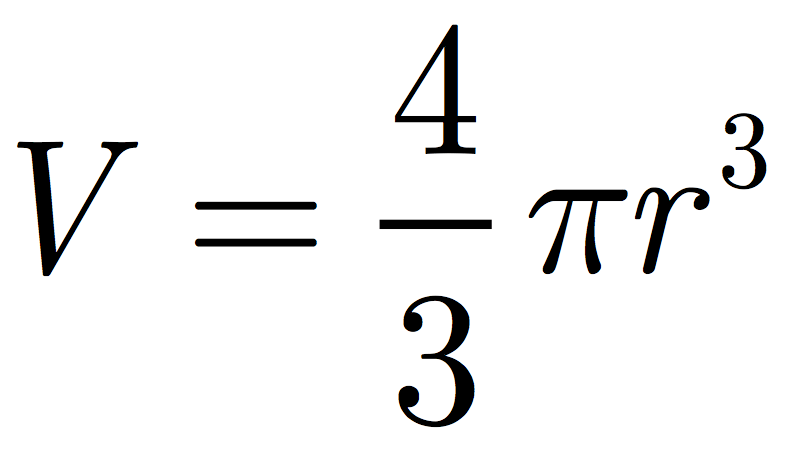
a)

acute

b)

obtuse

c)

right

d)

straight

6.
a)

acute

b)

obtuse

c)

right

d)

straight

7.
What is the measurement of a right angle?
a)
70
b)
80
c)
90
d)
180
8.

What is an Acute Angle?

a)

An angle that measures 180

b)

An angle that measures 90

c)

An angle that measures more than 90

d)

An angle that measures less than 90

9.
Which type of angle is pictured?
a)
Acute
b)
Right
c)
Obtuse
d)
Straight
10.

What is the range?

a)

The sum of the largest and smallest number

b)

The number in the middle

c)

The difference between the largest and smallest number

d)

The number that appears most often

11.

What is the median?

a)

The number in the middle when the numbers are in order from least to greatest.

b)

The difference between the largest and smallest number.

c)

The average

d)

The number that appears most often.

12.
What is the mode?
a)
The average
b)
The number that appears most often.
c)
The largest number - the smallest number
d)
The number in the middle.
13.
To find the average of a set of numbers, add up all the items and divide by...
a)
2.
b)
The smallest number
c)
The largest number
d)
The number of items in the set.
14.
A data set can have more than one mode
a)
True
b)
False
15.
When you are trying to find the MEDIAN of a set of data and 2 numbers are left in the middle after putting them in order from least to greatest, what do you do?
a)
List both of the numbers as the Median.
b)
Add the two numbers together and divide by 2.
c)
Pick the one that you want.
d)
Subtract the two numbers.
16.
In order to find the median, the data must be sorted from least to greatest first.
a)
True
b)
False
17.
What are complementary angles?
a)
Angles that add up to 180°
b)
Angles that add up to 90°
c)
Angles that are equal to each other
d)
Angles that are opposite of each other when lines intersect.
18.
What are supplementary angles?
a)
Angles that add up to 180°
b)
Angles that add up to 90°
c)
Angles that are equal to each other
d)
Angles that are opposite of each other when lines intersect
19.
What are vertical angles?
a)
Angles that are adjacent to each other
b)
Angles that add up to 180°
c)
Angles that are opposite of each other when lines intersect
d)
Angles that add up to 90°
20.

What are adjacent angles?

a)

two angles that share a common vertex and a common side

b)

Angles that add up to 90°

c)

Angles that are opposite of each other when lines intersect

d)

Angles that add up to 180°

21.

What is a letter or symbol that is used to represent a quantity?

a)

coefficient

b)

sum

c)

variable

d)

term

22.

What is a number that is multiplied by a variable in an algebraic expression?

a)

coefficient

b)

variable

c)

term

d)

product

23.

What is a number on its own that has a fixed value.

a)

constant

b)

coefficient

c)

term

d)

variable

24.

Probability is ...

a)

measure of the likelihood that an event will occur

b)

a game that involves coins and spinners.

c)

a guarantee.

25.
Probability can be written as ...
a)
a fraction
b)
a decimal
c)
a percent
d)
all of the above
26.
_______ is a part of a group being surveyed.
a)
Sample
b)
Population
c)
Random Sample
d)
Quartile
27.

_________ is a sample in which each individual or object in the entire population has a equal chance of being selected.

a)

Sample

b)

Population

c)

Random Sample

d)

Quartile

28.
_______ is the entire group of objects or individuals considered for a survey.
a)
Sample
b)
Population
c)
Random Sample
d)
Quartile
29.
The Triangle Sum Theorem states that the sum of all angles in a triangle is ______. 
a)
45°
b)
90°
c)
180°
d)
360°
30.

Experimental Probability is ______

a)

the probability that is based on repeated trials of an experiment

b)

the probability based on reasoning written as a ratio of the number of favorable outcomes to the number of possible outcomes

31.

Theoretical Probability is ____

a)

the probability that is based on repeated trials of an experiment

b)

the probability based on reasoning written as a ratio of the number of favorable outcomes to the number of possible outcomes

32.

This property states that the product of any number and zero is zero

a)

Associative Property

b)

Commutative Property

c)

Distributive Property

d)

Zero-Product Property

33.

This property states that you can add or multiply regardless of how the numbers are grouped

a)

Associative Property

b)

Commutative Property

c)

Distributive Property

d)

Zero Product Property

34.

This property states that multiplying the sum of two or more addends by a number will give the same result as multiplying each addend individually by the number and then adding the products together.

a)

Associative Property

b)

Commutative Property

c)

Distributive Property

d)

Zero-Product Property

35.

This property states that the numbers can be added or multiplied in any order, and you will still get the same answer equal to the other

a)

Associative Property

b)

Commutative Property

c)

Distributive Property

d)

Zero-Product Property

36.
If the scale factor is less than one, the new figure will be
a)
an enlargement
b)
a reduction
c)
a scale factor
d)
bigger
37.
If the scale factor is greater than one, the new figure will be
a)
a reduction
b)
an enlargement
c)
a scale
d)
not proportional
38.
Matching sides are called
a)
Corresponding Sides
b)
Corresponding Angles
c)
The Same
d)
Congruent Sides
39.

Two objects that are the same shape but not the same size are _______.

a)

Congruent

b)

Vertical

c)

Similar

d)

Complementary

40.

Two objects that are the same shapeand the same size are _______.

a)

Congruent

b)

Vertical

c)

Similar

d)

Complementary

41.
A rational number can be written as a fraction.
a)
True
b)
False
42.
Integers are ____________ rational.
a)
always 
b)
sometimes 
c)
never
43.
What is a rational number ?
a)
A rational number  is a number that cannot be written as a fraction.
b)
A rational number is a number that can be written as a fraction.
c)
A rational number cannot be a repeating  decimal.
44.
What type of number is π ?
a)
Rational
b)
Irrational
45.
Is absolute value always positive?
a)
yes
b)
no
46.
What's a way to define absolute value?
a)
The value of a number
b)
The opposite of a number
c)
The distance of a number from zero
d)
The multiplicative inverse of a number
47.
What do you call a decimal that has a finite set of digits as a result of dividing and has a remainder of 0?
a)
prime factor
b)
prime number
c)
repeating decimal
d)
terminating decimal
48.
How can you determine if a fraction is repeating?
a)
The number is even.
b)
The prime factors are either 2 or 5.
c)
The dividing of the numerator by denominator has a remainder of 0 or stops dividing.
d)
There is a bar notation or ... in the decimal value.
49.
What do you call a number greater than 1 whose only factors are 1 and itself?
a)
prime factor
b)
prime number
c)
repeating decimal
d)
terminating decimal
50.
What do you call a decimal in which a pattern of one or more digits is repeated indefinitely?
a)
prime factor
b)
prime number
c)
repeating decimal
d)
terminating decimal
51.
What does the "B" in the volume formula V = B x h stand for?
a)
Bottom of the object
b)
Box
c)
Between
d)
Area of the base
52.
The units for Volume are always 
a)
squared (to the 2nd power)
b)
cubed (to the 3rd power)
c)
quad (to the 4th power)
d)
pent (to the 5th power)
53.
What is surface area?
a)
Inside of the object
b)
The sum of all the areas of all the shapes that cover the surface of the object.
c)
Something Ms. Sharafeldin made up.
d)
Surface area is what you get when you boil unicorn tears 
54.
The formula for the Volume of ...
a)
Spheres
b)
Cones
c)
Cylinders
55.
The formula for the Volume of ...
a)
Cylinders
b)
Spheres
c)
Cones
56.
Circumference of a Circle
a)
C=πr²
b)
C=2πr
c)
C=2π
57.
Equation of a Line
a)
y = mx + b
b)
l = mb + x
c)
y = mb + x
58.
Area of a Triangle
a)
A=bh⁄2
b)
A=b+h
c)
A=bxhx2
59.
Area of a Circle
a)
A=x²
b)
A=πr²
c)
A=π²
60.
Volume of a Rectangular Prism
a)
V = rh
b)
V = lwh
61.
What is the formula for volume of a CONE?
a)
V = π r²
b)
V = π r² h
c)
V =  ⅓ π r² h
d)
V =  ⅓ L W H
62.
What is the formula for the volume of a pyramid?
a)
V = P*h
b)
V = B*h
c)
V = (1/3)P*h
d)
V = (1/3)B*h
63.
What is the volume formula for a sphere?
a)
V = (4 ∕ 3)πr3
b)
V = (1 ∕ 3)πr2h
c)
V = πr2h
d)
V = (1 ∕ 3)Bh
64.
What is the formula for volume of a CYLINDER?
a)
V = π r²
b)
V = π r² h
c)
V =  ⅓ π r² h
d)
V =  ⅓ L W H