wayground logo

Free Printable Worksheets

Font size

S
M
L
XL
Worksheets

Physics of the Nucleus

Total questions: 50

Worksheet time: 1hrs 21mins

Name
Class
Date
1.
In chemistry, how many types of subatomic particles are considered to form everything?
a)
two
b)
three
c)
92
d)
billions
2.
The word "atom" is from the _____
a)
Latin for "three parts"
b)
Greek for "indivisible"
c)
Gaelic for "uncuttable"
d)
French for "tiny"
3.
The proton is _____
a)
heavy and neutral
b)
heavy and negatively charged
c)
heavy and positively charged
d)
light and negatively charged
4.
The neutron is _____
a)
heavy and neutral
b)
heavy and negatively charged
c)
heavy and positively charged
d)
light and neutral
5.
The electron is _____
a)
heavy and positively charged
b)
light and positively charged
c)
light and neutral
d)
light and negatively charged
6.

Which subatomic particles determine the identity of an element?

a)

electrons

b)

protons

c)

neutrons

d)

photons

7.
The number of protons in an element is its _____
a)
atomic weight
b)
relative atomic mass
c)
atomic number
d)
mass number
8.
Nuclei are held together by the strongest of the four fundamental forces of physics, _____
a)
the electromagnetic force
b)
the gravitational force
c)
the strong nuclear force
d)
the weak nuclear force
9.

Which term represents just the total number of nucleons in the nucleus of an atom?

a)

atomic weight

b)

relative atomic mass

c)

atomic number

d)

mass number

10.
Variants of an element, with different masses but the same chemical properties, are called _____
a)
isotropics
b)
isotherms
c)
isomers
d)
isotopes
11.
Atoms of the same element have the same number of _____
a)
electrons in their nuclei
b)
orbiting protons
c)
neutrons in their nuclei
d)
protons in their nuclei
12.
What is radioactive decay?
a)
The spontaneous breakdown of an atomic nucleus resulting in only energy release
b)
The spontaneous breakdown of an atomic nucleus resulting in only matter release
c)
The spontaneous breakdown of an atomic nucleus resulting in a release of energy and matter
d)
The decay of the use of radios and the increased use of televisions.
13.
Which is not true of radioactive decay?
a)
It is a result of instability in atoms
b)
It happens only in nuclear power plants
c)
Radioactivity can be useful
d)
It is hazardous to human health
14.
Isotopes of the same element have different ____________. 
a)
 numbers of protons  
b)
numbers of electrons
c)
 symbols 
d)
numbers of neutrons
15.
When does radioactive decay occur?
a)
When the nucleus of an isotope is unstable
b)
When the nucleus of an isotope is stable
c)
When the electrons of an isotope are spinning
d)
When the electrons of an isotope are shared with another isotope
16.
Takes two small nuclei and combines them into a larger nucleus
a)
fission
b)
fusion
17.
The splitting of a nucleus into smaller nuclei is
a)
fusion
b)
fission
c)
half-life
d)
gamma radiation
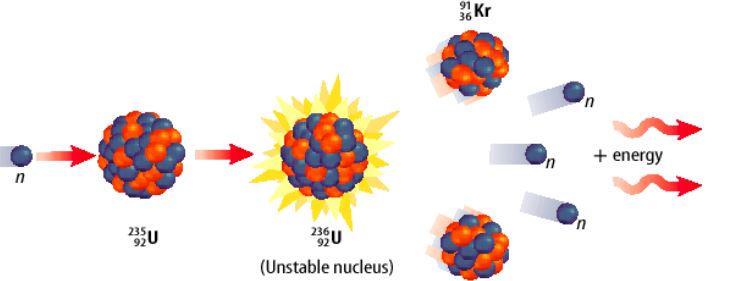
18.
This is an example of...
a)
Fission  reaction
b)
Fusion reaction
c)
Decomposition reaction
d)
Decay
19.
One disadvantage of nuclear energy is ___.
a)
it is a fossil fuel
b)
it leaves behind radioactive waste
c)
it emits large amounts of pollution into the atmosphere
d)
there are no disadvantages
20.
One advantage of nuclear energy over coal energy is ______.
a)
it is very cheap to build and maintain a nuclear power plant
b)
there is very little dangerous waste with nuclear energy
c)
the nuclear plant emits more greenhouse gases
d)
the nuclear plant does not emit as many greenhouse gases
21.

What is inside the nucleus of the atom?

a)

electrons and protons

b)

protons and quarks

c)

protons and neutrons

d)

neutrons and electrons

22.
Almost all of the mass of an atom is found in what part?
a)
The electron cloud
b)
The nucleus
c)
The protons
d)
The charge
23.
Mass and energy are interrelated and this is shown with Einstein's equation, E=mc2
a)
True
b)
False
24.
What is Half-life?
a)
The amount of time it takes for some of the nuclei in a sample of the isotope to decay
b)
The amount of time it takes for half the electrons in a sample of the isotope to decay
c)
The amount of time it takes for half the nuclei in a sample of the isotope to decay
d)
the amount of time it takes to double the nuclei in a sample of the isotope to decay
25.
The half-life of Zn-71 is 2.4 minutes. If one had 100.0 g at the beginning, how many grams would be left after 7.2 minutes has elapsed?
a)
100.0g
b)
50.0g
c)
12.5g
d)
8.5g
26.
Barium-122 has a half-life of 2 minutes. A fresh sample weighing 80 g was obtained. If it takes 10 minutes to set up an experiment using barium-122, how much barium-122 will be left when the experiment begins?
a)
0.25g
b)
2.5g
c)
25g
d)
80g
27.
The half-life of strontium-90 is 25 years. How much strontium-90 will remain after 100 years if the initial amount is 4.0 g?
a)
3.0g
b)
0.25mg
c)
0.3g
d)
0.25g
28.

The % of the parent isotope remaining after 1 Half Life.

a)

50%

b)

25%

c)

12.5%

d)

6.25%

29.

The % of the parent isotope remaining after 2 Half Lives.

a)

50%

b)

25%

c)

12.5%

d)

6.25%

30.

The % of the parent isotope remaining after 3 Half Lives.

a)

50%

b)

25%

c)

12.5%

d)

6.25%

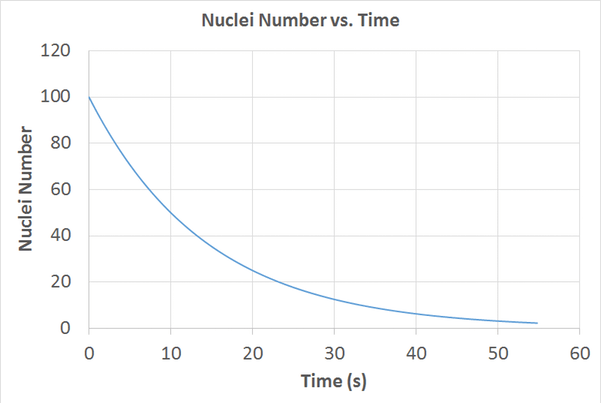
31.

What is the Half life of this isotope?

a)

5 seconds

b)

10 seconds

c)

15 seconds

d)

20 seconds

32.

The vertical (up and down) columns in the Periodic Table are called

a)

groups

b)

towers

c)

periods

d)

atomic numbers

33.
The Modern Periodic Table of Elements is arranged by
a)
atomic mass
b)
atomic number
c)
valence electrons
d)
number of isotopes
34.
What does the atomic mass tell you? 
a)
Basically,the number of electrons and protons
b)
The number of neutrons
c)
Basically, the number of protons and neutrons
d)
The number of protons.
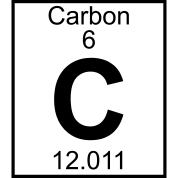
35.
What does the 6 represent?
a)
atomic mass
b)
atomic number
c)
element name
d)
chemical symbol 
36.
What does 12.011 represent?
a)
atomic mass
b)
atomic number
c)
element name
d)
chemical symbol 
37.
What does the C represent?
a)
atomic mass
b)
atomic number
c)
element name
d)
chemical symbol 
38.
These are found on the Periodic Table.
a)
Compounds
b)
Elements
c)
Mixtures
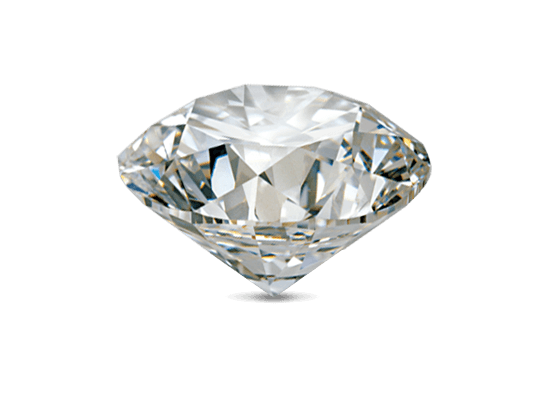
39.
What element primarily makes a diamond?
a)
Hydrogen
b)
Silver
c)
Carbon
d)
Calcium
40.
What is the symbol for Potassium?
a)
P
b)
K
c)
Pb
d)
Pd
41.
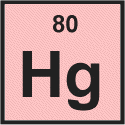
What is the name of this element?
a)
Helium
b)
Rubidium
c)
Hydrogen
d)
Mercury
42.
What is the atomic number of Oxygen?
a)
6
b)
7
c)
8
d)
9
43.
All matter is made of .....
a)
energy 
b)
atoms 
c)
air
d)
chemistry
44.
Most of the mass of an atom is found it its _____.
a)
electron cloud
b)
nucleus
c)
atomic number
d)
empty space
45.
An element is made up of only one kind of _____.
a)
isotope
b)
plastic
c)
atom
d)
metal
46.
Which is an electron?
a)
A
b)
B
c)
C
47.
Which is a proton?
a)
A
b)
B
c)
C
48.
Which is a neutron?
a)
A
b)
B
c)
C
49.
What is the number of protons that the element in this image contain?
a)
14
b)
7
c)
15
d)
18
50.

I think I am ready for my assessment on the Physics of the Nucleus!

a)

Yes

b)

No

c)

Maybe

d)

Wait, have we started a new topic? I though we were still learning about electricity