

wayground logo

Free Printable Worksheets

Font size

S
M
L
XL
Worksheets

Scientific Method

Total questions: 9

Worksheet time: 14mins

Name
Class
Date
1.
An experiment is performed on plants to see how different liquids affect plant growth. Each plant in the experiment is given a different liquid; water, apple juice, or milk. Each plant has the same amount of soil, sunlight, and listens to the same music. In this investigation, the independent variable is ...
a)
The type of plant
b)
The amount of sunlight
c)
The type of music
d)
The type of liquid
2.

An experiment is performed on plants to see how different liquids affect plant growth. Each plant in the experiment is given a different liquid; water, apple juice, or milk. Each plant has the same amount of soil, sunlight, and listens to the same music. In this investigation, what are the constants?

a)

Type of plant, amount of music, and sunlight

b)

Water, apple juice, milk

c)

Plant growth

3.
The name of the information that you get from your experiment (you organize it into charts and graphs).
a)
observations
conclusion
b)
data
c)
variables
d)
hypothesis
4.

A scientist performs an experiment to see if acids have an effect on the health of a particular type of plant. Three sets of plants were treated with acidic solutions of known pH while the control set was treated with a solution of neutral pH 7.Which is the best conclusion for this experiment?

a)

Acid has no effect on the health of this type of plant.

b)

B. High acidity (pH 2) is helpful to this type of plant.

c)

C. Low acidity (pH 6) is harmful to this type of plant.

d)

High acidity (pH 2) is harmful to this type of plant.
5.
Carmen conducted an experiment to determine if listening to different types of music would affect a person’s pulse. Her hypothesis was that pulse rate would change with different types of music. Each person listened to seven different selections of music for 30 seconds each. Each person’s pulse was taken before the music and then after each 30-second interval of music. The pulses were taken again after the music selections were completed. Based on her experiment, Carmen concluded that a person’s pulse rate changed when the person listened to different types of music.  Which component is missing from Carmen’s experiment?
a)
a question
b)
a hypothesis
c)
a control group
d)
a description of the experiment
6.
An experiment was carried out to determine whether drinking caffeinated soda increases pulse rate. The pulse rates of two groups of people at rest were measured. Group A was then given caffeinated soda and group B was given caffeine-free soda. One hour after drinking the soda, the pulse rates were measured. The participants in the experiment were all the same age, and they were all given the same amount of soda. The dependent variable in this experiment is the
a)
type of soda given to each group
b)
amount of soda given to each group
c)
 pulse rate of each group
d)
age of participants in each group
7.
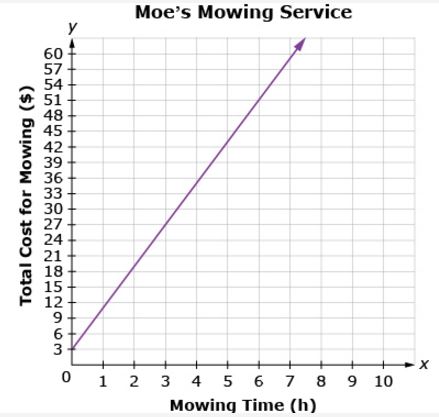
Choose the accurate independent (I) and dependent (D) variables.
a)
I - total cost
D - mowing time
b)
I - mowing time
D - total cost
c)
I - lawnmowers purchased
D - number of lawns
d)
I - number of lawns
D - lawnmowers purchased

8.
What words would be most appropriate to see if a student was describing the QUALITATIVE properties of a metal? 
a)
 melts at 1,500 degrees F
b)
density of 1.75 pounds per cubic inch
c)
reflective shine
d)
15.3% copper
9.
What words would be most appropriate to see if a student was describing the QUANTITATIVE properties of an organism? 
a)
grey skin
b)
big ears
c)
2 1/2 tons
d)
mammal