
 Worksheets
Cell Theory
Total questions: 10
Worksheet time: 20mins
Name
Class
Date
1.

Robert Hooke, Anton van Leeuwenhoek, Theodor Schwann, Rudolf Virchow, and Matthias Schliden were all responsible for what theory?
a)
The Theory of Living Organisms
b)
The Theory of Relativity
c)
The Cell Theory
d)
The Theory of Continental Drift
2.
______________ are the basic unit of life.
a)
DNA
b)
RNA
c)
Cells
d)
Takis
3.
Which of the following is NOT one of the basic points of Cell Theory?
a)
All living things are made of cells.
b)
The cell is the smallest living thing that can perform all the functions of life.
c)
Cells are too small to see without a microscope.
d)
All cells must come from pre-existing cells.
4.
True or False: There are more than two scientist who contributed to the cell theory.
a)
True
b)
False
5.
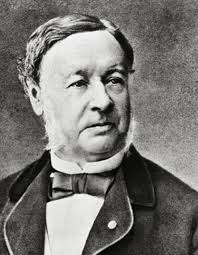
Which of the following scientists concluded that all animals are made of cells?
a)
Rudolf
Virchow
b)
Matthais
Schleiden
c)
Robert
Hooke
d)
Theodor
Schwann
6.

What is one way in which all living things on Earth are alike?
a)
All living things have hair.
b)
All living things are made of cells and come from other cells.
c)
The cells of all living things have chloroplast.
d)
All living things can move.
7.
What structures distinguish a plant cell from an animal cell?
a)
Plant cells have cell walls and ribosomes.
b)
Plant cells have cell walls and chloroplasts.
c)
Plant cells have chloroplasts and ribosomes.
d)
Plant cells have chloroplasts and mitochondria.
8.
Which invention from the 17th century allowed for the development of modern cell theory?
a)
x-rays
b)
computers
c)
the light microscope
d)
the scanning electron microscope
9.
A plant and an animal are both living things. According to the Cell Theory, what can you conclude about these two very different organisms?
a)
Plants have cells but animals do not.
b)
They are both made of one or more cells.
c)
They both come from the same kind of cell.
d)
They both come from a non-living organism.
10.
Unlike eukaryotes, prokaryotes do not have:
a)
DNA
b)
cytoplasm
c)
cell walls
d)
a membrane bound nucleus
100 %

