
 Worksheets
Separation Techniques 101 Quiz (LS)
Total questions: 20
Worksheet time: 18mins
Separating iron fillings from wood dust
filtration
using magnets
evaporation
fractional distillation
Separating oil fractions using their different boiling points
Distillation
Fractional Distillation
Evaporation
Electrolysis
Separating salt dissolved in water
Distillation
Fractional Distillation
Crystallisation
Filtration
Separating 2 immiscible liquids (liquids that don’t dissolve in one another)
use a separating funnel
chromatography
fractional distillation
evaporation
Separating miscible liquids (liquids that dissolve in one another).
Distillation
Fractional distillation
Crystalisation
Evaporation
To separate a mixture of salt and water what separation method is used?
Filtration
Distillation
Chromatography
Evaporation to dryness
Which of the following pairs of substances may best be separated through through fractional distillation
sand and soil
water and soil
salt and sand
water and alcohol
Which property indicates that a solid is pure?
It burns completely in oxygen, leaving no residue.
It has a fixed melting point.
It has a fixed volume.
It is soluble in water.
What method is used to obtain copper(II) sulfate crystals from its solution?
Crystallisation
Evaporation to dryness
Paper chromatography
Fractional distillation
What is the method suitable to obtain pure water from seawater.
Simple distillation
Fractional distillation
Filtration
Evaporation to dryness
Name a application of magnetic attraction as a separation technique.
Salvaging of iron and steel
Removing tea leaves from tea
Production of salt from seawater
Making excellent coffee
After filtration is finished, the solid remaining on the filter paper is called the ___________.
filtrate
dirt
residue
salt
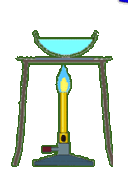
Which one of the following is the name for separation technique in the picture below
distillation
filtration
evaporation
chromatography
Chromatography separates the mixture of dyes on the basis of their ----------------------------
density
solubility
gravity
boiling point
Panning for gold is an example of
Filtering
Decanting
Distillation
Evaporation
Decanting is
Separating solids from liquids
Separating a soluble solid and solvent
Separating an insoluble solid from a liquid
When one liquid is changed to another liquid
Salt water turning into fresh water is an example of
Evaporation
Decanting
Distillation
Filtering

