wayground logo

Free Printable Worksheets

NEW

Font size

S
M
L
XL
Worksheets

Chapter 4 Review

Total questions: 50

Worksheet time: 3hrs 34mins

Name
Class
Date
1.
In Dalton's Atomic Theory, all elements consist of __________ that cannot be divided.
a)
Atoms
b)
Parts
c)
Molecules
d)
Hydrogen
2.

Crookes (and thomson) discovered the existence of what particle?

a)

Electrons

b)

Protons

c)

Neutrons

d)

Quarks

3.
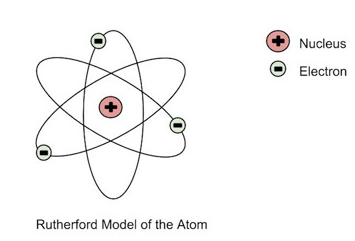
Which model is this?
a)
Thomson Model
b)
Cloud Model
c)
Bohr Model
d)
Rutherford Model
4.
Which model involved gold foil?
a)
Thomson Model
b)
Rutherford Model
c)
Cloud Model
d)
Bohr Model
5.
While making his model of an atom, what structure did Rutherford discover (containing protons and neutrons)?
a)
the Nucleus
b)
the Electron Cloud
c)
the quarks
d)
the atomic mass
6.
The nucleus is made up of protons and what other particle?
a)
Electrons
b)
Nothing else
c)
Neutrons
d)
Atomic Number
7.
Which model of the atom proposed that atoms were positive spheres with negative electrons in them?
a)
Heliocentric Model
b)
Solid Sphere Model
c)
Plum Pudding Model
d)
Planetary Model
8.

Who was the Greek philosopher who called the smallest particle of matter as "atom"?

a)

Democritus

b)

Aristotle

c)

J.J Thompson

d)

Einstein

9.
What did James Chadwick discover?
a)
neutrons
b)
electrons
c)
the atomic theory
d)
protons
10.
Which scientist developed the plum pudding/chocolate chip cookie model
a)
Dalton
b)
Thompson 
c)
Rutherford
d)
Democritus
11.
This number gives the number of protons in each atom of an element.
a)
mass number
b)
atomic number 
c)
atomic mass
12.

Which of the following is/are conclusions based on Rutherford’s gold foil experiment?

a)

Atom is mostly empty space

b)

The nucleus is positively charged

c)

The atom has a small dense nucleus

d)

All answers are correct

13.
The positive particles of an atom are 
a)
electrons 
b)
positrons 
c)
neutrons 
d)
protons 
14.
all matter is made of what 
a)
energy 
b)
atoms 
c)
electrons 
d)
compounds 
15.

protons + neutrons =

a)

Subatomic Particles

b)

Atomic Number

c)

Atomic Mass

d)

Gluons

16.
Subatomic particles that are neutral in charge
a)
Neutrons
b)
Protons
c)
Nucleus 
d)
Electrons
17.
Atoms of the same element with a different number of neutrons
a)
Ion
b)
Gluons
c)
Isotope
d)
Quarks
18.
The smallest particle of an element that shows all the properties of that element.
a)
Subatomic Particles
b)
Atom
c)
Quarks
d)
Gluons
19.
A tiny but very dense, positively charged portion of the atom that holds most of the atomic mass
a)
Electron Shells
b)
Orbitals
c)
Electron Cloud
d)
Nucleus
20.
Discovered the electron within the atom
a)
Thomson
b)
Chadwick 
c)
Schrodinger & Heisenberg
d)
Dalton
21.
Calculation used to find the number of neutrons in an atom
a)
Atomic Mass - Atomic Number
b)
Atomic Number - Atomic Mass
c)
Atomic Mass - Electrons
d)
none of these
22.

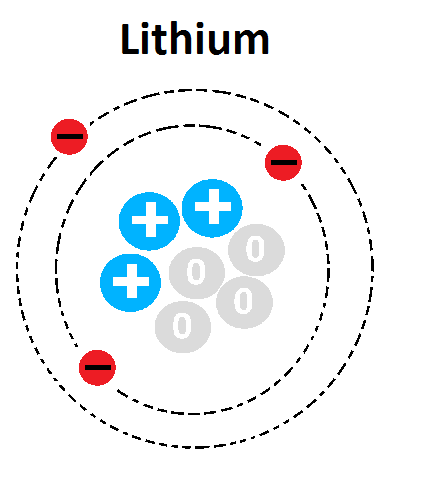
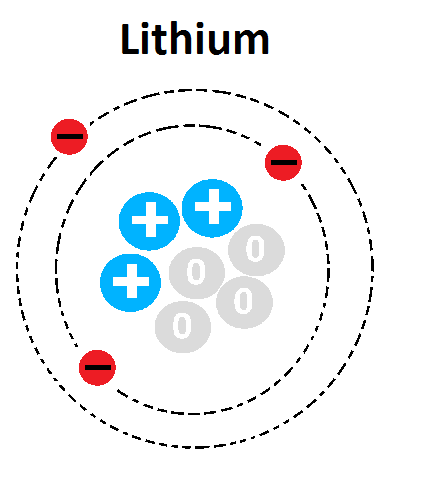
What is the mass number of this atom?

a)

1

b)

3

c)

4

d)

7

23.
What is the atomic number of this atom?
a)
1
b)
3
c)
4
d)
7
24.

An element has the mass number 12 and atomic number 6. The number of neutrons in it is:

a)

6

b)

10

c)

4

d)

8

25.

Isotopes have different numbers of

a)

protons

b)

neutrons

c)

electron

d)

properties

26.

The number in Kr-84 represents what about Krypton?

a)

The number of electrons

b)

The number of protons

c)

The mass number

27.

If an atom has 10 electrons, how many protons does it have?

a)

0

b)

1

c)

10

d)

5

28.

How many electrons are in an atom with an atomic number of 50?

a)

5

b)

8

c)

50

d)

2

29.
After the nucleus of a radioactive element undergoes changes, the element can transform into ...
a)
  (a)  a different isotope of the same element.
b)
(b) an entirely different element.
c)
Both (a) and (b)
d)
Neither (a) nor (b)
30.
Alpha particles.....
a)
a) are positively charged.
b)
b) consist of two protons and four neutrons.
c)
c) can penetrate any thickness of matter
d)
d) All of the above 
31.
During beta decay, a nucleus .... 
a)
gives up two protons and two neutrons.
b)
  maintains the same number of protons and neutrons.
c)
  loses a proton and gains a neutron.
d)
gains a proton and loses a neutron. 
32.
When a nucleus undergoes nuclear decay by gamma rays, the atomic number of the element....
a)
remains the same
b)
  decreases by one.
c)
increases by one.
d)
increases by two.
33.
Radioactive materials have unstable...
a)
electrons
b)
protons
c)
nuclei
d)
neutrons
34.
A helium nucleus with two protons and two neutrons is called a(n) ____.  
a)
alpha particle
b)
electroscope
c)
beta particle
d)
gamma ray
35.

All atoms on the periodic table are ____________ because _____________.

a)

negative, too many electrons

b)

neutral, protons = electrons

c)

positive, too many protons

d)

neutral, neutrons

36.

Millikan measured the charge of an electron to be?

a)

1/1840

b)

+1

c)

1.062 x 10⁻¹⁹ Coulombs

d)

0

37.
What contribution did John Dalton make to atomic theory? 
a)
He discovered that every atom was positively charged. 
b)
He discovered that every element consisted of one type of atom that couldn't be divided. 
c)
He discovered that atoms had nuclei. 
d)
He discovered that atoms could be divided into smaller parts. 
38.
Rutherford's gold foil experiment provided evidence that...
a)
negative and positive charges are spread evenly throughout the atom.
b)
alpha particles have a positive charge.
c)
gold is not a dense as previously thought.
d)
there is a dense positively charged nucleus at the center of an atom.
39.
The first person to propose a theory about an atom called the Atomos Theory was
a)
Democritus
b)
Rutherford
c)
Dalton
d)
Aristotle
40.
Who discovered the nucleus using the gold foil experiment?
a)
Democritus
b)
Robert Millikan
c)
James Chadwick
d)
Ernest Rutherford
41.
He first measured the mass and charge of an electron using the oil drop experiment.
a)
Joseph Thomson
b)
Robert Millikan
c)
John Dalton
d)
Niels Bohr
42.
How did Thomson build upon Dalton's model? 
a)
His model was the same.
b)
He put electrons in orbitals.
c)
He discovered the nucleus.
d)
He discovere subatomic particles (electron).
43.
What particle completes this reaction?
a)
alpha particle
b)
beta particle
c)
gamma particle
d)
neutron
44.
Solve this equation for alpha decay.
20985At = ___ + 42He
a)
20583Bi
b)
20986Rn
c)
20781Tl
d)
20885At
45.
Solve this equation for beta decay.
6027Co = ___ + 0-1e
a)
5625Mn
b)
6028Ni
c)
5823V
d)
5927Co
46.
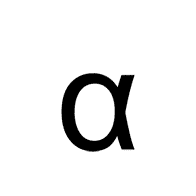
This is the symbol for a(n)
a)
alpha particle
b)
beta particle
c)
gamma particle
47.
Has the symbol
a)
Alpha
b)
Beta
c)
Gamma
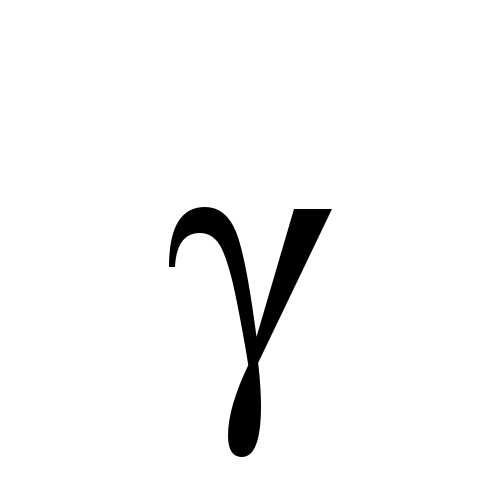
48.
Has the symbol
a)
Alpha
b)
Beta 
c)
Gamma
49.

Rubidium has two common isotopes, 85Rb and 87Rb. If the abundance of 85Rb is 72.2% and the abundance of 87Rb is 27.8%, what is the average atomic mass of rubidium?

a)

85.468 amu

b)

37 amu

c)

85.6 amu

d)

86.4 amu

50.
An element has two naturally occurring isotopes. One is 10.013 amu and is 19.9% abundant. The other is 11.01 amu and is 80.1% abundant. What is the average atomic mass? What element is it?
a)
9.012, Beryllium
b)
12.011, Carbon
c)
6.941, Lithium
d)
10.812, Boron