Wayground logo

Free Printable Worksheets

Font size

S
M
L
XL
Worksheets

Unit 2:Vital Signs & Experiments

Total questions: 23

Worksheet time: 23mins

Name
Class
Date
1.

The main vital signs include: (select all that apply)

a)

blood pressure

b)

respirations and pulse

c)

temperature

d)

blood sugar

2.
When experimenting with the growth of a plant, a scientist uses three (of the same type of) plants, two different fertilizers, equal light, and equal water. What type of variable is the fertilizer?
a)
Dependent
b)
Independent
c)
Control
d)
Compound
3.
Ms. S set up an experiment to see how the mass of a ball affects the distance it rolls off a ramp. What is the dependent variable?
a)
Distance traveled by the ball
b)
Height of the ramp
c)
Mass of the ball
d)
Where the experiment took place.
4.
Research Question: Does the type of gasoline put in a car effect how fast the car can drive. What is the independent variable?
a)
Type of gasoline
b)
which car the gas is put into
c)
how fast the car can drive
d)
how much gas is put into the car
5.
Gerald wants to find out how quickly he can melt a stick of butter. He plans to use a hair dryer with 4 different heat settings. What would be the control group in his experiment?
a)
Hottest Setting
b)
Lowest Setting
c)
No Heat
d)
Middle Setting
6.

A study was created to test the effects of fear in children. The hypothesis of the experimenters was that if babies were exposed to fuzzy bunnies and at the same time a loud cymbal was struck close behind them, then that child would be afraid of all fuzzy things. Another group of children would be exposed to bunnies without any loud noises. The study was carried out as planned and as a result, hundreds of young children developed fear of all cute furry bunny rabbits. What is the control group?

a)

Children with bunnies and load noises.

b)

Children with bunnies and no loud noises.

c)

Fuzzy bunnies

d)

Loud cymbals

7.
What is the normal heart rate for teens and adults?
a)
40-80 bpm
b)
110-120 bpm
c)
60 - 100 bpm
d)
30-50 bpm
8.
A normal oral temperature should range between
a)
97.8F-99.0F
b)
99.6F-101.0F
c)
86.5C-89.3C
d)
95.6F-97.7F
9.
Normal blood pressure measures below
a)
145/90
b)
130/90
c)
120/80
d)
150/70
10.

The pulse is a measurement of _______.

a)

the measure of how many times a person breathes

b)

the measure of the heart beat as is pumps blood

c)

the measure of a persons temperature

d)

not useful to doctors

11.

The respiratory rate ___________.

a)

a persons heart beat as it pumps blood.

b)

the temperature of a person

c)

the measure of how many breaths a person takes in a measured amount of time.

d)

not useful to a doctor

12.

Blood pressure is the _________.

a)

not useful to doctors

b)

the temperature of the body

c)

the number of times the heart beats in a specified time

d)

the pressure of the blood in the circulatory system

13.

Measurements, specifically pulse rate, temperature, respiration rate, and blood pressure, that indicate the state of a patient's essential body functions.

a)

sensory motor

b)

Visual motor

c)

Medical diagnosis

d)

Vital signs

14.
Which tool is used to measure blood pressure?
a)
Arm cuff and stethoscope
b)
Thermometer
c)
Scale
d)
MRI
15.

According to the following data what conclusion can be made for this experiment

a)

Yoga does not decrease the heart rate.

b)

Yoga does reduce the heart rate.

c)

Conclusion can not be made based on the results. There is no trend that can be identified.

d)

There is not enough information to determine a conclusion.
16.
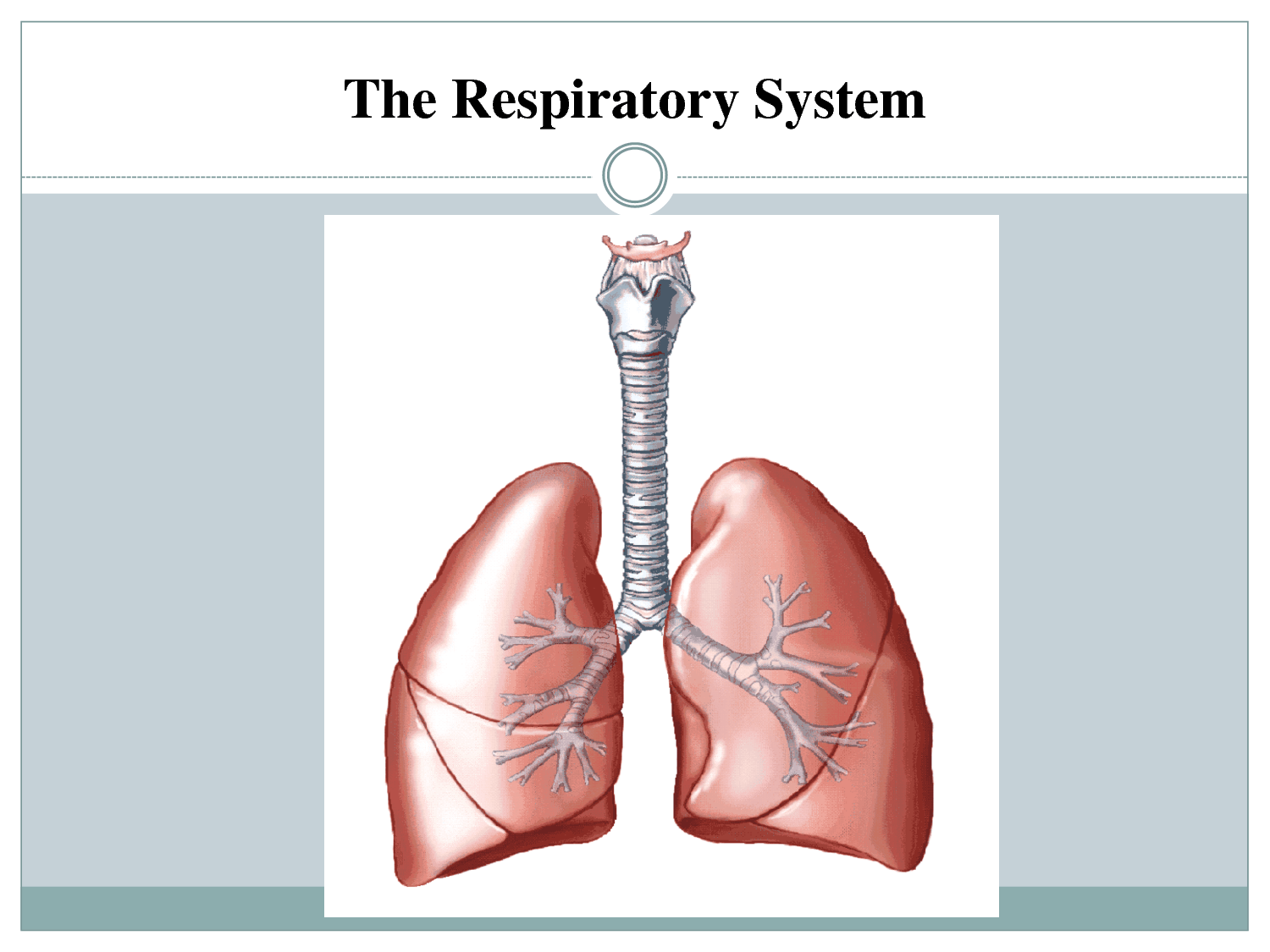
What is the main function of the respiratory system?
a)
to provide oxygen and remove carbon dioxide from the body
b)
to bring oxygen to the body
c)
to break down food and absorb nutrients
d)
to remove oxygen from the body and deliver carbon dioxide
17.
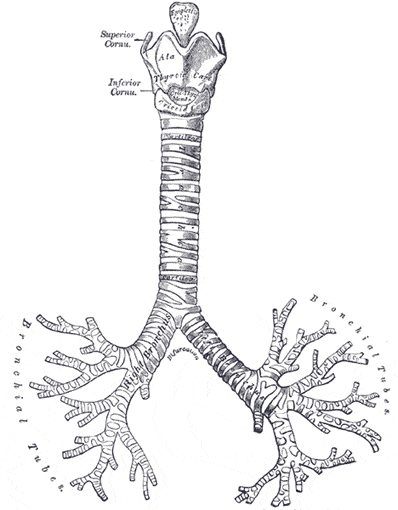
The two main branches from the trachea (one to each lung)
a)
bronchi
b)
alveoli
c)
capillaries
d)
bronchioles
18.
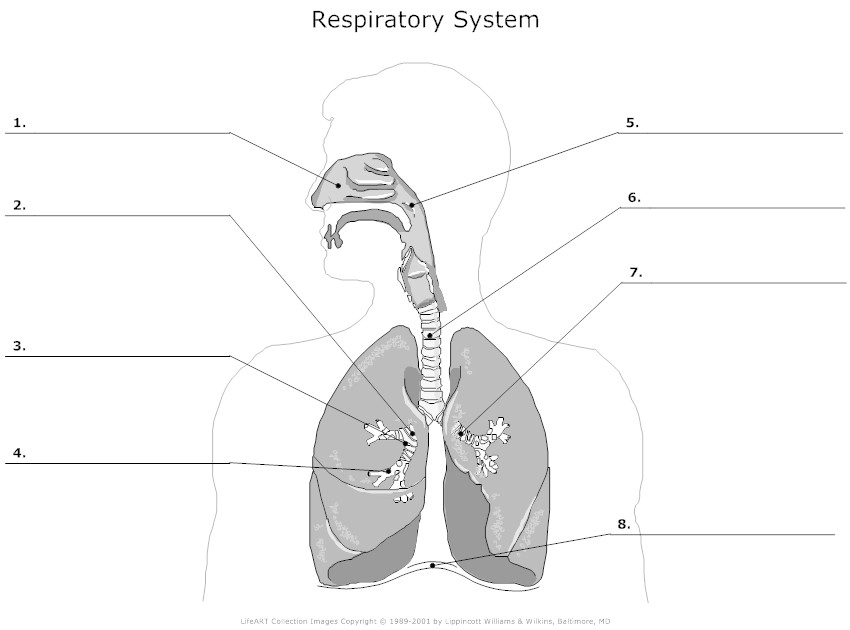
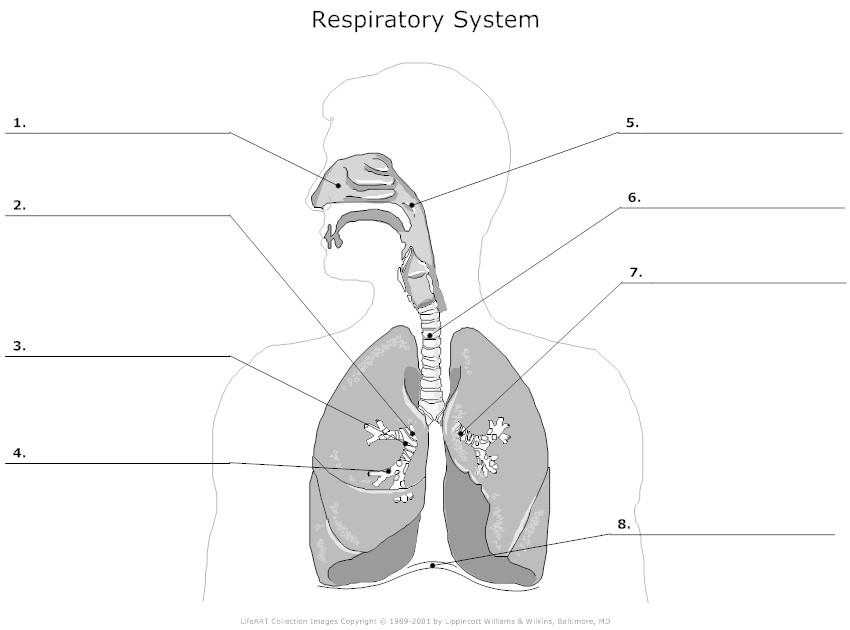
Name the organ label # 6. 
a)
alveoli 
b)
bronchi 
c)
trachea 
d)
lungs 
19.
Name the structure labeled 8 
a)
lungs 
b)
trachea 
c)
diaphragm 
d)
alveoli 
20.
Within the lungs, the exchange of oxygen and carbon dioxide occurs between the ___ and the capillaries. 
a)
trachea 
b)
bronchi 
c)
alveoli
d)
diaphragm
21.

These blood vessels take oxygenated blood to the body cells.

a)

heart

b)

artery

c)

vein

d)

capillary

22.

These blood vessels carry deoxygenated blood to the lungs.

a)

heart

b)

capillaries

c)

veins

d)

arteries

23.

The 3 main functions of the Circulatory System

a)

break down food, remove waste, make blood cells

b)

react to stimuli, grow, adapt

c)

deliver materials, remove waste, and fight infection