wayground logo

Free Printable Worksheets

Font size

S
M
L
XL
Worksheets

Edexcel A Geography Coastal Processes

Total questions: 20

Worksheet time: 10mins

Name
Class
Date
1.

What does the term Fetch refer to?

a)

The shape of a headland

b)

The distance a wave travels before it reaches land

c)

The movement of sediment within an ecosystem

d)

The time it takes for erosion to occur

2.

What is this type of wave?

a)

Constructive wave

b)

Destructive wave

3.

With a ................................... wave, the backwash is stronger than the swash.

a)

destructive

b)

constructive

c)

swash

d)

backwash

4.
The movement of water up the beach after the breaking of a wave is...
a)
Swash
b)
Backwash
5.
When swash is stronger than backwash it creates a
a)
Constructive wave
b)
Destructive wave
c)
Water layer weathering
d)
Plunging wave
6.
I happen when the waves don't have enough energy to carry sediment
a)
Deposition
b)
Erosion
c)
Swash
d)
Backwash
7.

A high energy environment causes __________ to occur?

a)

Erosion

b)

Deposition

c)

Gravity

d)

Sand Dunes

8.
The type of erosion that occurs when pebbles bang together
a)
Abrasion
b)
Attrition
c)
Hydraulic action
d)
Solution
9.

Erosion happens faster when water interacts with...

a)

Hard Rocks eg. Igneous and Metamorphic Rock

b)

Soft Rocks eg. Sedimentary Rocks

c)

At the same rate on both hard and soft rocks

10.

Corrosion occurs when?

a)

Little rocks get picked up by the waves and smashed on to the cliffs

b)

Small rocks are smashed against each other, making smaller rocks.

c)

Chemicals in the sea water dissolve the rocks

d)

At low tide when animals enter the coastal environment.
11.
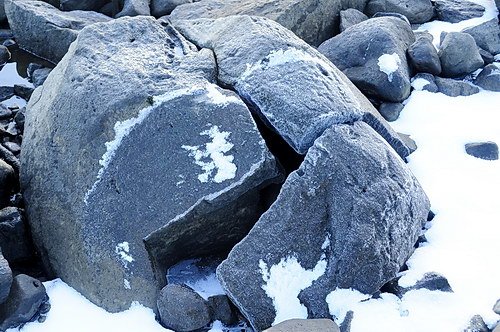
How does freezing water cause the weathering of rocks?  The freezing water—
a)
keeps the rocks in place.
b)
makes the rocks last longer.
c)
expands cracks and breaks rocks.
d)
causes rocks to fall in landslides.
12.
The process that breaks down rocks and other materials on Earth's surface is called
a)
Weathering
b)
Erosion
c)
Deposition
d)
Decomposition
13.
How do plants weather rocks?
a)
During photosynthesis
b)
When roots grow into cracks of rocks and expand the rock breaks.
c)
When the plant moves water from the roots to the leaves, the rock breaks.
d)
Plants don't weather rocks.
14.
What is an enormous mass of ice moving over land, causing weathering of rock and soil?
a)
A glacier
b)
An iceberg
c)
An ice wedge
d)
A sand dune
15.
These are called _______________________.
a)
slumps
b)
mudflows
c)
creeps
d)
landslides
16.
This is a picture of a
a)
slump
b)
creep
c)
mudflow
d)
landslide
17.

Which one of these processes is the rolling of stones along the sea bed?

a)

solution

b)

saltation

c)

suspension

d)

traction

18.

Which one of these processes is the movement of particles 'leap frogging' along the sea bed?

a)

traction

b)

suspension

c)

saltation

d)

solution

19.

Which one of these processes is the movement of material that is carried within the water flow?

a)

traction

b)

suspension

c)

saltation

d)

solution

20.
This is
a)
Longshore Drift
b)
Nearshore currents
c)
Attrition
d)
Undertow