Wayground logo

Free Printable Worksheets

Font size

S
M
L
XL
Worksheets

ATOMIC STRUCTURE

Total questions: 33

Worksheet time: 22mins

Name
Class
Date
1.

Subatomic particles with a negative charge

a)

Electrons

b)

Neutrons

c)

Protons

d)

Quarks

2.
subatomic particles found on the outermost shell & responsible for the atom's reactivity
a)
neutrons
b)
valence electrons
c)
isotopes
d)
ions
3.
Subatomic particles with a positive charge
a)
neutrons
b)
atomic mass
c)
protons
d)
isotopes
4.
Value representing the number of protons in an element
a)
Atomic Mass
b)
Mass Number
c)
Valence Electrons
d)
Atomic Number
5.
Subatomic particles that are neutral in charge
a)
Neutrons
b)
Protons
c)
Nucleus 
d)
Electrons
6.
Where electrons are likely to be found as they travel around the nucleus
a)
Nucleus
b)
Electron Cloud
c)
Within a Proton
d)
Within a Neutron
7.
A tiny but very dense, positively charged portion of the atom that holds most of the atomic mass
a)
Electron Shells
b)
Orbitals
c)
Electron Cloud
d)
Nucleus
8.
Arrangement of elements organized by atomic number
a)
Electron Cloud 
b)
Periodic Table 
c)
Electron Configuration
d)
None of these
9.
Calculation used to find the number of neutrons in an atom
a)
Atomic Mass - Atomic Number
b)
Atomic Number - Atomic Mass
c)
Atomic Mass - Electrons
d)
none of these
10.
The only element with no neutrons in its nucleus.
a)
Oxygen
b)
Helium 
c)
Hydrogen
d)
Lithium
11.

A horizontal row of elements in the periodic table

a)

Molecule

b)

Period

c)

Family

d)

Atom

12.

The smallest particle of an element.

a)

Element

b)

Molecule

c)

Atom

13.

A substance that cannot be broken down into other substances by chemical or physical means.

a)

Covalent bond

b)

Atom

c)

Element

14.

What is one way Neutrons are different from electrons?

a)

they both are negative

b)

neutrons have no charge, while electrons have a negative charge

c)

Both are in the nucleus( center of atom)

d)

Electrons are inside nucleus and neutrons are outside the nucleus.

15.

What is the atomic number?

a)

35

b)

18

c)

17

d)

52

16.

How many protons and electrons does this element have?

a)

35

b)

18

c)

17

d)

52

17.

How many neutrons does Chlorine have?

a)

18

b)

17

c)

35

d)

52

18.

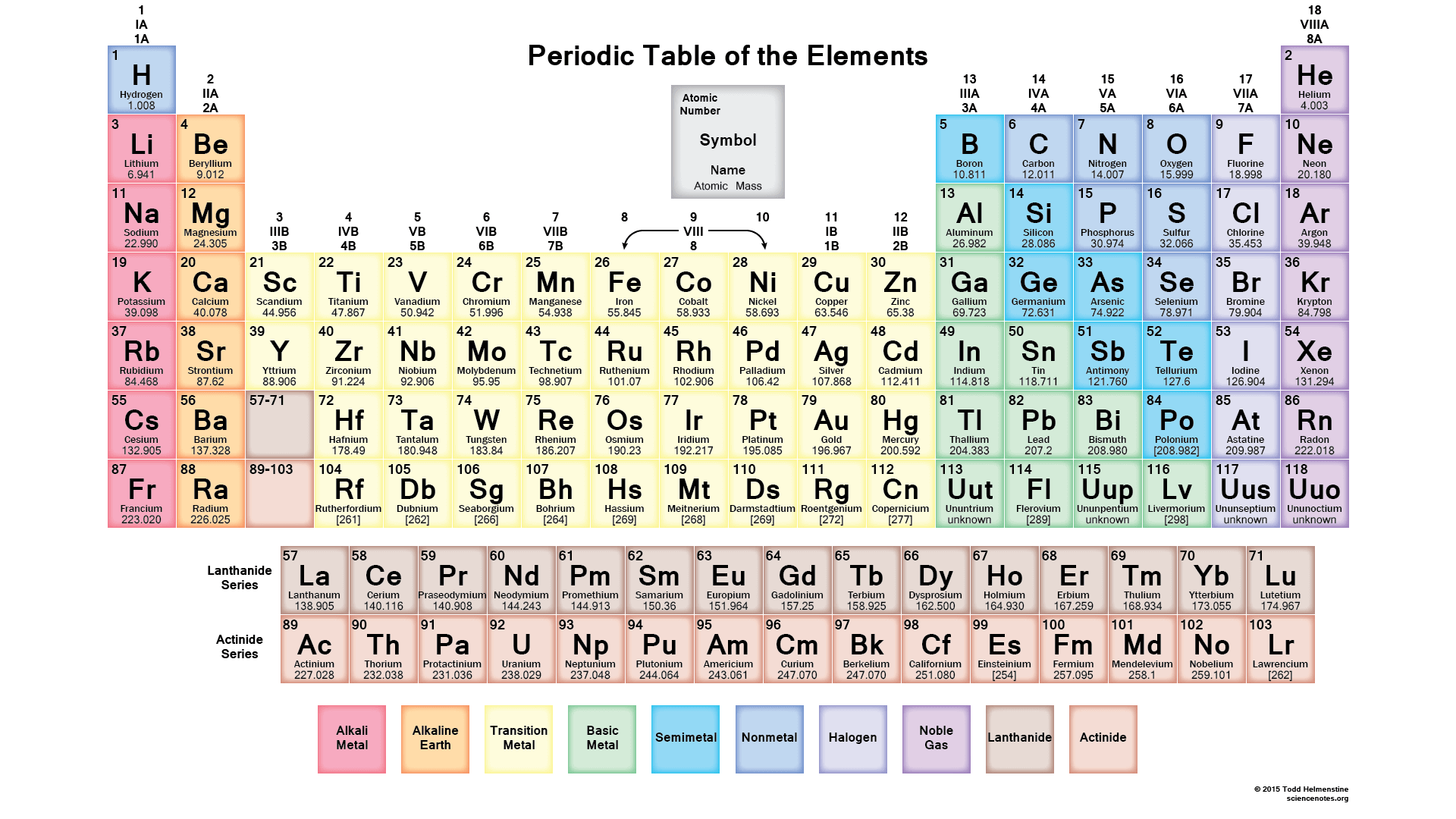
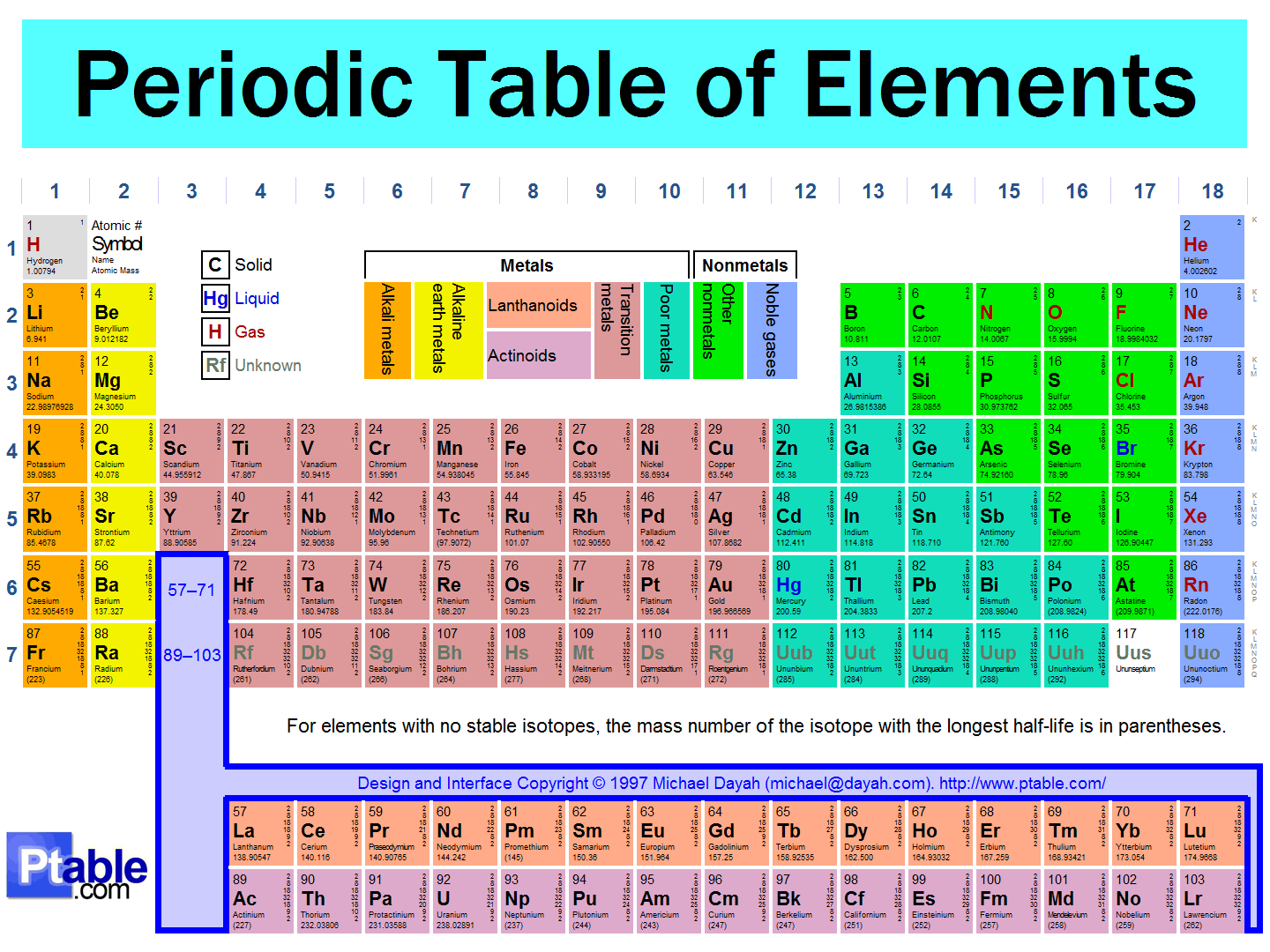
What is the atomic mass of Neon?

a)

10

b)

20

c)

30

19.
These will determine what element an atom is. 
a)
number of neutrons
b)
number of electrons
c)
number of atoms 
d)
number of protons 
20.
What are the 3 subatomic particles that make-up the atom?
a)
protons, neutrons, and isotopes
b)
neutrons, isotopes, and electrons
c)
positives, negatives, and electrons
d)
protons, neutrons, and electrons
21.

What does the nucleus of an atom contain?

a)

Electrons and neutrons

b)

Protons and neutrons

c)

Neutrinos and positrons

d)

Electrons and megatrons

22.

The vertical (up and down) columns in the Periodic Table are called

a)

groups

b)

towers

c)

periods

d)

atomic numbers

23.
Sodium (Na) is found in period 
a)
3
b)
2
c)
4
d)
1
24.
Sodium (Na) is found in group 
a)
1
b)
2
c)
3
d)
4
25.
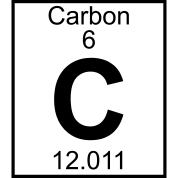
What does 12.011 represent?
a)
atomic mass
b)
atomic number
c)
element name
d)
chemical symbol 
26.

The horizontal (side to side) rows in the Periodic Table are called

a)

groups

b)

families

c)

periods

d)

atomic numbers

27.
An element's identity is determined by the number of
a)
electrons.
b)
protons.
c)
neutrons.
d)
valence.
28.
All matter is made of .....
a)
energy 
b)
atoms 
c)
air
d)
chemistry
29.
The atomic number of an element tells the number of _____ in the nucleus of an atom of that element.
a)
protons
b)
neutrons
c)
electrons
d)
isotopes
30.
Which is an electron?
a)
A
b)
B
c)
C
31.
Which is a proton?
a)
A
b)
B
c)
C
32.
Which is a neutron?
a)
A
b)
B
c)
C
33.
An atom of the element with atomic number 6 always has _____.
a)
six protons in its nucleus
b)
an atomic mass of six
c)
more than six neutrons
d)
six electron clouds