wayground logo

Free Printable Worksheets

Font size

S
M
L
XL
Worksheets

Q1 Task 2 Review

Total questions: 60

Worksheet time: 1hrs 23mins

Name
Class
Date
1.
What is true about thematic statements?
a)
It is that same as a subject.
b)
It is the idea the author wishes to convey abut a subject.
c)
It is the same as the moral of the story.
d)
There is only one theme per story.
2.
Which of the following is an example of THEME?
a)
Carry your laptops with two hands at all times.
b)
Cereal is the healthiest food you can eat.
c)
How much wood a woodchuck could chuck if a woodchuck could chuck wood.
d)
Life is short; make the most of it.
3.
Nature's first green is gold,
Her hardest hue to hold.
Her early leaf's a flower; 
But only so an hour.
Then leaf subsides to leaf,
So Eden sank to grief,
So dawn goes down to day
Nothing gold can stay. 
What is the central theme of this poem?
a)
Nature and man
b)
Innocence cannot last
c)
Sunsets and sunrises are beautiful
d)
Nature and beauty
4.
You can often infer the theme of a piece of literature by ...
a)
evaluating how a character has changed
b)
sharing a character's experience
c)
determining how the conflict has resolved
d)
ALL of the above
5.
A theme should be a statement, not just one word. 
a)
TRUE
b)
FALSE
6.

Which of the following is an example of theme?

a)

Love

b)

Don't forget to feed your gerbil.

c)

If you stay up all night playing video games, you will be tired.

d)

Sometimes you have to face your fears in order to conquer them.

7.

A story can have more than one theme.

a)

True

b)

False

8.

You and your friend found two different themes. You can both be right if

a)

Your teacher is nice

b)

Bothe themes have the same subject

c)

The author agrees with you

d)

You both have evidence to support them

9.

Characterization is

a)

the central message in a story

b)

the problem in a story

c)

the process by which a writer reveals a character's personality and qualities
10.
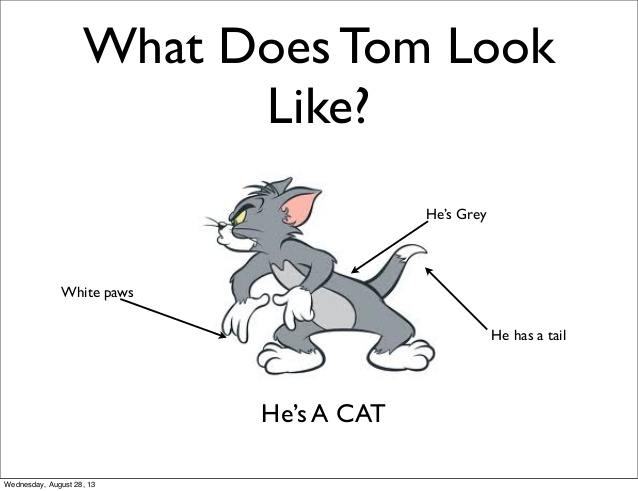
If the author directly tells you what the character is like, that is:
a)
direct characterization
b)
indirect characterization
11.
If the author shows you what the character is like and you have to infer, that is
a)
direct characterization
b)
indirect characterization
12.
Which of the following is an example of direct characterization?
a)
He tapped his foot anxiously.
b)
"I wouldn't  trust that man," said Ma.
c)
Frank was a shy, quiet person.
d)
Every time he earned a high grade, he would hang the test on his wall.
13.
Which of the following is an example of indirect characterization?
a)
Marcia was a good listener and wonderful friend.
b)
Marcia felt the knot in her stomach grow when she saw the number of questions on the test, and she tugged her hair anxiously. 
c)
Marcia was a nervous person.
d)
Marcia was an optimist who always believed the best about people.
14.

What can you use to figure out what a character’s traits are?

a)

what the character says

b)

what the character thinks

c)

how other characters react to the character

d)

all of the above

15.

True or False: Characters can only be humans.

a)

True

b)

False

16.
The character, thing, or event which is opposing the main character is...
a)
protagonist
b)
antagonist
c)
plankton
d)
villian
17.
The main character in a story is the...
a)
Protagonist
b)
Antagonist
c)
Your favorite character
d)
Most hated character
18.
Characterization is the process of revealing character traits. 
a)
True
b)
False
19.
A character that has many different sides, and is fully developed is...
a)
the antagonist
b)
the protagonist
c)
round
d)
flat
20.
A character that, has few traits and is easily described is...
a)
the antagonist
b)
the protagonist
c)
round
d)
flat
21.
Static Characters...
a)
do not change during the story
b)
have little or no detail
c)
have lots of detail
d)
change during the story
22.

What kind of character can pretty much be summed up in one adjective (like funny or mean)?

a)

dynamic

b)

static

c)

round

d)

flat

23.
Alex shut the lid to his laptop with a loud clap.  Some of the people sitting at the tables near him looked up from their books and gave him annoyed looks.  Alex realized that he had disturbed them and held up his hand apologetically.  The librarian turned toward him and shushed him loudly, perhaps louder than the noise that he had made.  Alex put the laptop in his bag and began walking toward the door.  He held his head down low.
Which of the following choices is evidence that the setting is a library?
a)
Some of the people sitting at the tables near him looked up from their books and gave him annoyed looks.
b)
Alex shut the lid to his laptop with a loud clap
c)
Alex realized that he had disturbed them and held up his hand apologetically. 
d)
The librarian turned toward him and shushed him loudly, perhaps louder than the noise that he had made.
24.
In the passage below, what can you infer about Randolph using clues from the setting?
One summer day, Randolph the Bright slept alone in his room in the castle at Reddington. The light of the morning seeped slowly through his curtains. Randolph blinked against the day, smiling as his dream came to a peaceful conclusion.
a)
Randolph is does not like mornings.
b)
Randolph is a prince or king. 
c)
Randolph lives alone. 
d)
The setting doesn't give me any clues about Randolph. 
25.
Which description of a setting would best create a mood of loneliness for a story?
a)
"The sun was bright, and the breeze was warm in the park. In the distance, there was the pleasant noise of children laughing."
b)
"The restaurant was packed. The waitress balanced three dishes on her arm and moved carefully around the large, round tables. Everyone's plates were full."
c)
"At the amusement park, the ticket counter hadn't opened yet. It was still too early. But the warm smell of hot dogs and pretzels was already filling the air with the promise of fun."
d)
"The sky was gray that cool November afternoon in the empty playground. The swings were rusted. The wood was rotted. There was silence except for the wind blowing through the dead leaves."
26.
The time, place and duration of a literary work  is the _______________________.
a)
climax
b)
falling action
c)
setting
d)
plot
27.
Biloxi, Mississippi, 1949 would be an example of _________________________.
a)
theme
b)
setting
c)
plot
d)
conflict
28.
Setting is defined as the ________and________of the story. 
a)
tone and place
b)
tone and plot
c)
time and place
d)
time and plot
29.
Language that appeals to the reader's 5 senses is called: 
a)
poetry
b)
setting
c)
imagery
d)
mood
30.
What do you think the mood of this setting would be?
a)
sad
b)
excited
c)
scary
d)
comfy
31.
How does imagery help us understand the story?
a)
It doesn't
b)
By expressing how the author is feeling
c)
Imagery helps us to see, touch, taste, smell, and feel what the characters feel and see
d)
By telling the mood
32.
True or false: Setting can impact the story by creating conflict.
a)
True
b)
False
33.
Which part of the plot
introduces the characters?
a)
Exposition
b)
Rising Action
c)
Climax
d)
Falling Action
34.
Choose the two words that best complete the sentence.
During the exposition, it is important to introduce the ________ and the ________.
a)
characters, setting 
b)
characters, falling action 
c)
climax, conflict 
d)
conflict, resolution
35.
What is the definition of plot?
a)
The lesson in the story
b)
The sequence of events in the story
c)
The turning point of the story
d)
The conflict in the story
36.
Which part of the story is represented by this blue blob?
a)
exposition
b)
rising action
c)
falling action
d)
resolution
37.
Which part of the story is represented by this blue blob?
a)
climax
b)
rising action
c)
falling action
d)
resolution
38.
Which part of the story is represented by this blue blob?
a)
climax
b)
exposition
c)
falling action
d)
resolution
39.
Which part of the story is represented by this blue blob?
a)
exposition
b)
rising action
c)
climax
d)
resolution
40.
Which of the following is correct? 
a)
Jane said, "I really want to eat Cheetos."
b)
Jane said, "I really want to eat Cheetos".
c)
Jane said "I really want to eat Cheetos."
d)
Jane said, "I really want to eat Cheetos,"
41.
Put __________________ around a speaker's exact words.
a)
commas
b)
speaker tags
c)
quotation marks
d)
An indent
42.

Which sentence uses dialogue and punctuation correctly?

a)

The mother remarked, "Don't forget to clean your room!"

b)

The mother remarked "Don't forget to clean your room!"

c)

The mother remarked, "don't forget to clean your room!"

d)

The mother remarked", Don't forget to clean your room!"

43.
_______________ the first word of a quotation and first word of each sentence.
a)
Indent
b)
Capitalize
c)
Underline
d)
Delete
44.
Dialogue is
a)
a conversation between/amongst characters
b)
a verb
c)
when the narrator tells you what is happening in a story
d)
boring
45.
If you're writing prose that contains dialogue, when must you begin a new paragraph?
a)
whenever a different character begins speaking
b)
at the end of every sentence
c)
before every speech tag
d)
after every comma
46.
In which of the following works might you find dialogue presented in word balloons?
a)
Comic Book
b)
Fiction Book
c)
Poem
d)
News Paper
47.
What does the word "denotation" mean?
a)
The dictionary definition of a word.
b)
The way a word makes you feel.
c)
The word choice of the author.
d)
An explosion.
48.
What does the word "connotation" mean?
a)
The dictionary definition of a word.
b)
The way a word makes you feel.
c)
The word choice of the author.
d)
A connection between two different words.
49.
Choose the word with the negative connotation.
a)
chat
b)
gossip
c)
news
d)
report
50.
Choose the word with the positive connotation.
a)
scrawny
b)
slender
c)
underweight
d)
gaunt
51.
Which of the following words has the strongest connotations about being cold?
a)
cool
b)
chill
c)
wintery
d)
frigid
52.

I recognized the familiar smell of my roommate's cooking. If you change the word smell to stench, the word now has a ____________ connotation.

a)

positive

b)

negative

53.
Which of the following has the most positive connotation?
a)
carefree
b)
lazily
c)
hastily
54.

Consider the following sentences. I hear my brother talking on the phone with his girlfriend. I hear my brother chatting on the phone with his girlfriend. How does the connotation of the word chatting in the second sentence convey the author’s purpose?

a)

It implies the conversation is not serious.

b)

It implies that the conversation is funny.

c)

It implies anger or resentment in the conversations.

d)

It implies the conversation is very serious.

55.
Which word has a neutral connotation?
a)
Mansion
b)
Residence
c)
Shack
56.
Referring to someone's house as a "shack" would have a __________ connotation.
a)
positive
b)
negative
57.

What's the difference between theme and central idea?

a)

There is no difference.

b)

Theme is the life message in a story, while central idea is the key point conveyed in an informational text.

c)

Central idea is the life message in a story, while theme is the key point conveyed in an informational text.

d)

They are both life lessons, but a theme is also a fact.

58.

What is the central idea of the following paragraph?


Wolverines are medium sized mammals. They weigh no more than 50 lbs. Yet they have earned their reputation for ferocity by killing prey many times their size. But why do they get in so many fights? The reason why wolverines have so many conflicts with other animals (including wolves, cougars, and even bears) is probably because of the wolverine's preferred hunting style. Rather than chasing down or tricking its prey like most hunters, the wolverine prefers to take its meals directly from other hunters. So while a polar bear or a lone wolf might be enjoying a hard earned carcass, a hungry wolverine may try to take his lunch. As you might imagine, this style of hunting get the wolverine in plenty of fights.

a)

Wolverines are medium sized animals who get very hungry.

b)

Despite their size, Wolverines are ferocious animals.

c)

Wolverines have a aggressive hunting style.

59.
People often refer to taxes in terms of their being much too high. In reality, they are probably even higher than you think, because in addition to the federal income tax we are now studying, there are many other Federal, State, and local taxes, including sales taxes, inheritance taxes, state income taxes, personal property taxes, real estate taxes, and others. These are just some of the most obvious ones. 
a)
Taxes are much too high. 
b)
We pay more taxes than we may realize. 
c)
Inheritance taxes and real estate taxes are unfair. 
d)
Some taxes are hidden. 
60.

In complex texts, the central idea...

a)

is stated and can be quoted directly from the text.

b)

is implied, not stated, meaning you must rely on clues in the text to find it.

c)

is not directly said by the author, meaning you must draw conclusions.

d)

is said in the title, and therefore, copying the title is a great way to find the central idea.