wayground logo

Free Printable Worksheets

NEW

Font size

S
M
L
XL
Worksheets

EXAM REVIEW: PHYSICAL GEOGRAPHY UNIT EXAM

Total questions: 60

Worksheet time: 30mins

Name
Class
Date
1.
What is low land between hills or mountains called?
a)
hill
b)
mountain
c)
stream
d)
valley
2.
What body of water flows into oceans?
a)
lake
b)
sea
c)
river
d)
pond
3.
Which landform is surrounded by water on all sides?
a)
strait
b)
canyon
c)
island
d)
sea
4.
What's the landform with water on three sides?
a)
strait
b)
ocean
c)
sea
d)
peninsula
5.
What is any land that meets the ocean?
a)
coast
b)
ocean
c)
strait
d)
sea
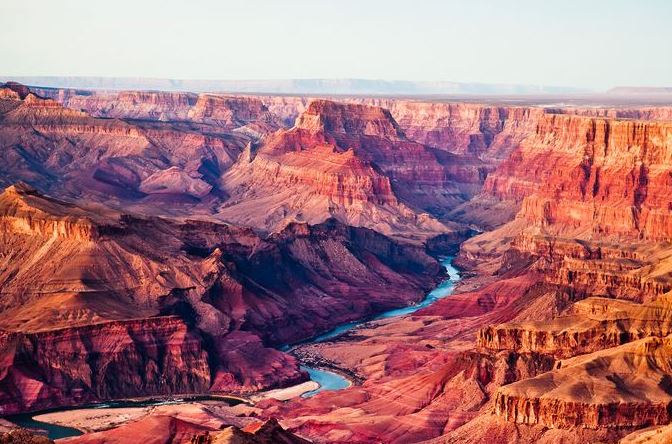
6.
What is this landform?
a)
canyon
b)
valley
c)
hill
d)
mountain
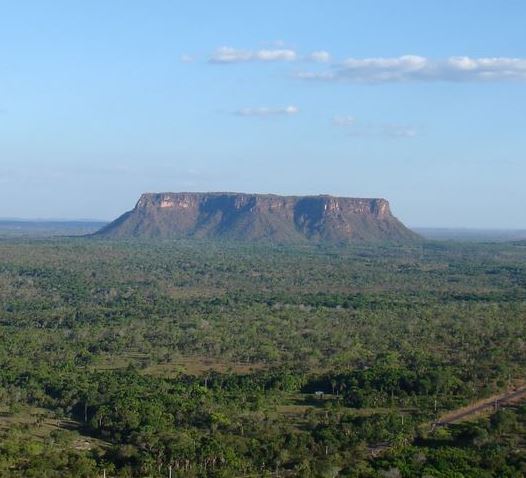
7.
What is this landform?
a)
mesa
b)
mountain
c)
hill
d)
cliff
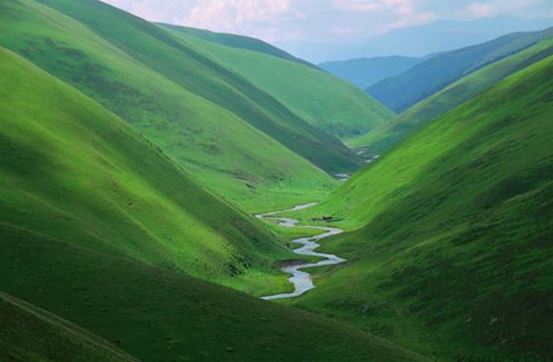
8.
What is this landform?
a)
valley
b)
canyon
c)
hill
d)
mountain
9.

What is the water cycle?

a)

the 3 forms of water

b)

the movement of water on, above, or below the surface of the Earth

c)

when water melts

d)

when clouds form

10.

Snow, sleet, hail, and rain are all examples of ________________.

a)

evaporation

b)

condensation

c)

accumulation

d)

precipitation

11.

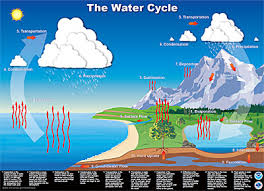
What follows evaporation during the water cycle? How does this occur?

a)

Water evaporates into water vapor

b)

Water vapor condenses and forms a cloud

c)

Water precipitates to the ground

d)

Water runs down into the hydrosphere
12.
What is it called when plants give off water vapor as a waste product?
a)
condensation
b)
evaporation
c)
sublimation
d)
transpiration
13.
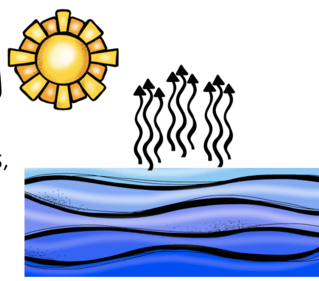
Evaporation happens when the sun ___________ water and turns it into vapor.
a)
cools
b)
heats up
c)
freezes
d)
lights up
14.
During which stage do clouds form?
a)
condensation
b)
evaporation
c)
precipitation
15.
What is climate?
a)
What's happening in space at a time and place.
b)
What's happening in our atmosphere at a time and place
c)
The average weather over many years
d)
The average temperature over many years.
16.
What is weather?
a)
What's happening in space at a time and place.
b)
What's happening in our atmosphere at a time and place.
c)
The average weather over many years
d)
The average temperature over many years.
17.
Antarctica is cold all the time. What is it's climate?
a)
Tropical
b)
Polar
c)
Arid/Dry
d)
Temperate
18.
Which of the following does NOT have an affect on a region's climate?
a)
Large bodies of water
b)
Latitude
c)
Mountains
d)
Longitude
19.

A tropical climate in the US would be?

a)

Virginia

b)

New York

c)

Montana

d)

Florida

20.
A polar climate in the US?
a)
Virginia
b)
New York
c)
Maine
d)
Alaska
21.
Which sentence best describes the relationship between elevation and air temperatures?
a)
 LOWER elevation = COLDER temperatures
b)
HIGHER elevation = COLDER temperatures
c)
HIGHER elevations = WARMER temperatures
d)
There is no relationship
22.

Which zones are temperate zones?

a)

Zone C

b)

Zones B, C,

c)

ZONE C AND A

d)

ZONE B

23.

Which zone is the tropical zone?

a)

Zone B

b)

Zone C

c)

Zone D

d)

Zone E

24.

An enormous moving piece of the earth's lithosphere is a

a)

earthquake

b)

tsunami

c)

volcano

d)

tectonic plate

25.

As plates push together, one plate is forces under the other. As the bottom plate starts to melt, magma rises and forms volcanoes at the surface.

a)

Divergent

b)

Subduction

c)

Collision

d)

Transform

26.

A fracture in earth's crust is a

a)

tsunami

b)

fault

c)

Ring of Fire

d)

epicenter

27.

Where are most volcanoes found?

a)

Asia

b)

Australia

c)

near the center of tectonic plates

d)

near plate boundaries

28.

The Ring of Fire is

a)

a zone around the Pacific Ocean.

b)

a zone around the Atlantic Ocean.

c)

caused by tsunamis.

d)

part of the Richter scale.

29.

What is the shaking of the Earth’s crust caused by a release of energy?

a)

Earthquake

b)

Epicenter

c)

Fault

d)

Plate

30.

What is molten rock that has formed deep within the Earth?

a)

Hot Spot

b)

Magma

c)

Lava

d)

Volcano

31.

The Ring of Fire is made of what kind of plate movement?

a)

subduction zone

b)

convergent boundary

c)

divergent boundary

d)

transform boundary

32.

According to Wegener's hypothesis of continental drift,

a)

Earth's surface is made up of seven major landmasses

b)

the continents DO NOT move

c)

Earth is slowly cooling and shrinking

d)

the continents were once joined together in a single landmass

33.
_______ are formed when two continental plates collide.
a)
Mountain ranges
b)
Transform faults
c)
Rift valleys
d)
Volcanoes
34.

Plate movement is caused by ______________.

a)

the rotation of the Earth

b)

ocean tides

c)

convection currents in the mantle

d)

the moon's gravity

35.

The outermost layer of the Earth. It includes all dry land and the ocean floor

a)

Crust

b)

Mantle

c)

Core

d)

Volcano

36.
What is weathering?
a)
The process by which
water, ice, wind or gravity
moves fragments of rock
and soil.
b)
The process by which
water, ice, wind or gravity
deposit rock sediments
and soil in a new place.
c)
The breaking down of
Earth’s crust into smaller
and smaller pieces.
37.
The diagrams  shows a natural process that weathers rock.
 Which statement best explains why this process results in weathering?
a)
frozen water acts as a solute
b)
water expands when it freezes
c)
the mass of water increases when it freezes
d)
frozen water dissolves most types of rock
38.
What is mechanical weathering?
a)
Process through which rocks are physically broken into smaller pieces.
b)
Rocks are broken down through chemical changes.
c)
Rocks are worn away from acid in plant roots.
d)
Rocks broken down by machinery.
39.
How do plants weather rocks?
a)
during photosynthesis
b)
when roots grow into cracks of rocks and expand the rock
c)
when the plant moves water from the roots to the leaves
40.

These rocks were broken apart from the continuous freeze/thaw of water in the cracks of the rocks. This is an example of:

a)

cryofracturing

b)

acid rain

c)

permeability

d)

abrasion

41.
the process in which sediment particles are picked up and moved from one place to another
a)
mechanical weathering
b)
chemical weathering
c)
erosion
d)
deposition
42.
oxidation produces rust on some rocks containing iron
a)
chemical weathering
b)
mechanical weathering
c)
erosion
d)
deposition
43.
rock particles wear away rock
a)
mechanical weathering
b)
chemical weathering
c)
erosion
d)
deposition
44.

To locate exact places on the earth, one must look at

a)

the intersecting lines of latitude and longitude

b)

the lines of latitude only

c)

the lines of longitude only

d)

a neighboring area to describe the location

45.
What is the name of this line at 0 degrees latitude?
a)
Prime Meridian
b)
Equator
c)
North Pole
d)
South Pole
46.
What is the name of the line at zero degrees longitude?
a)
Equator
b)
Prime Meridian
c)
North Pole
d)
South Pole
47.

Latitude and longitude are measured in ________.

a)

inches

b)

feet

c)

degrees

d)

grams

48.
Which statement is correct?
a)
Australia is located in the Eastern and Souther Hemispheres 
b)
Asia is located in the Southern and Eastern Hemispheres
c)
North America is located in the Southern and Western Hemispheres
d)
South America is located in the Northern and Eastern Hemispheres.
49.

Which Hemisphere are both North America and South America found in?

a)

Western Hemisphere

b)

Eastern Hemisphere

c)

Southern Hemisphere

d)

Northern Hemisphere

50.
A _______________ is exactly half of the earth.
a)
Equator
b)
Hemisphere
c)
Tropic of Cancer
d)
Arctic Circle
51.
North America is ________________.
a)
4
b)
2
c)
1
d)
7
52.
Which number is Asia?
a)
4
b)
6
c)
3
d)
7
53.

The Pacific Ocean is _____________.

a)

2

b)

1

c)

4

d)

3

54.
This body of water is located between Mexico and Florida.
a)
Erie Canal
b)
Continental Divide
c)
Gulf of Mexico
d)
St. Lawrence River
55.

The Atlantic Ocean is _____________.

a)

2

b)

1

c)

4

d)

3

56.

Which number is South America?

a)

4

b)

2

c)

3

d)

7

57.

Which number is Africa?

a)

7

b)

2

c)

3

d)

5

58.

The part of a map that shows you direction (N, S, E, W) is called the:

a)

Compass Rose

b)

Key

c)

Title

d)

Scale

59.

The part of a map (red arrow) that explains that map's symbolism is called the:

a)

Compass Rose

b)

Key

c)

Title

d)

Scale

60.

Which zones are polar zones?

a)

Zone A

b)

Zones B, C,

c)

ZONE C AND A

d)

ZONE B