
NEW
Font size
S
M
L
XL
 Worksheets
french & indian war
Total questions: 25
Worksheet time: 29mins
Name
Class
Date
1.
The land fought over was the
a)
Ohio River Valley
b)
Appalachian Mountains
c)
Florida
d)
Canada
2.
Both French & British set up ____________ in the Ohio River Valley that led to conflict.
a)
forts
b)
communities
c)
farms
d)
traps
3.
The French and Indian War included
a)
French, British, Native Americans
b)
French, British, African Americans
c)
Ohio, Spain, Canada
d)
Ohio, Native Americans, French
4.
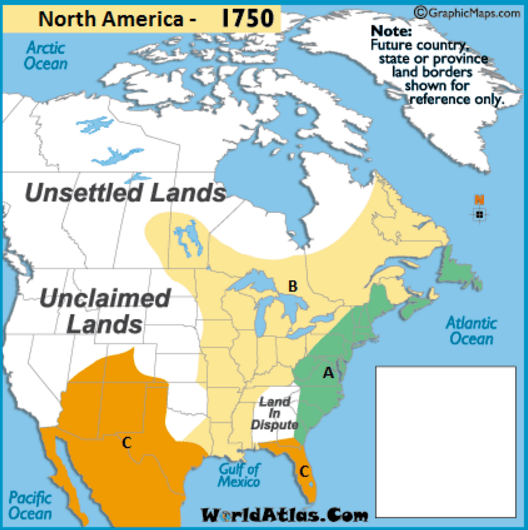
Which European power controlled territory A?
a)
England
b)
France
c)
Spain
5.
Which European power controlled territory B?
a)
England
b)
France
c)
Spain
6.
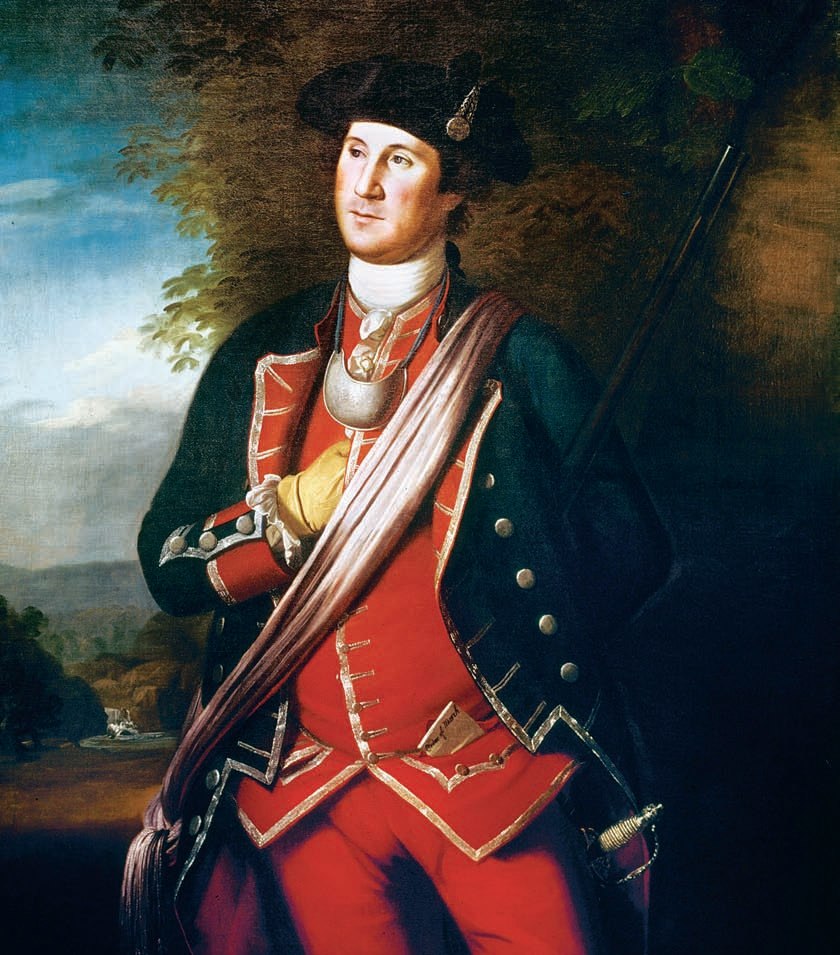
Who was the young military leader from Virginia who was sent to western Pennsylvania to fight the French?
a)
William Pitt
b)
Edward Braddock
c)
King George II
d)
George Washington
7.
What the result of the French and Indian War
a)
France lost its territory in North America to the British
b)
France took over all of Canada
c)
Native-Americans succesfully kicked out the British and French from North America
d)
France defeated the British
8.
Who fought in the French and Indian War?
a)
French vs. Indians
b)
British vs. French
c)
British vs. French and Indians
d)
Indians vs. British
9.
Who won the French and Indian War?
a)
England
b)
France
c)
Indians
d)
Spain
10.
The French and Indian War, unfair taxes in the colonies, along with many other events all led to what eventually?
a)
World War I
b)
American Revolution
c)
World War II
d)
Civil War
11.

What was stated in the Proclamation of 1763?
a)
Colonists were banned from settling west of the Appalachian Mountains.
b)
Colonists were encouraged to begin settling west of the Appalachian Mountains.
c)
The Proclamation ended the French and Indian War.
d)
The Proclamation proclaimed independence for the American colonists.
12.

In general, how did the colonists view the Proclamation of 1763?
a)
They felt that it supported their freedom and they supported it.
b)
They felt it was an infringement on their freedom of movement and were angry about it.
c)
They were not involved so it did not affect them.
d)
They supported it because they believed the King had the AUTHORITY to make this law.
13.

What was the purpose of the Treaty of Paris in 1763?
a)
The purpose of the Treaty of Paris in 1763 was to end the Revolutionary War.
b)
The purpose of the Treaty of Paris in 1763 was to create an agreement between Chief Pontiac and the British colonists.
c)
The purpose of the Treaty of Paris in 1763 was to end the French and Indian War.
d)
The purpose of the Treaty of Paris in 1763 was to recognize America as a free and independent nation.
14.
This created a temporary border at the Appalachian Mountains, restricting the movement of the colonists
a)
Appalachian Line of 1769
b)
Proclamation of 1763
c)
Northwest Ordinance of 1767
d)
Colonial Border of 17
15.

The first political cartoon produced in America was created by whom?
a)
George Washington
b)
Benjamin Franklin
c)
Samuel Adams
d)
Paul Revere
16.
The main source of income for the French was fur trading.
a)
True
b)
False
17.
George Washington fought for the British in the French and Indian War
a)
True
b)
False
18.

What do the sections of the snake represent?
a)
French forts
b)
French colonies
c)
British cities
d)
British colonies
19.
Which answer best explains what the image means? (its message)
a)
The British colonies are like sneaky snakes and should be cut up and destroyed.
b)
This image warns British colonist they must unite together to defeat the French, or die from the French.
c)
The British colonies were actually divided into 10 different sections.
d)
This is how parts of a snake are labeled.
20.
This plan was an attempt to unite all British colonies under one government as a way to defeat the French.
a)
Proclamation of 1763
b)
Treaty of 1763
c)
Albany Plan of Union
d)
Pennsylvania Plan
21.
Why did the Albany Plan of Union fail?
a)
Not a single colony was willing to give up any of its power.
b)
There was not enough money to support the plan.
c)
They couldn't decide who would be in charge.
d)
The war ended before putting the plan in action.
22.

After the war, who controlled most of Canada and land west of the Mississippi River?
a)
Spain
b)
France
c)
Britain
23.
After the war, who controlled most of Canada and land east of the Mississippi River?
a)
Spain
b)
France
c)
Britain
24.
After the war, Who controlled Florida?
a)
Spain
b)
France
c)
Britain
25.
What fort did George Washington attack that officially started the French and Indian War?
a)
Fort Bragg
b)
Fort Pitt
c)
Fort Duquesne
d)
Fort Delaware
Reset

