NEW
Font size
 Worksheets
Landforms - SC.6.E.6.2
Total questions: 25
Worksheet time: 13mins

Jane was looking at a cliff made up of several layers of different kinds of rock. Near the top of the cliff, she found a fossilized bone. Near the middle, she found the fossil of a fern. At the bottom, she found a fossilized shell.
What process was critical in the formation and preservation of the fossils?
plate tectonics
deposition
chemical weathering
abrasion
Many processes help to shape Earth’s surface. Starting with a rock, in what order would you expect the following Earth processes to occur?
deposition, eruption, weathering
erosion, weathering, deposition
eruption, erosion, weathering
weathering, erosion, deposition

Water is found in many places on Earth. Consider the rivers, streams, and ocean in the illustration.
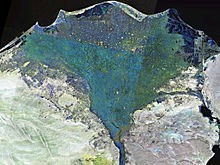
What landform will be created when sediments carried by the river are deposited near the river’s mouth?
an alluvial fan
delta
a sea cave
a sea cliff
Weathering and erosion are two processes that shape Earth’s surface. Which of the following sets of factors causes both weathering and erosion?
moving water, plants, wind
glaciers, waves, wind
acids, tree roots, waves
acids, plants, ice
Marsha places a sealed plastic bottle of water in a freezer. The next day she discovers that the water has frozen and split the sides of the bottle. What process does this phenomenon best represent?
chemical weathering
deposition
mountain building
physical weathering
Sand dunes form along some coastlines. Which factor is most responsible for forming sand dunes?
rain
wind
water
ice
Plateaus and plains are both landforms. How is a plateau different from a plain?
The elevation of a plateau is higher than that of the surrounding area.
The elevation of a plateau varies greatly from place to place
The area of a plateau is greater than that of a plain.
The area of a plateau is greater than that of a plain.
Many thousands of years ago, glaciers covered large areas of Earth’s surface. Glaciers are large blocks of ice that flow slowly over the land. Portions of the ice melted and refroze many times over the years. Which explanation best describes how glaciers contributed to the formation of coastal plains?
Water from the melting ice elevated the shoreline, forming plateaus.
Water from the melting ice flooded the plains, causing plants to die
Water from the melting ice smoothed sediments along the shore.
Water from the melting ice deposited sand on the ocean floor.
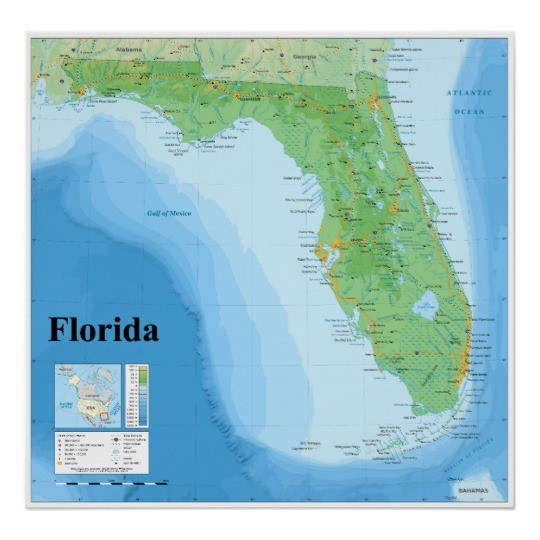
The state of Florida is a peninsula. What type of landform borders the Florida peninsula on three sides?
a river
a delta
a coastline
a mountain

Earth’s surface has many different landforms. Look at the illustration.
Which number indicates a dune?
1
2
3
4