
 Worksheets
8th grade - Quiz #6
Total questions: 15
Worksheet time: 14mins
According to Newton's second law, if you increase the force applied to an object : (De acuerdo con la segunda ley de Newton, si aumenta la fuerza aplicada a un objeto:)
it accelerates more (acelera más)
it doesn't move (no se mueve)
you get more inertia (tienes más inercia)
it decelerates (se desacelera)
A 20 kg bike accelerates at 10 m/s2. What was the force? (Una bicicleta de 20 kg acelera a 10 m / s2. ¿Cuál fue la fuerza?)
25 Newtons
20 Newtons
200 Newtons
10 Newtons
According to Newton’s first law of motion, a moving object that is not acted on by an unbalanced force will (De acuerdo con la primera ley de movimiento de Newton, un objeto en movimiento sobre el que no actúe una fuerza desequilibrada)
remain in motion (permanecer en movimiento)
eventually come to a stop (inalmente detenerse)
change its momentum (cambiar su impulso)
accelerate (acelerar)

What law? (Que ley)
1st (Primero)
2nd (2do)
3rd (3ro)
A 20 kg bike accelerates at 10 m/s2. what was the force (Una bicicleta de 20 kg acelera a 10 m / s2. cual era la fuerza)
25
200 N
20 N
10 N

In the picture, the vehicle will move because of... (En la imagen, el vehículo se moverá debido a ...)
Newton's 1st Law (Primera Ley de Newton)
Newton's 2nd Law (Segunda ley de Newton)
Newton's 3rd Law (3ra ley de Newton)
Newton's 9th Law (Novena Ley de Newton)

In the picture, the blocks are flying out of the truck based on which of Newton's laws? (En la imagen, ¿cuáles de las leyes de Newton salen volando del camión?)
Newton's 1st Law (Primera Ley de Newton)
Newton's 2nd Law (Segunda Ley de Newton)
Newton's 3rd Law (Ley 3 de Newton)
Newton's 6th Law (Ley 6 de Newton)
What is a PUSH or PULL of an object? (¿Qué es un PUSH o PULL de un objeto?)
Motion (movimiento)
Force (fuerza)
Friction (fricción)
Gravity (gravedad)
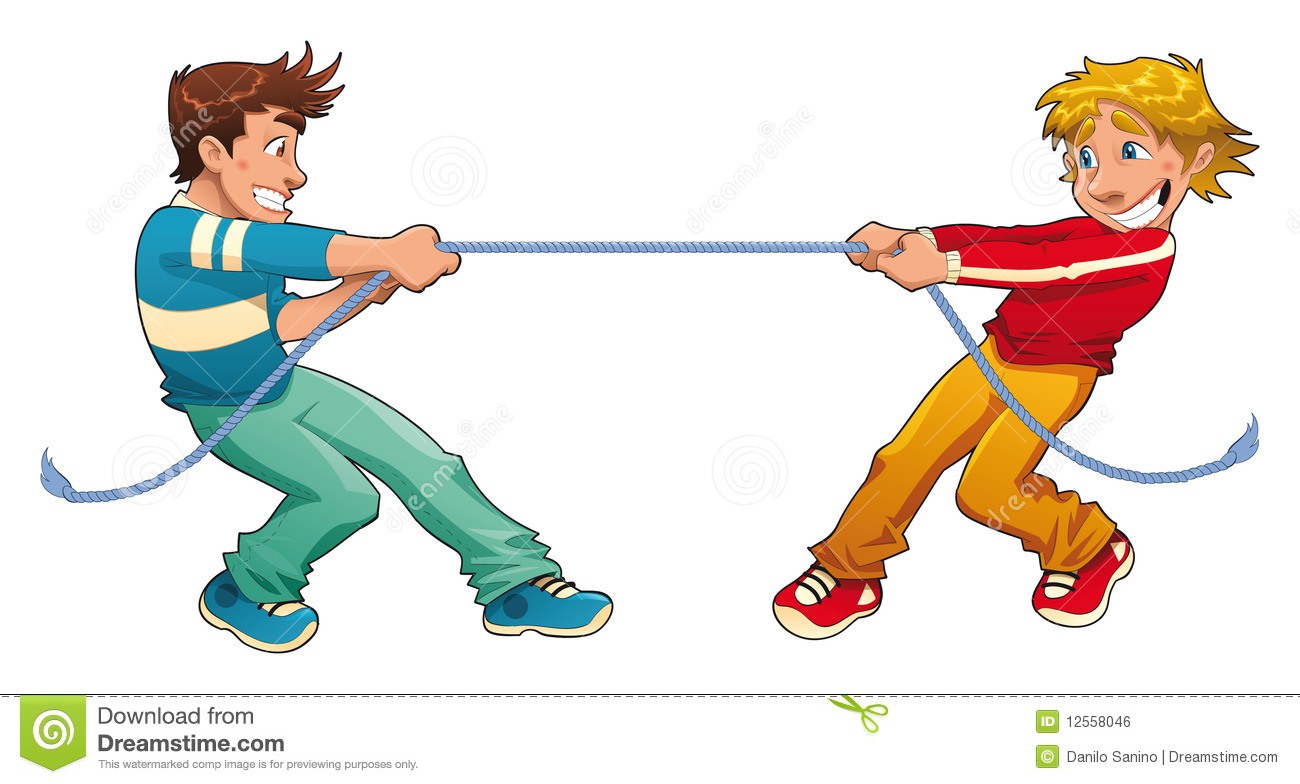
If these boys are pulling with the same amount of force. What will happen? (Si estos muchachos están tirando con la misma fuerza. ¿Lo que sucederá?)
The boy in blue will win. (El chico de azul ganará.)
They will not move at all. (No se moverán en absoluto.)
The boy in red will win. (El chico de rojo ganará.)
Both will fall down. (Ambos se caerán.)

The formula
? = mass x acceleration
or
? = m x a
is used to find
(La formula
? = masa x aceleración
o
? = m x a
se usa para encontrar)
Force (fuerza)
Velocity (velocidad)
Momentum (impulso)
Gravity (gravedad)
For every action, there is an equal and opposite reaction. (Para cada acción, hay una reacción igual y opuesta)
Newton's
1st
Law of Motion
(De Newton
Primero
Ley de movimiento)
Newton's
2nd
Law of Motion
(De Newton
2do
Ley de movimiento)
Newton's
3rd
Law of Motion
(De Newton
3ro
Ley de movimiento)
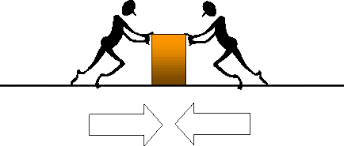
If an object is stationary (not moving) the forces acting upon it are _____________ (Si un objeto es estacionario (no se mueve), las fuerzas que actúan sobre él son _____________)
unbalanced (desequilibrado)
weak (débiles)
balanced (equilibrado)
Hulk Smash! (¡Hulk Smash!)
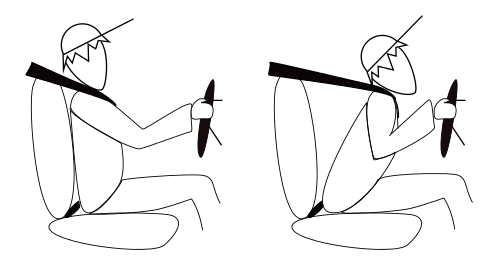
What Newtons law does this picture represent (¿Qué ley de Newton representa esta imagen?)
Newtons 2nd law
Law of gravity
Newtons 1st law
Newtons 5th law

What do each of the letters correctly represent? (¿Qué representan cada una de las letras correctamente?)
Funny, Monkeys, Arrive (Divertido, monos, llegar)
Force, Mass, Acceleration (Fuerza, masa, aceleración)
Free, Mass, Access (Gratis, misa, acceso)
Force, Magnesium, Arsenic (Fuerza, Magnesio, Arsénico)
Which is always a contact force? (¿Cuál es siempre una fuerza de contacto?)
electric (eléctrico)
friction (fricción)
magnetic (magnético)
gravity (gravedad)

