
 Worksheets
Scientific Method
Total questions: 20
Worksheet time: 37mins
Which of the following is NOT a scientific fact about a rabbit?
Rabbits must eat food in order to survive.
The rabbit is 8cm long.
The rabbit has white fur with black spots.
Rabbits make good pets.
A student studied 3 identical plants. One plant was placed in direct sunlight. One plant was placed under a lamp. One plant was placed in a dark closet. What question could be answered by this scientific investigation?
How do different kinds of plants respond to light?
Which types of plants grow best in direct sunlight?
How well do identical plants grow under different lighting conditions?
How often fo you need to water plants growing in different amounts of light?
Which statement is an opinion?
Plants take in carbon dioxide and give off oxygen
Plants are very pretty in the summer.
Plants take in water through their roots.
Some plants grow in dry soil.
A students wants to find out how much faster water heats up when it is in a copper pot than when it is in a steel pot. Which set of tools will be most useful for this investigation?
hot plate, camera, hand lens
thermometer, hot plate, stopwatch
ruler, microscope, camera
thermometer, hand lens, compass
Which instrument or tool would you use to measure how fast you can walk up 200 stairs?
stopwatch
telescope
meterstick
balance scale
A science class is recording the air temperature outside their classroom. Which instrument should they use?
calculator
stopwatch
meter stick
thermometer
The leaves of a potted marigold are drooping, and the soil is dry. Based on this information, which is the best explanation for what is wrong with the plant? The plant probably needs-
more fertilizer
more water
more sunlight
a bigger pot
A girl finds a rock in the park next to her school. Which tool would most help her find out what the rock is made up of?
hand lens
binoculars
a telescope
a thermometer
The leaves of Gina's plant always face the Sun. Gina says this is because the leaves are happier when they are looking at the Sun. Which of these is a better explanation for Gina's observation?
Leaves receive more oxygen if they face the sun.
Plants that face the Sun have deeper roots.
Plants absorb more water when they face the sun.
Leaves that face the Sun receive more of the Sun's rays.
A girl is baking sugar cookies. She puts 20 balls of dough in a metal pan and 20 balls of dough in a glass pan. She notices that the cookie dough in the glass pan takes 8 minutes to bake and 12 minutes for the metal pan. What can the girl conclude from her observations.
Her oven doesn't like metal pans.
Metal pans are better for baking.
Glass pans are better for baking.
Both pans burned the cookies.
What is the first step of the scientific method?
make data
do research
make observations / ask a question
create a hypothesis
conclusion
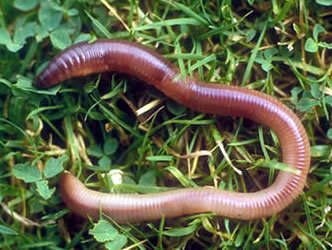
Angela’s experiment proved that earthworms move away from light. Which step of the scientific method is this?
recognize a problem
test the hypothesis with an experiment
form a hypothesis
draw conclusions
To make observations you use your _______.
senses
feet
smile
experience

