
 Worksheets
Nitrogen and Carbon Cycle
Total questions: 69
Worksheet time: 36mins
What converts nitrogen gas into a usable form for plants and animals?
bacteria
rain
fungi
car exhaust
The process in which nitrogen circulates and is recycled is called
The nitrogen cycle
The carbon cycle
The water cycle
The phosphorus cycle
Organisms that need nitrogen to survive.
only plants
only animals
only bacteria
all living things
How is nitrogen "fixed" into a usable form for plants?
Through action of bacteria only
Through lightning only
Through action of bacteria and lightning
Through photosynthesis
How do animals get the nitrogen they need?
From the air they breathe
From the water they drink
From the food they eat
From the sun
Gas that makes up 78% of our atmosphere.
Oxygen
Nitrogen
Hydrogen
Carbon Dioxide
What is the process of combining nitrogen gas with other elements to make nitrogen into usable compounds?
nitrogen composition
nitrogen fixation
ammonia
denitrification
What process occurs when dead plant and animal matter decomposes and nitrogen is released back into the atmosphere?
Assimilation
Fixation
Ammonification
Denitrification
What is the formula for atmospheric nitrogen?
N
N2
NH3
NO3
Plants and animals cannot use nitrogen directly from the air.
True
False
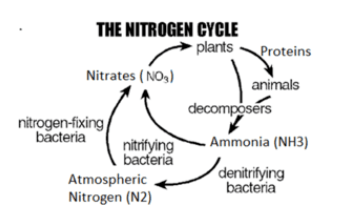
According to this diagram, plants use nitrogen to make _________________________
bacteria
animals
proteins
decomposers
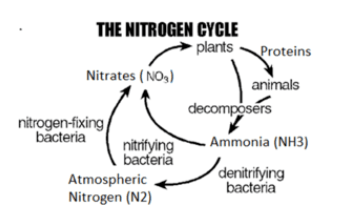
According to this diagram, plants absorb
nitrates
nitrogen fixing bacteria
animals
decomposers
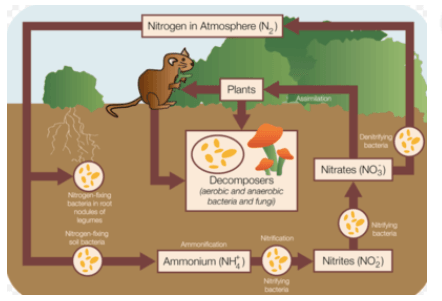
A correct path that nitrogen could take would be
air -> animals -> plants -> bacteria
animals -> air -> bacteria -> plants
bacteria -> air -> plants -> animals
air -> bacteria -> plants -> animals
Bacteria fix nitrogen from the atmosphere into a form plants can use.
True
False
Bacteria create a form of nitrogen that animals can use directly.
True
False
What do free living bacteria in the soil do?
Make clouds
Turn atmospheric nitrogen into nitrates
Make carbon dioxide for plants to go through photosynthesis
Help plants take in water
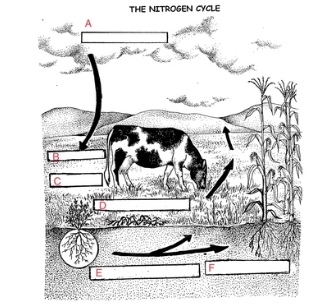
In the nitrogen cycle, what does label A in the diagram represent?
Gas
Clouds
Carbon dioxide in the atmosphere
Nitrogen in the atmosphere
All plants have nitrogen fixing bacteria in their roots.
True
False


How does carbon in a grass plant get into a lion?
The lion eats an antelope that ate the grass
Carbon from grass doesn't end up in a lion.
The lion absorbs the carbon given off by transpiration
The lion breathes in carbon given out by the plant
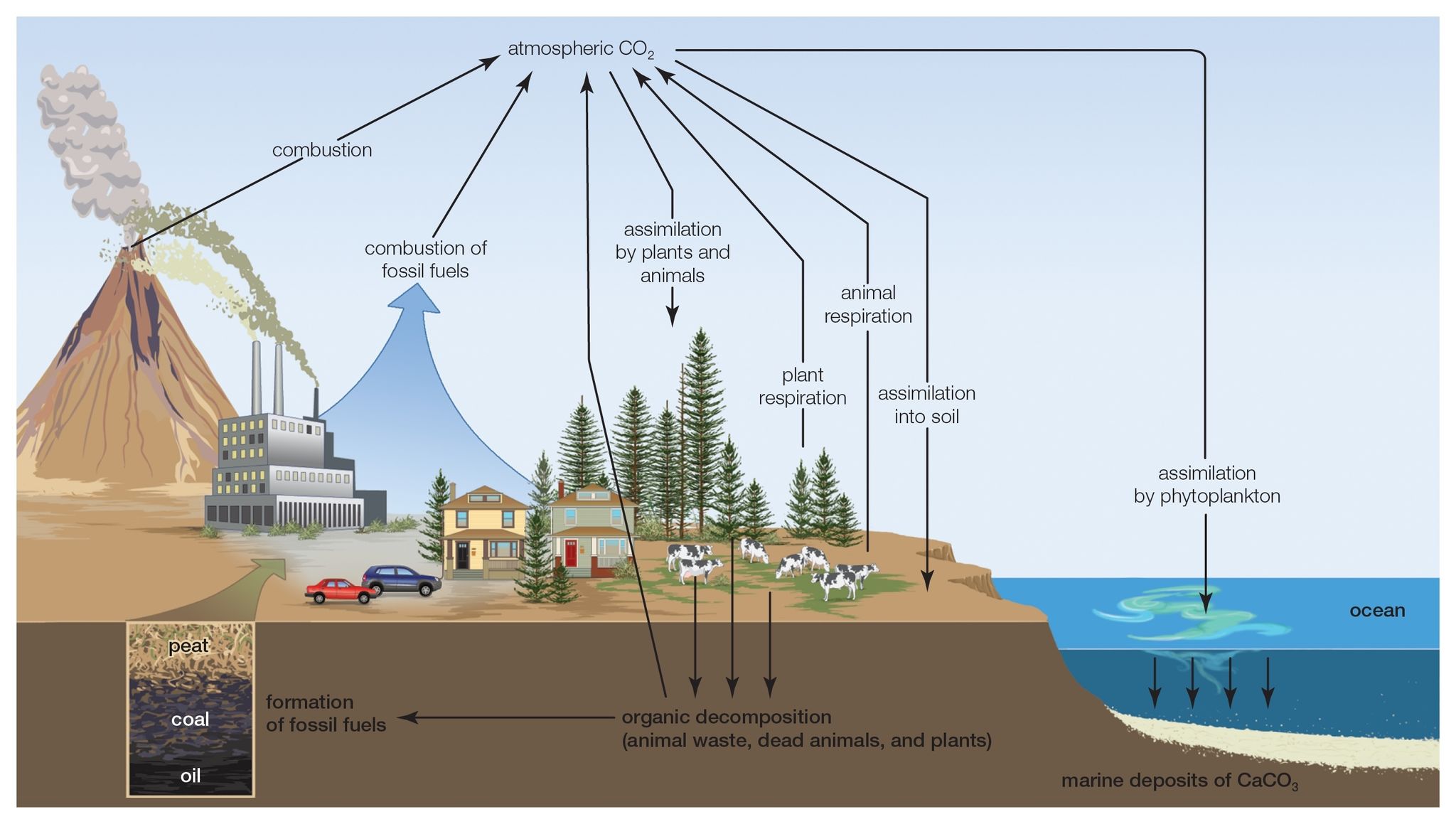
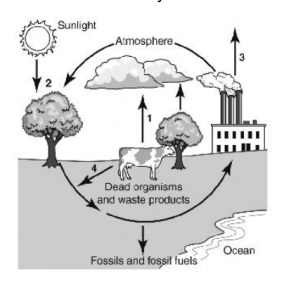
features of environment that are alive or were once alive
biotic
abiotic
inbiotic
biography

Which describes the relationship between plants and animals in the carbon cycle?
Plants produce and release oxygen that animals need
Plants produce and release carbon dioxide that animals need
Animals produce and release oxygen that plants need
Animals produce oxygen that plants turn into carbon dioxide
Which is a true statement?
Humans depend on oxygen, plants depend on carbon dioxide
Plants produce carbon dioxide
Humans depend on carbon dioxide, plants depend on oxygen
Humans don't depend on plants for the air they need
Plants use ____________ to make their own food
Water
Sunlight
Carbon dioxide
All of these
Which gas do plants release, that humans depend on for survival?
Water
Carbon Dioxide
Oxygen
Sugar
C6H12O6 is also known as glucose (sugar). Where is it found?
Plants
Animals
Both plants and animals
Neither plants or animals
____________________ is a part of oceans, air, rocks, soil, and all living things.
Nitrogen
Water
Carbon
Silver
Through the process of photosynthesis, plants pull CO2 from the air to make plant food for themselves.
True
False
When animals eat plants, the carbon that the plant contains is absorbed by the animals.
True
False
Plants use ____________________ to make their own food.
Carbon Dioxide
Oxygen
Materials
Gravity
How do animals get carbon?
By eating plants and or other animals.
They absorb it from the atmosphere.
From the ground
They do not get carbon from anywhere.
What are fossil fuels made from?
Plants and animals that are buried underground for millions of years.
They absorb it from the atmosphere.
Water
Wind
When humans EXHALE, we release __________________.
Oxygen
Carbon Dioxide
Nitrogen
Water
What is CO2?
Carbon Monoxide
Carbon Trioxide
Carbon Dioxide
Oxygen
Respiration is a process where living things (animals) inhale ______________ and exhale _____________________.
Oxygen, Nitrogen
Carbon Dioxide, Oxygen
CO2, O
Oxygen, Carbon Dioxide
Which of the following are fossil fuels?
Coal, water, oil
Oxygen, coal, oil
Coal, Oil, Natural Gas
None of the above
Where can you find carbon?
Only in Earth's atmosphere
Inside all water molecules
Inside the sun
Inside every living thing on Earth
How is the carbon cycle similar to the water cycle?
Both involve liquid substances falling to the Earth from the atmosphere?
Neither process works at low temperature.
Both involve the transfer of substances between animals, plants, and the Earth.
Both involve the transfer of substances between the earth and outer space.
What organisms in the ocean absorb the most carbon dioxide?
Algae and marine plants
Ocean mammals, like whales and dolphins
Fish
Coral
What is a carbon sink?
Something that adds to the atmosphere.
Something that removes carbon from the atmosphere.
Something that adds carbon to the earth's crust.
Something that removes carbon from the earth's crust.
Which of these historical events led to a major imbalance in the carbon cycle?
The American Civil War
The American Revolution
The Industrial Revolution
The French Revolution
How does carbon become locked inside the earth?
Tree roots expel carbon into the soil as they grow.
Humans use machines to pump carbon dioxide into large underground rocks.
Rocks become richer in carbon as time goes by.
The carbon-rich bodies of plants and animals decay into the earth after they die.
How do carbon emissions lead to global warming?
By trapping the sun's heat in the atmosphere.
By causing very hot volcanic eruptions.
Rocks become richer in carbon as time goes by.
By increasing the amount of carbon in the earth's crust
Which of these is a factual statement about carbon?
Humans use far too much carbon-based fuel
Carbon is the fourth-most abundant element in the universe
There is no relationship between carbon emissions and global climate change.
Burning rainforests helps restore equilibrium to the carbon cycle.

