wayground logo

Free Printable Worksheets

Font size

S
M
L
XL
Worksheets

Texas History District Assessment 2019-2020

Total questions: 169

Worksheet time: 4hrs 9mins

Name
Class
Date
1.

Which Empresario...

• Negotiated a contract to bring Anglo families to Texas

• Died before he could fulfill his dream

a)

Moses Austin

b)

Stephen Austin

c)

Green De Witt

d)

Martin De Leon

e)

Erasmo Seguin

2.

Which Empresario...

• Was a Tejano rancher

• Helped Stephen F. Austin receive a empresario grant in Texas

a)

Moses Austin

b)

Stephen Austin

c)

Green De Witt

d)

Martin De Leon

e)

Erasmo Seguin

3.

Which Empresario...

• established the town of Gonzalez with Anglo settlers?

a)

Moses Austin

b)

Stephen Austin

c)

Green De Witt

d)

Martin De Leon

e)

Erasmo Seguin

4.

Which Empresario...

• The first successful empresario

• Fulfilled his father’s contract and took 300 Anglo families to Texas

• Known as the Father of Texas

a)

Moses Austin

b)

Stephen Austin

c)

Green De Witt

d)

Martin De Leon

e)

Erasmo Seguin

5.

Which Empresario...

  • brought mostly Mexican settlers to his Texas colony?
a)

Moses Austin

b)

Stephen Austin

c)

Green De Witt

d)

Martin De Leon

e)

Erasmo Seguin

6.

Which Individual Rights was denied to Anglos living in Texas under the Constitution of 1824?

a)

Freedom of Speech

b)

Freedom of Press

c)

Freedom of Religion

d)

Freedom of Assembly

7.

I was the first to obtain permission to bring Anglo settlers to Spanish Texas; Who am I?

a)

Moses Austin

b)

Stephen Austin

c)

Green De Witt

d)

Martin De Leon

e)

Erasmo Seguin

8.

This is Mexico's plan to increase Texas' population, by inviting in American land agents to bring families to settle in Texas

a)

The Colonization Law of 1825

b)

Empresarios

c)

The Empresario System

d)

The Mier y Teran Report

9.

The Mexican government offered _________ to empresarios who would bring families into Texas

a)

land grants

b)

a herd of cattle for ranching

c)

enslaved people to work their farms

d)

government jobs

10.

_________ are Texans of Mexican descent

a)

Empresarios

b)

Tejanos

c)

Conquistadors

d)

Missionaries

11.

Who was the empresario who took over when his father died - he brought the first 300 families to Texas and set up the first successful empresario colony.

a)

Stephen F. Austin

b)

Moses Austin

c)

Green Dewitt

d)

Martin de Leon

12.

Who was the Tejano mayor of San Antonio who helped bring empresarios like Stephen F. Austin into Texas?

a)

Green Dewitt

b)

Martin de Leon

c)

Erasmo Seguin

d)

Moses Austin

13.

Who were the "Old 300"?

a)

The 300 Mexican inspectors who carried out the Mier y Teran Report

b)

The 300 people who Moses Austin brought into Texas under his empresario land grant

c)

The first 300 families that Stephen F. Austin brought to Texas

d)

The 300 Native Americans who attacked the mission at La Bahia

14.

Texas was a state in Mexico, but it was connected to another Mexican state. The people of Texas didn't want to be connected to the other state - what was the full name of the state of Texas?

a)

Coahuila y Tejas

b)

Texas and Oklahoma

c)

Texas and Louisiana

d)

New Mexico y Tejas

15.
Mexican officials tried to maintain Mexican culture when issuing land grants by...
a)
Introducing Spanish foods to the new settlers.
b)
Requiring settlers to practice the Catholic religion.
c)
Administering Spanish language test to settlers.
d)
Expecting Anglo settlers to wear Spanish clothing.
16.
Who took over Moses Austin's dream to carry out the "Texas Venture" when Moses passed away?
a)
Beth Austin
b)
Ian Austin
c)
Stephen Austin
d)
Sarah Austin
17.
What was the Alamo's Original name?
a)
San Felipe De Austin
b)
San Antonio de Valero
c)
San Antonio de Alamo
d)
Cibola de Alamo
18.
The federal constitution of 1824 turned Mexico into a republic. During this time, Mexico was reorganized and ____________ was created. 
a)
Jane Long colony
b)
San Antonio
c)
settled land
d)
Coahuila y Texas
19.
What impact did the State Colonization Law of 1825 have?
a)
Opened Texas settlement and immigration 
b)
Many empresarios lost their job
c)
Mexico became angry and started their war
d)
Spain regained their power due to this law
20.
Who claimed the land of Mexico that included Texas for over 300 years. 
a)
United States
b)
Mexico
c)
France
d)
Spain
21.
Who did Mexico defeat for their independence? 
a)
Spain
b)
France
c)
Texas
d)
United States
22.
In what year did Mexico won their independence? 
a)
1836
b)
1821
c)
1845
d)
1830
23.
What is another term for Empresario? 
a)
Doctor
b)
Merchant
c)
Operator
d)
Land Agent
24.
Why is Stephen called the "Father of Texas"?
a)
He was a man of strong Character
b)
He brought many people to Texas
c)
He was one of many land agents 
d)
He brought the first 300 families to Texas
25.
Empresarios were offering cheap land to Anglos settlers in Texas, how much was an acre of land? 
a)
25 cents an acre
b)
12.5 cents an acre
c)
12. 7 cents an acre
d)
14. 5 cents an acre
26.
From the list below, pick the answer which was NOT one of the 4 things a settler had to agree to in order to purchase land in Texas.
a)
1. Speak Spanish
b)
2. Become a Citizen
c)
3. Become Catholic
d)
4. Be of Good Moral Character 
27.
Anglos settled Texas during what time period?
a)
Natural Texas and It's People
b)
Mexican National Era
c)
Spanish Colonial Era
d)
Age of Contact
28.
Which document required Mexican citizens to only practice Catholicism? 
a)
Imperial Colonization Laws
b)
Empresario Contracts
c)
Mexican Constitution of 1824
d)
Declaration of Independence
29.
What event ended the Guiterrez-Magee expedition?
a)
The Empresario Contracts
b)
The Old Three Hundred
c)
The Mexican Colonization Laws
d)
The Battle of Medina
30.
Which filibuster was suspected of plotting to claim land for the United States?
a)
Philip Nolan
b)
James Long
c)
Stephen F. Austin
d)
Green DeWitt
31.
Which filibuster was captured and executed in 1822 after leading an army into Nacogdoches and declaring Texas' independence from Spain?
a)
Peter Bean
b)
James Long
c)
William Magee
d)
Philip Nolan
32.
Most of the early settlers coming to Texas had to...
a)
become citizens of Mexico and take an oath of allegiance
b)
pay for their land in advance, and in cash
c)
change their religion to Baptist, which was the national religion of Spain
d)
join the Mexican Army for at least 3 years
33.
In what year did Federalists in Mexico write a new constitution?  [it established the state of Coahuila y Texas and established a democratic government in Mexico]
a)
1824
b)
1806
c)
1830
d)
1817
34.
Why were Spanish officials worried about the number of Americans settling in Texas?
a)
They feared that Americans would outnumber Spaniards and eventually take control of the territory.
b)
They were concerned that Americans would turn the Native Americans away from the Catholic Church.
c)
They thought that Texas would become overpopulated.
d)
They were convinced that Americans would attempt to enslave Spanish citizens.
35.
What filibuster had an expedition (Army of the North) that failed?
a)
James Long
b)
Philip Nolan
c)
Father Hidalgo
d)
Gutierrez-Magee
36.
What Filibuster was given permission from Spain to wrangle horses and sale them for profit?
a)
Father Hidalgo
b)
James Long
c)
Philip Nolan
d)
Gueiterrez
37.
Which Filibuster was a Pirate?
a)
James Long
b)
Augustus Magee
c)
Philip Nolan
d)
Jean Lafitte
38.
Who was the last major Filibuster and shot in prison by a prison guard?
a)
James Long
b)
Augustas Magee
c)
Jean Lafitte
d)
Gutierrez
39.
A person who enters a country illegally specifically to cause a revolution
a)
Filibuster
b)
Missionary
c)
Soldier
d)
Rebel
40.
Philip Nolan, the filibuster who was given permission to wrangle horses, was caught ____________ for the United State.
a)
dancing
b)
hunting
c)
stealing
d)
spying
41.
Which Explorer went looking for the "cities of gold" but found only simple adobe brick houses?
a)
Cabeza De Vaca
b)
Coronado
c)
Pineda
d)
La Salle
42.
Which explorer made the very first map of the Gulf of Mexico and the Texas Gulf Coast?
a)
Coronado
b)
Pineda
c)
Cabeza De Vaca
d)
La Salle
43.
Which explorer was the very first European to ever sail to America?
a)
Pineda
b)
Coronado
c)
Magellin
d)
Columbus
44.

Which explorer was the first to make 'first contact' with the Texas Native Americans (Coahelticans and Karankawas)?

a)

Columbus

b)

Cabeza De Vaca

c)

Coronado

d)

Cortez

45.
This explorer conquered the mighty Aztec Empire by being sneaky and lucky (lucky to be filled with disease)!
a)
Cortez
b)
Coronado
c)
Cabeza De Vaca
d)
Pineda
46.
What ended up being the #1 killer of about 80% of all Native Americans over the 200 years after Columbus arrived?
a)
Dying in battle (getting shot)
b)
Diseases (small pox)
c)
Starving to Death
d)
Old Age
47.
One of the main reasons the Spanish King wanted to set up missions in Texas was try to block out the French from controlling the land in Texas.
a)
True
b)
False
48.

This explorer wrote the first Texas History Book, from his journals of his adventures across Texas and Mexico?

a)

Coronado

b)

Cabeza De Vaca

c)

Cortez

d)

Pineda

49.

A Spanish soldier-explorer who sought personal riches and power, as well as wealth and glory for Spain, in the conquest for the Americas

a)

conquistador

b)

missionary

c)

representative

d)

privateer

50.

Which is NOT apart of the 3 G's

a)

God

b)

Guns

c)

Glory

d)

Gold

51.

Which of the following explorers Never came to Texas:

a)

Pineada

b)

De Vaca

c)

La Salle

d)

Columbus

52.
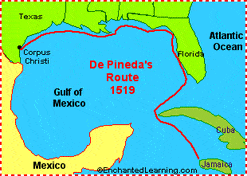
Who am I: I sailed the Gulf in Mexico in 1519, mapping it and claiming the land around it for Spain
a)
De Soto
b)
Cortes
c)
Columbus
d)
Pineda
53.
I discovered the New World in 1492?
a)
Columbus
b)
Cabeza de Vaca
c)
Pineda
d)
De Soto
54.

Im considered the first explorer of Texas:

a)

Pineda

b)

Cabeza De Vaca

c)

Columbus

d)

Cortes

55.

I established Fort St. Louis after not finding the Mississippi River:

a)

La Salle

b)

Cornado

c)

Onate

d)

Moscoso

56.

I am known for crossing through the panhandle of Texas:

a)

Onate

b)

La Salle

c)

Cornado

d)

Moscoso

57.

What year did Alonso Alvarez de Pineda map the Texas coastline?

a)

1492

b)

1519

c)

1521

d)

1536

58.

Which Spanish explorer set out to find Cibola (cities of gold) and was considered a failure for Spain?

a)

Alonso Alvarez de Pineda

b)

Hernan Cortez

c)

Alvar Nunez Cabeza De Vaca

d)

Francisco Vasquez de Coronado

59.

What was Christopher Columbus looking for when he discovered the New World?

a)

Looking for Cibola

b)

Looking for easy trade routes to India

c)

Looking for Florida

d)

Looking for Mexico

60.

After Columbus, what was the 3 reasons for Exploration?

a)

Gold, Glory, and God

b)

Glory, God, and Goodness

c)

Gold, God, and Greatness

61.

Which tribe did Cabeza de Vaca meet with on Galveston Island?

a)

Apache

b)

Caddo

c)

Jumanos

d)

Karankawa

62.

Which city of gold did Coronado set out to find?

a)

Cibola

b)

New Orleans

c)

New York

d)

Houston

63.

TRUE or FALSE. Coronado found the city of gold and became wealthy and famous.

a)

True

b)

False

64.

TRUE or False. La Salle was a French explorer that accidentally came to Texas.

a)

True

b)

False

65.

Which of these explorers landed at Matagorda Bay while searching for the mouth of the Mississippi River?

a)

La Salle

b)

Coronado

c)

Cortez

d)

Columbus

66.

Which of the following best describes the defining characteristics of the Age of Contact era in Texas history?

a)

Anglo and Spanish settlers established colonies in Texas.

b)

American Indian tribes were driven out of Texas by French settlers.

c)

Spanish explorers and French explorers both claimed land in Texas.

d)

Spanish colonists abandoned exploration of Texas after not finding any gold.

67.
How did physical geography impact the building of missions and presidios in Texas? 
a)
It made no difference, the Spanish had materials from all over the world shipped to the job site
b)
The missions and buildings were usually built near rivers (water sources) and they would build with local materials. 
c)
They liked to build the missions right on the beach.
d)
The King of Spain demanded that every mission be built of imported bricks.
68.
What happened to La Salle’s expedition? 
a)
the French gave La Salle an award for his excellent navigation skills.
b)
the entire settlement showed excellent skills and kindness in working with the local Indians.
c)
Near Matagorda Bay they built Fort St. Louis and many settlers were killed by local Karankawa Indians, wild animals, starvation and ruin. 
d)
LaSalle was honored by the Tonkawa tribe for his kindness.
69.
Why did the Spanish adopt the process of building missions and presidios?
a)
to help the local Indians maintain their Indian lands and expand the Indian cultures.
b)
to research the local Indians and publish Academic reports on world cultures.
c)
To claim the land for Spain, also convert the local Indians to Christianity, grow settlements and towns
d)
to find better lands for the French.
70.
What was life in a mission like? 
a)
little work for anyone to do as the crops grew themselves with no work required
b)
nearly all of the people in the mission could play music and eat all day long with little work
c)
Daily and constant work of farming, building work, maintaining the missions, cattle and livestock care, even hunting, some weaving, pottery and going to church.   
d)
the mission friars could simply call up the King for technicians to come in and do repairs as needed.
71.

Which of the following explorers was shipwrecked near Galveston while searching for the legendary city of El Dorado?

a)

Franco Coronado

b)

Cabeza de Vaca

c)

Hernan Cortes

d)

Robert La Salle

72.
Which headline could have occurred in 1519?
a)
Manny Valdez defeats the Aztecs!
b)
Coronado claims Oregon!
c)
Pineda Maps Coastline of Texas!
d)
La Salle Claims New York!
73.
If you made a timeline of the history of Texas, where would you put the Era of Exploration?
a)
 1700s
b)
1600s
c)
 1500s
d)
1400s
74.

How did this Texas mission show the way Texans adapted to their environment?

a)

It is hurricane proof

b)

The porch is facing North

c)

It had a front porch.

d)

It was made from resources in the area.

75.

This map shows what?

a)

Towns grew near missions and presidios

b)

Towns were already established before missions

c)

Most towns were in the mountains.

d)

Most towns were near the Rio Grande

76.

What influenced where missions and presidios were built?

a)

Desert

b)

Mountains

c)

Rivers

d)

Oceans

77.

The circle on the map shows?

a)

Capitol Of Texas in Austin

b)

A large cattle ranch

c)

A major port

d)

Where a battle was fought for Texas independence.

78.

The Mission graphic best shows it is a mission by what? Remember why missions were built.

a)

There are barracks and a workshop

b)

A plaza and cemetery are inside

c)

There are Indian quarters and a church.

79.
This town was founded as a halfway point between the Rio Grande and East Texas
a)
Nacogdoches
b)
San Antonio
c)
Ft. Saint Louis
d)
San Francisco de los Tejas
80.
Tejano
a)
People of Mexican heritage living in Texas
b)
Friar who built the first mission in East Texas
c)
American Indian culture group
d)
A major shipping point for international trade
81.
Which of the following is NOT a reason for the failure of the mission system?
a)
Disease
b)
American Indian attacks
c)
American Indian abandonment
d)
American Indian cooperation
82.
Which of the following is NOT true about the Aguayo Expedition?
a)
It was led by Marques de San Miguel de Aguayo
b)
It retook East Texas from France and reoccupied old missions
c)
It established a presidio which became the unofficial Spanish capital of Texas: Los Adaes
d)
It strengthened French and Spanish trading and promoted peace between the two nations
83.
The first mission in East Texas was:
a)
San Antonio
b)
Nuestra Senore de los Dolores
c)
San Francisco de los Tejas
d)
San Miguel de los Adaes
84.
This missionary founded many successful missions in East Texas, such as Nuestra Senora de los Dolores
a)
Francisco Hidalgo
b)
Jose de Escandon
c)
Damian Massanet
d)
Antonio Margil de Jesus
85.
This friar got Spain to build more missions by secretly encouraging France to occupy East Texas.
a)
Francisco Hidalgo
b)
Jose de Escandon
c)
Damian Massanet
d)
Antonio Margil de Jesus
86.
This friar built the first mission in East Texas.
a)
Francisco Hidalgo
b)
Jose de Escandon
c)
Damian Massanet
d)
Antonio Margil de Jesus
87.
A Spanish military oupost
a)
Viceroy
b)
Tejano
c)
Presidio
d)
Tigua
88.

This mission is located close to the present day city of El Paso. It is the first mission ever established in Texas and was founded in 1682

a)

The Ysleta Mission

b)

The Alamo

c)

Mission San Antonio de Valero

d)

Mission Guadalupe

89.

The Spanish wanted the natives to follow which religion?

a)

Baptist

b)

Catholic

c)

Puritan

d)

Lutheran

90.

The Alamo is known as

a)

San Antonio de Valero

b)

The El Paso

c)

The Mission

d)

San Juan Bautista

91.

A Spanish cowboy is called a

a)

rachero

b)

vaquero

c)

presido

d)

Ysleta

92.

Spanish missions brought diseases that killed many native Texans.

a)

True

b)

False

93.

Spanish missions brought diseases that killed many native Texans.

a)

True

b)

False

94.
What city, in 1718, was founded, became the Capital of Spanish Texas, and have many missions including the Alamo built in and around it?
a)
San Antonio
b)
Laredo
c)
Goliad
d)
Gonzalez
95.
How did Spain react to LaSalle's expedition?
a)
Built more missions in East Texas to protect the Spanish lands from French
b)
Shifted its interest from Texas to Florida
c)
Moved its missions and presidios from New Mexico and West Texas to East Texas
d)
Became allies and trading partners with Native Americans near Louisiana border
96.
The Spanish named the area "Tejas," after a Caddo word meaning ally, or friend.
a)
True
b)
False
97.
In which part of Texas were missions NOT established?
a)
South (San Antonio)
b)
Central (Austin)
c)
West (El Paso)
d)
North Texas
98.
When were missions established?
a)
1400's-1500's
b)
1500's-1600's
c)
1600's-1700's
d)
2000's
99.

Why is the period from 1528 to 1690 Called the Age of Contact in Texas?

a)

Spanish and French explorers both claimed Texas

b)

American Indians were killed and enslaved

c)

Colonies were formed all over the United States

d)

Gold, Glory, and God

100.

What was an effect of the Chicken War?

a)

The Spanish took control of West Texas

b)

French and Spanish Allies

c)

The French and Spanish ate chicken

d)

The Spanish retreated to San Antonio de Valero

101.

By establishing missions in East Texas

a)

Spain was responding to French interest in their lands

b)

Spain wanted a better economy

c)

Spain was only in it for religion

d)

Spain learned to build towns

102.
Which European rival was the greatest threat to Spain's North American lands?
a)
The Netherlands
b)
Japan
c)
England
d)
France
103.
Who was the most influential Spanish friar who helped build the missions in Texas?
a)
La Salle
b)
King Richard III
c)
Damian Massanet
d)
Cabeza de Vaca
104.
San Antonio was founded in what year?
a)
1718
b)
1999
c)
1721
d)
1682
105.
The setbacks that the missions faced were
a)
crops failing and disease spreading
b)
Native American attacks and hurricanes
c)
crops failing and tornados
d)
poor leadership and ghosts
106.
Missions were mainly built in which part of Texas?
a)
East Texas
b)
West Texas
c)
North Texas
d)
South Texas
107.
Why did Spain send expeditons to Texas in the 1600s?
a)
They heard that LaSalle (French) had established a fort in Texas
b)
They wanted to help France colonize Texas
c)
The were tired of Mexico and New Mexico and wanted to settle Texas
d)
They wanted to make money from oil
108.
True or False
The first mission in East Texas was San Francisco de las Tejas.
a)
True
b)
False
109.
__________ and ____________ established the first mission in East Texas.
a)
Father Damian Massanet, Alonso de Leon
b)
LaSalle and Ortiz
c)
Brother Jim Hogg and Sister Vaca
d)
Estevanico and El Turko
110.
The mission that was established to provide a steady stream of supplies into East Texas was ________________.
a)
San Antonio de Valero (later known as The Alamo)
b)
San Francisco de los Tejas
c)
Espiratu de Santo
d)
Guadalupe de Jesus
111.
Spain's main method of colonizing Texas was __.
a)
Missions
b)
Plantations
c)
Canals
d)
Indian Villages
112.
Which of the following was NOT a purpose of missions?
a)
Collect oil
b)
Convert Indians to Christians
c)
Teach Indians to become good and loyal Spanish citizens
d)
Make money for Spain
113.
TRUE or FALSE
Life in the missions was often a hard working lifestyle, causing some natives to try and escape.
a)
True
b)
False
114.
The purpose of a presidio was to __________.
a)
Give military support to missions and settlements
b)
Provide shelter for travellers
c)
Host Foreign Diplomats who were visiting Texas
d)
To train soldiers to become priests
115.
TRUE or FALSE
The purpose of a rancho (ranch) was to provide food, supplies, and horses for missions, presidios and pueblos.
a)
True
b)
False
116.
Vaqueros (Cowboys) developed many of the techniques used today for ___________.
a)
Herding, roping and working cattle from horseback
b)
Collecting shrimp from the Gulf of Mexico
c)
Hunding deer and turkey in Texas
d)
Collecting oil in East Texas
117.
Which of the following were brought to Texas by the Spanish?
a)
Cows and Horses
b)
Sheep
c)
Pigs
d)
All of these answers are correct
118.
This region is the lowest in elevation but the highest in rainfall?
a)
Coastal Plains
b)
North Central Plains
c)
Great Plains
d)
Mountains & Basins
119.
The region has the coldest winters and drought can be a problem here.  
a)
Coastal Plains
b)
North Central Plains
c)
Great Plains
d)
Mountains & Basins
120.
This river is not a boundary with another state or country?
a)
Red River
b)
Rio Grande River
c)
Trinity River
d)
Sabine River
121.
Which river goes thru 3 of Texas' Natural Regions?
a)
Neuces
b)
Brazos
c)
Trinity River
d)
Sabine River
122.
Which tribe of Natives was sedentary?
a)
Caddo
b)
Karankawa
c)
Apache
d)
Kiowa
123.
This region of the state has the highest population?
a)
Coastal Plains
b)
North Central Plains
c)
Great Plains
d)
Mountains & Basins
124.
Which tribe of natives was considered the "Masters of the Plains" and pushed other tribes out of their homelands?
a)
Caddo
b)
Karankawa
c)
Apache
d)
Comanche
125.
Texas has a variety of landscapes and climates?
a)
Agree
b)
Disagree
126.

Which number is the Red River?

a)

1

b)

2

c)

3

d)

4

127.

Which number is the Sabine River?

a)

1

b)

2

c)

3

d)

4

128.

Which number is the Rio Grande River?

a)

1

b)

2

c)

3

d)

4

129.

Which region has low elevation, large population and heavy rains?

a)

Moutains and Basins

b)

Great Plains

c)

Coastal Plains

d)

North Central Plains

130.

Which region of Texas is red?

a)

Coastal Plains

b)

North Central Plains

c)

Great Plains

d)

Mountains and Basins

131.

Which region has marshy land, grassy prairies, humidity and mild winters?

a)

North Central Plains

b)

Great Plains

c)

Coastal Plains

d)

Mountains and Basins

132.

All of the rivers below are major rivers in Texas except

a)

Red River

b)

Guadalupe River

c)

Sabine River

d)

Rio Grande River

133.

All of the following major cities are in the Coastal Plains region except

a)

Austin

b)

El Paso

c)

Nacogdoches

d)

Dallas

134.

Which major city is in the Mountains and Basins region?

a)

Houston

b)

Fort Worth

c)

Amarillo

d)

El Paso

135.

Which major city is in the North Central Plains region?

a)

Dallas

b)

Fort Worth

c)

Houston

d)

Austin

136.

Which of the following examples of extreme weather are most likely to affect Texas?

a)

Earthquake

b)

Hurricane

c)

Tsunami

d)

Typhoon

137.

Which Texas region has the highest elevation, dry air, cold winters, small population and little rainfall?

a)

North Central Plains

b)

Mountains and Basins

c)

Great Plains

d)

Coastal Plains

138.

Which major river borders the Mountains and Basins region?

a)

Rio Grande River

b)

Sabine River

c)

Red River

d)

Mississippi River

139.
What river creates the border between Texas and Oklahoma?
a)
Rio Grande
b)
Red River
c)
Sabine River
d)
Trinity River
140.
What large body of water borders Texas to the southeast?
a)
Gulf of Mexico
b)
Caribbean Sea
c)
Atlantic Ocean
d)
Gulf of California
141.
Which state does NOT border Texas?
a)
Arkansas
b)
New Mexico
c)
Arizona
d)
Oklahoma
142.
What region is this?
a)
Coastal Plains
b)
Mountains and Basins
c)
North Central Plains
d)
Great Plains
143.
What Region is this?
a)
Coastal Plains
b)
North Central Plains
c)
Mountains and Basins
d)
Great Plains
144.
What region is this?
a)
Great Plains
b)
North Central Plains
c)
Coastal Plains
d)
Mountains and Basins
145.
What region is this?
a)
Coastal Plains
b)
Mountains and Basins
c)
North Central Plains
d)
Great Plains
146.
Which of the following tribes were not nomadic?
a)
Coahuiltecan
b)
Apache
c)
Comanche
d)
Jumano
147.
The Balcones and Caprock are examples of _____ on the edges of plateaus.
a)
Barrier Islands
b)
Escarpments
c)
Aquifers
d)
Northers
148.
The Edwards, Ogallala, and Gulf Coast __________ are layers of rock that absorb rainwater and keeps it flowing underground.
a)
Barrier Islands
b)
Aquifers
c)
Mountains
d)
Escarpments
149.
Which city is the Capital of Texas?
a)
Austin
b)
Dallas
c)
San Antonio
d)
Houston
150.
How did horses get to North America? 
a)
The Spanish brought them when they settled the region
b)
Horses are native to North America
c)
There were never horses in America until the late 1800s
d)
The Native Americans sold them to the Spanish.
151.
What is the definition of “nomadic”?
a)
Staying in one place and not moving.
b)
Moving from place to place with no permanent home. 
c)
Riding a horse to travel somewhere
d)
People who farm the land. 
152.
Where does the word “Texas” come from and what does it mean? 
a)
Spanish explorers named the region after a town in Spain.
b)
The state was named after a famous French explorer.
c)
The Caddo tribe named Texas and the word means "friendship"
d)
The Comanche tribe named it and the word means "happy"
153.
Why do historians divide the past into eras? 
a)
A.      To include as many historical events as possible
b)
A.      Limit the number of facts taught within a unit
c)
A.      Improve the development of timelines
d)
A.      Examine time periods with greater ease
154.
Describe the Indian tribes (Jumanos) that lived in the Mountains and Basins region
a)
Nomadic, farmers, lived in adobe houses
b)
Sedentary, farmers and lived in adobe houses
c)
Nomadic, hunted buffalo, and lived in teepees
d)
Nomadic, fished from ocean, and lived in wigwams
155.
What natural resource is the greatest influence on where people choose to settle? 
a)
Trees
b)
Climate
c)
Water
d)
Escarpments
156.

What tribes used the following housing?

a)

Caddo and Wichita

b)

Karakawa and Caddo

c)

Jumano and Tigua

d)

Apache and Comanche

157.

If you travel from west to east across the state of Texas, which of the following statements would be TRUE?

a)

The elevation stays the same.

b)

The elevation decreases.

c)

The elevation increases.

158.

A source created about an event or time-period by someone who was there

a)

Primary

b)

Secondary

159.

Something made about an event or time period by someone who was not there

a)

Primary

b)

Secondary

160.

An article about the Civil War written during the Civil War

a)

Primary

b)

Secondary

161.

A report about the life of Abraham Lincoln written by a 5th grade student

a)

Primary

b)

Secondary

162.

An audio recording of an immigrant talking about their experience of Ellis Island.


What is the audio recording in this sentence?

a)

Primary

b)

Secondary

163.

Which answer below is a Secondary Source?

a)

Autobiography

b)

Photograph

c)

Diary

d)

Textbook

164.

I go to a play about Christopher Columbus discovering America. What is the play?

a)

Primary

b)

Secondary

165.
The Declaration of Independence,
Primary Source - True or False?
a)
True
b)
False
166.
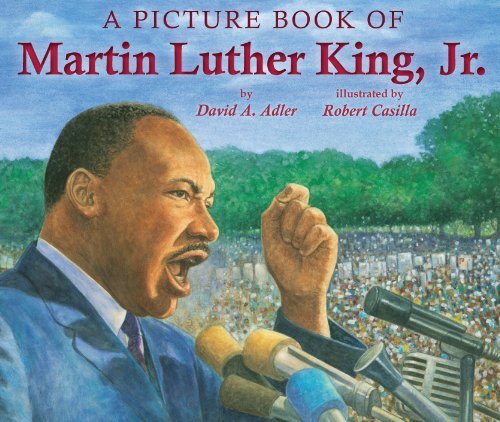
This picture book is a Primary Source - True or False?
a)
True
b)
False
167.
An autobiography is a
a)
Primary Source
b)
Secondary Source
168.
A biography about Abraham Lincoln
a)
Primary Source
b)
Secondary Source
169.
Anne Frank's diary describing her life during World War 2.
a)
Primary Source
b)
Secondary