
 Worksheets
Atomic Structure & the Periodic Table
Total questions: 31
Worksheet time: 18mins
Name
Class
Date
1.
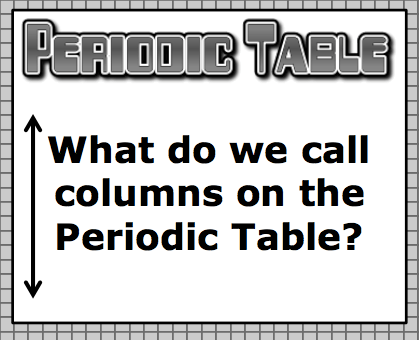
a)
Periods
b)
Groups
2.
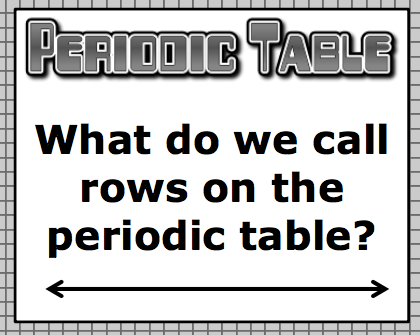
a)
Periods
b)
Groups
3.
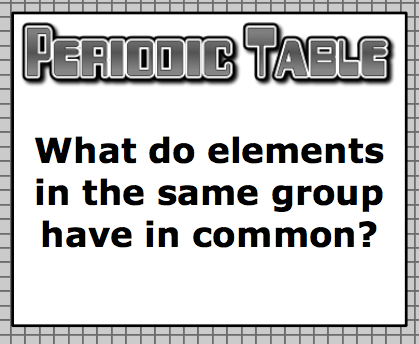
a)
energy levels
b)
valence electrons
c)
protons
d)
neutrons
4.
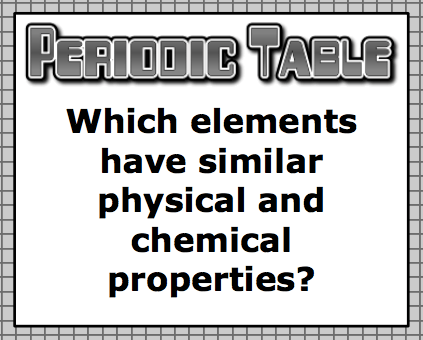
a)
Same group
b)
Same period
5.
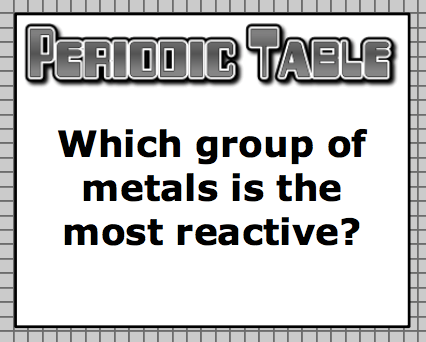
a)
Group 1
b)
Group 17
c)
Group 18
d)
Group 2
6.
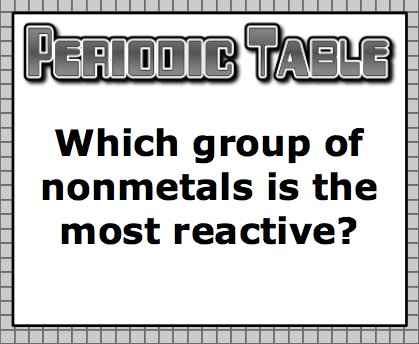
a)
Group 1
b)
Group 17
c)
Group 18
d)
Group 2
7.
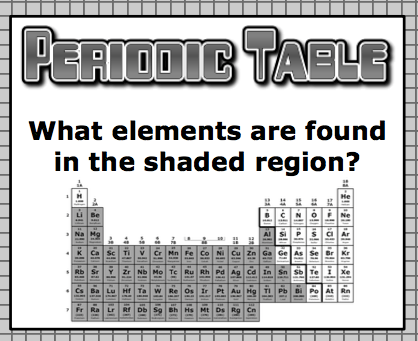
a)
Metals
b)
Nonmetals
c)
Metalloids
8.
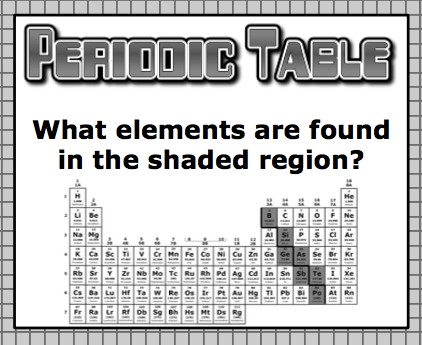
a)
Metals
b)
Nonmetals
c)
Metalloids
9.
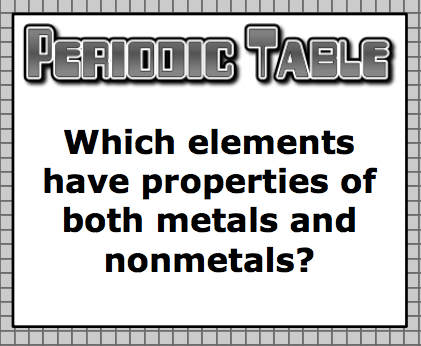
a)
Metals
b)
Nonmetals
c)
Metalloids
10.
Elements which are shiny, conduct electricity and heat are called
a)
metal
b)
nonmetal
c)
metalloid
d)
nonexistent
11.
Which is an alkali metal?
a)
Magnesium
b)
Iron
c)
Sodium
d)
Europium
12.
Elements in a ..................have similar chemical properties.
a)
period
b)
group
c)
row
13.
An element's identity is determined by the number of
a)
electrons.
b)
protons.
c)
neutrons.
d)
valence.
14.
Group 18 elements are known as the _____ _____ and have full valence shells.
a)
royal gases.
b)
supreme solids.
c)
noble gases.
d)
legit liquids.
15.

What is the atomic number of Nickel?
a)
~30
b)
30
c)
28
d)
58.693
16.
The majority of elements on the periodic table are
a)
man made.
b)
nonmetals.
c)
metals.
d)
gases.
17.
Which elements have the most similar chemical properties?
a)
K and Na
b)
K and Ca
c)
K and Cl
d)
K and S
18.

In what section would Transition Metals be found?
a)
purple
b)
light blue
c)
yellow
d)
red
19.
Subatomic particles with a negative charge
a)
Electrons
b)
Neutrons
c)
Protons
d)
Quarks
20.
subatomic particles found on the outermost shell & responsible for the atom's reactivity
a)
neutrons
b)
valence electrons
c)
isotopes
d)
ions
21.
Subatomic particles with a positive charge
a)
neutrons
b)
atomic mass
c)
protons
d)
isotopes
22.
Value representing the number of protons in an element
a)
Atomic Mass
b)
Mass Number
c)
Valence Electrons
d)
Atomic Number
23.
Subatomic particles that are neutral in charge
a)
Neutrons
b)
Protons
c)
Nucleus
d)
Electrons
24.
Atoms of the same element with a different number of neutrons
a)
Ion
b)
Gluons
c)
Isotope
d)
Quarks
25.
The smallest particle of an element that shows all the properties of that element.
a)
Subatomic Particles
b)
Atom
c)
Quarks
d)
Gluons
26.
A tiny but very dense, positively charged portion of the atom that holds most of the atomic mass
a)
Electron Shells
b)
Orbitals
c)
Electron Cloud
d)
Nucleus
27.
Arrangement of elements organized by atomic number
a)
Electron Cloud
b)
Periodic Table
c)
Electron Configuration
d)
None of these
28.
Discovered the nucleus of the atom through the Gold Foil Experiment
a)
Rutherford
b)
Chadwick
c)
Thomson
d)
Dalton
29.
Discovered the electron within the atom
a)
Thomson
b)
Chadwick
c)
Schrodinger & Heisenberg
d)
Dalton
30.
Created the Planetary Model of the atom
a)
Bohr
b)
Dalton
c)
Rutherford
d)
Chadwick
31.
Discovered the neutron within the atom
a)
Democritus
b)
Thomson
c)
Rutherford
d)
Chadwick
100 %

