

wayground logo

Free Printable Worksheets

NEW

Font size

S
M
L
XL
Worksheets

Literary devices

Total questions: 35

Worksheet time: 25mins

Name
Class
Date
1.
When an author gives an inanimate object human or living characteristics. For example: the trees danced in the wind.
a)
personification
b)
alliteration
c)
simile
d)
oxymoron
2.
An over-exaggeration. For example: I was standing in line forever.
a)
personification
b)
cliche
c)
metaphor
d)
hyperbole
3.
A comparison of two unlike things without using like or as. 
He was a bear in the the goal.
a)
simlie
b)
paradox
c)
metaphor
d)
allusion
4.
Mark is as fast as a cheetah. This is an example of the following:
a)
simile
b)
metaphor
c)
idiom
d)
analogy
5.
Fred ate five French fries on Friday.
a)
simile
b)
alliteration
c)
hyperbole
d)
cliche
6.
POW!
Bang!
Buzzzzzz....
a)
alliteration
b)
personification
c)
Onomatopoeia
d)
assonance
7.
My love is like a red, red rose.
a)
Allusion
b)
Simile
c)
Metaphor
d)
Personification
8.
The baby was as snug as a bug in a rug.
a)
Allusion
b)
Simile
c)
Metaphor
d)
Personification
9.
In the film and book Charlotte’s Web, Charlotte explains to Wilbur that all living things eventually die. Charlotte then has to spin a web to save Wilbur’s life. In the process of spinning her web, Charlotte expends all her energy and dies.
a)
Allusion & Imagery
b)
Simile & Metaphor
c)
Foreshadowing & Irony
d)
Personification & Mood
10.
In Lemony Snicket, most of the inhabitants of the island on which the Baudelaires find themselves in The End are characters from The Tempest, a play by William Shakespeare.

a)
Allusion
b)
Simile
c)
Metaphor
d)
Imagery
11.
“But my heart is a lonely hunter that hunts on a lonely hill.”
  -William Sharp
a)
Allusion
b)
Simile
c)
Metaphor
d)
Irony
12.
This quiz is a piece of cake.
a)
Allusion
b)
Simile
c)
Metaphor
d)
Personification
13.
Christy didn't like to spend money. She was no Scrooge, but she seldom purchased anything except the bare necessities.
a)
Allusion
b)
Simile
c)
Imagery
d)
Metaphor
14.
The water beckoned invitingly to the hot swimmers.
a)
Allusion
b)
Personification
c)
Metaphor
d)
Irony
15.
Choose the correct term for the following definition: occurs when we know something that a character in a story doesn't know. 
a)
Dramatic Irony
b)
Metaphor
c)
Personification
d)
Symbolism
16.

An object or thing that represents something bigger than itself

a)

Foreshadowing

b)

Simile

c)

Symbol

d)

Personification

17.

Which of the following sentences is the best example of personification?

a)

She was as shy as a chipmunk.

b)

Sarah is a delicate flower.

c)

The police station was robbed.

d)

The grass danced in the breeze.

18.

A whiff of the coffee aroma filled our noses. This is a good example of what literary device?

a)

Irony

b)

Personification

c)

Imagery

d)

Metaphor

19.

Break a leg is what kind of literary device?

a)

simile

b)

personification

c)

idiom

d)

dramatic irony

20.
"America is a melting pot" is an example of 
a)
Metaphor
b)
Simile
c)
Foreshadowing
d)
Repetition
21.
What is a hyperbole?
a)
An extreme exaggeration
b)
A little exaggeration
c)
Similar sounds
d)
Compares two things using like or as
22.
I can do a cartwheel! It's a piece of cake! What does the idiom "Piece of cake" mean? 
a)
it's easy 
b)
it's challenging
c)
a happy feeling 
d)
something I can do
23.
What is onomatopoeia?
a)
A word or phrase that can be said forwards and backwards
b)
 An obvious exaggeration
c)
A word that mimics a sound
d)
Giving human qualities to an item
24.
Words or phrases a writer uses to represent persons, objects, actions, feelings, and ideas descriptively by appealing to the five senses
a)
imagery
b)
irony
c)
tone
d)
theme
25.

What is the definition of mood?

a)

The way the author feels.

b)

The way the reader feels.

c)

The author's attitude.

d)

The reader's attitude.

26.

Which of the following is an idiom?

a)

First, feel free to fix the furniture.

b)

I had the answer on the tip of my tongue.

c)

A million pencils fell out of her locker.

d)

The dirty bird worked early in the morning.

27.

What is the definition of symbol?

a)

An idea that shows up in a story over and over again.

b)

Something that connects the reader to one of the five senses.

c)

The most important idea in a text that all the readers can see.

d)

An object that stands for itself and something else.

28.

What is the definition of foreshadow?

a)

Giving a hint of what will happen later

b)

Referring to something that happened before

c)

Offering contrast to a point of view

d)

Criticizing the way something is written

29.

What is the definition of protagonist?

a)

The character the reader follows throughout the text

b)

The character that works against the main character

c)

The character that supports the main character

d)

The characters that are never fully developed

30.

What is the definition of flashback?

a)

Referring to an event that happened earlier

b)

Preparing for something that will happen later on

c)

Demonstrating visual imagery

d)

Offering alternative suggestions to a character

31.

Which of the following is important for setting?

a)

Time and place

b)

People and place

c)

Time and people

d)

People, time, and place

32.

What is the definition of antagonist?

a)

The character the reader follows throughout the text

b)

The character that works against the main character

c)

The character that supports the main character

d)

The characters that are never fully developed

33.

What is the definition of inference?

a)

Referring to an event that happened earlier

b)

Preparing for something that will happen later on

c)

Reading between the lines

d)

Offering alternative suggestions to a character
34.
What is assonance?
a)
The repetition of letters in a line of poetry
b)
the repetition of letter sounds in a line of poetry
c)
the repetition of vowel sounds in poetry
d)
the repetition of consonant sounds in poetry
35.
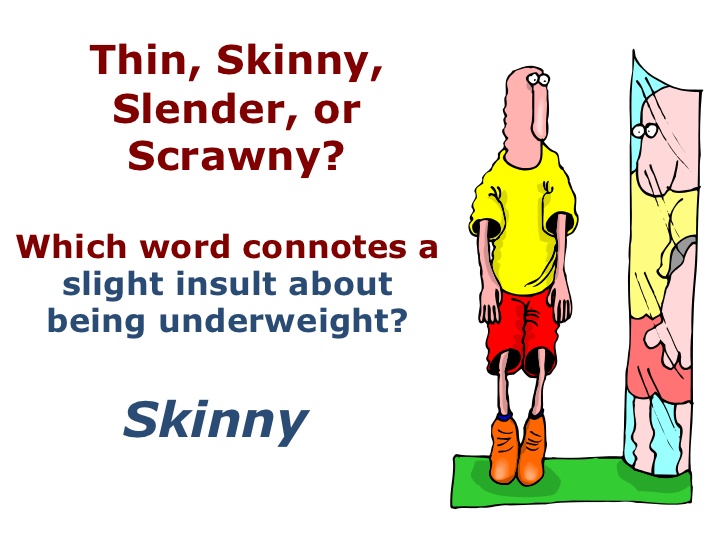
What is connotation?
a)
Connotation implies or suggests a meaning of a word.
b)
Dictionary meaning of a word.
c)
I don't know!
d)
Unknown meaning
