
 Worksheets
Unit 3: American Revolution
Total questions: 20
Worksheet time: 2hrs 40mins

What major era in U.S. history is referred to in the graphic?
Colonial
Civil War
Revolutionary
Reconstruction
Which date below best describes the beginning of America becoming free from the rule of monarchy?
1607
1776
1803
1861
Which newspaper headline would most likely have appeared in Philadelphia in 1776?
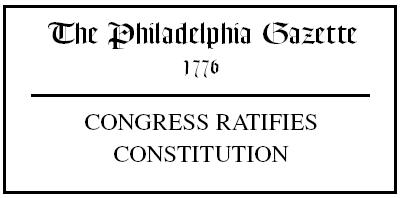
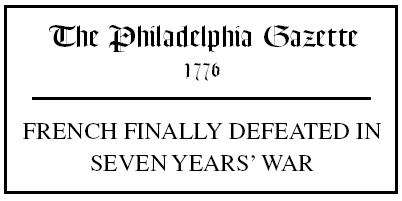
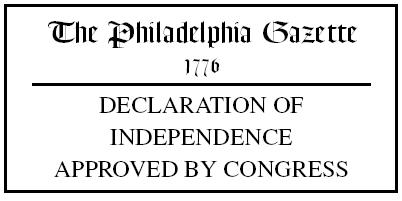
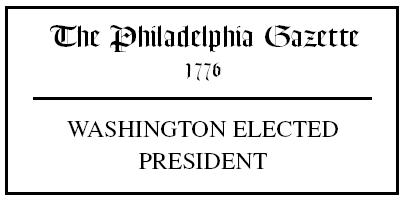

The excerpt above shows the growing pre-Revolutionary bias of some American colonists against-
economic controls by Great Britain
the presence of British troops
self-government in the colonies
settlements on the western frontier
The British began imposing taxes on the colonists in 1765 to help pay the expenses of fighting the-
Spanish Armada
American Revolution
Battle of Tippecanoe
French and Indian War

What is Patrick Henry's message in this excerpt?
Only the free can survive
Freedom is worth dying for
Free people live longer
People must die to gain freedom
The Battle of Saratoga was a turning point in the American Revolution because-
the colonists were defeated and lost possession of New York
Native Americans joined the war against the colonies during the battle
Great Britain was forced to form an alliance with France against the colonies
the colonial victory convinced France to support American Independence
"The shot heard round the world" was fired at the Battle of __________________.
Lexington and Concord
Valley Forge
Saratoga
Yorktown
"We had nothing to eat for two or three days previous...the greatest part were not only shirtless and barefoot, but destitute of (without) all other clothing, especially blankets."
The above quote describes the conditions at
Yorktown
Saratoga
Valley Forge
Lexington

Using the map above which areas of land were acquired by Americans through the Treaty of Paris in 1783?
A and B
C and D
B and C
A and D
Which excerpt from the Declaration of Independence best explains why colonists were unhappy about their lack of representation in the British parliament?
"He has refused to pass other Laws for the accommodation of large districts of people."
"For imposing Taxes on us without our Consent."
"He has refused his Assent to Laws, the most wholesome and necessary for the public good."
"For transporting us beyond Seas to be tried for pretended offences."

This list includes rights that are considered-
transferable
legislated
unalienable
inherited
Many of the protests and demonstrations that followed the Stamp Act and Intolerable Acts were examples of which of the following?
Boycott
Natural rights
Civil Disobedience
Unalienable rights

Which of these completes this graphic organizer?
Parliament repeals the Stamp and Sugar Acts
King George III allows colonists to petition Parliament for tax relief
Parliament passes the Intolerable Acts
King George III appoints colonial representatives to Parliament
Which of the following groups opposed the Declaration of Independence?
Patriots
Loyalists
Sons of Liberty
Continental Congress
Who is often considered the founder of the U.S. Navy?
John Paul Jones
George Washington
Benjamin Franklin
Nathaniel Bacon

The actions listed in the box were contributions to the Revolutionary War made by-
French fighters
women patriots
military officers
enslaved people
Which Founding Father of the United States had the most significant role in writing the Declaration of Independence?
Thomas Jefferson
George Washington
John Adams
Benjamin Franklin
Which of the following individuals was appointed commander of the Continental army by the Second Continental Congress in 1775?
Thomas Jefferson
John Adams
George Washington
Nathan Hale

Which of the following events completes the time line?
British surrender at Yorktown
Americans hold Stamp Act Congress
British occupy Fort Ticonderoga
Americans issue the Declaration of Independence

