
 Worksheets
Periodic Trends and Electrons Quiz
Total questions: 15
Worksheet time: 30mins
Name
Class
Date
1.
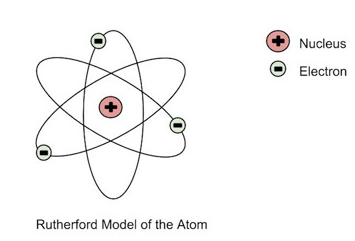
Rutherford's gold foil experiment provided evidence that...
a)
negative and positive charges are spread evenly throughout the atom.
b)
alpha particles have a positive charge.
c)
gold is not a dense as previously thought.
d)
there is a dense positively charged nucleus at the center of an atom.
2.
The atom with the largest atomic radius in Group 18 is -
a)
Ar
b)
He
c)
Kr
d)
Rn
3.
Francium (Fr) has the lowest ionization energy in Group 1 because -
a)
it has the smallest number of valence electrons
b)
it has the greatest atomic mass
c)
it has the greatest number of protons, so it attracts its electrons the strongest
d)
its 1 valence electron is very far from the nucleus, so little energy is needed to remove it
4.
The energy required to remove electrons is the definition of:
a)
Electronegativity
b)
Atomic Number
c)
Atomic Radius
d)
Ionization Energy
5.
Electronegativity is...
a)
the ability of an atom to attract/ accept electrons
b)
the ability of an atom to lose electrons
c)
the energy required to remove an electron from a specific atom
d)
how easy it is to make friends.
6.
Electronegativity __________ from left to right within a period and __________ from top to bottom within a group.
a)
decreases, increases
b)
increases, increases
c)
increases, decreases
d)
stays the same, increases
7.
Families all have similar
a)
Names
b)
atomic numbers
c)
atomic masses
d)
properties
8.
The element with the largest electronegativity in the halogens is -
a)
At
b)
F
c)
Cl
d)
Br
9.

This family (group) contains the most reactive non-metals. They are known as:
a)
Alkali Metal Family
b)
Halogen Family
c)
Noble Gas Family
d)
Transition Metal Family
10.

Is silicon a metal, nonmetal or metalloid?
a)
Metal
b)
NonMetal
c)
Metalloid
11.

Is this a metal, nonmetal or metalloid?
a)
Metal
b)
Nonmetal
c)
Metalloid
12.
Which group of the periodic table is composed of inert (not reactive) gases?
a)
alkali metals
b)
alkaline earth metals
c)
halogens
d)
noble gases
13.
Elements which are shiny, conduct electricity and heat are called
a)
metal
b)
nonmetal
c)
metalloid
d)
nonexistent
14.

This is the correct Lewis Dot diagram for which element?
a)
Mg
b)
Cl
c)
C
d)
O
15.
The electron configuration of an atom is 1s22s22p6. The number of electrons in the atom is
a)
3
b)
6
c)
8
d)
10
100 %

