
 Worksheets
Unit 2 Test Review
Total questions: 20
Worksheet time: 16mins
Name
Class
Date
1.
Which of the following is the smallest unit of life that can carry out all life functions?
a)
the mitochondria
b)
the vacuoles
c)
the nucleus
d)
the cell
2.
Which structures are found in every living cell?
a)
cell membrane and cytoplasm
b)
chloroplasts and mitochondria
c)
a cell wall and nucleus
d)
chloroplasts and cell wall
3.
Which cell structure is found in plant and animals cells and controls what can come into or leave a cell?
a)
cell membrane
b)
cytoplasm
c)
nucleus
d)
vacuole
4.
What is the function of the cell nucleus found in both plant and animal cells?
a)
to produce energy
b)
to control cell activity
c)
to remove waste products
d)
to allow molecules to enter the cell
5.
All cells need energy to function. Which cell organelle is responsible for producing energy in the cell?
a)
chloroplasts
b)
mitochondria
c)
nucleus
d)
vacuoles
6.
Cells with a nucleus and membrane-bound organelles are called ____________________.
a)
prokaryotes
b)
eukaryotes
c)
bacteria
d)
protists
7.
Which of the following is not part of the cell theory?
a)
cells must contain DNA
b)
all living things are made from cells
c)
cells can only come from other cells
d)
cells are the basic unit of life
8.
Which part of the cell is considered to be "selectively permeable" because it allows certain things to enter or leave the cell?
a)
Cell Membrane
b)
Nucleus
c)
Lysosome
d)
Cytoplasm
9.
Most of the cell membrane is made of...
a)
Lipids
b)
Carbohydrates
c)
Proteins
d)
Nucleic acids
10.

This experiment illustrates which property of the cell membrane?
a)
impermeability
b)
selective permeability
c)
insolubility
d)
complete permeability
11.
Hydrophobic means...
a)
water-loving
b)
water-fearing
c)
nonpolar
d)
lipid soluble
12.
"Water Loving"
a)
Hydrophobic
b)
Hydrophilic
c)
Hydroelectric
d)
Hydroloric
13.
The type of cellular transport that requires no energy.
a)
Active Transport
b)
Protein Pumps
c)
Passive Transport
d)
Endocytosis
14.
Which of the following modes of cellular transport does NOT require energy?
a)
Facilitated Diffusion
b)
Protein Pumps
c)
Endocytosis
d)
Exocytosis
15.
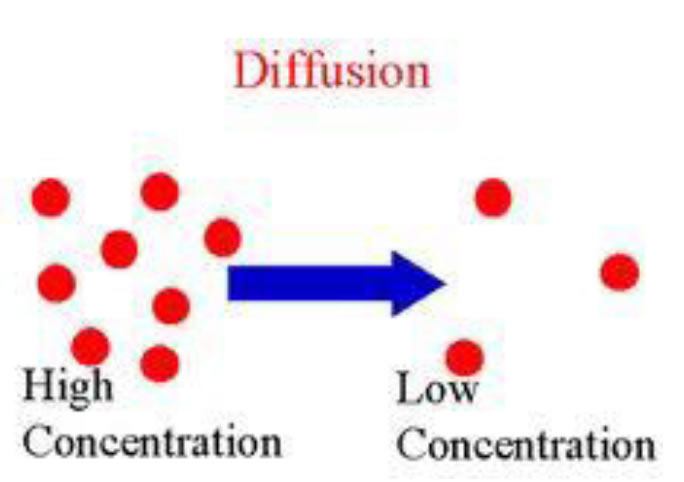
Movement of particles from high to low concentration.
a)
Passive Transport
b)
Active Transport
16.
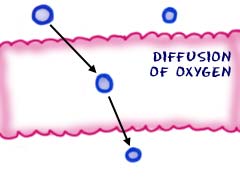
a)
Passive Transport
b)
Active Transport
17.

a)
Passive Transport
b)
Active Transport
18.

a)
Passive Transport
b)
Active Transport
19.
What structure is found in all cells that synthesizes proteins?
a)
Cytoplasm
b)
Ribosomes
c)
Endoplasmic Reticulum
d)
Mitochondria
20.
What kind of cell has no nucleus or membrane bound organelles?
a)
Eukaryote
b)
Prokaryote
100 %

