
 Worksheets
Test Corrections Quiz review
Total questions: 48
Worksheet time: 2hrs 35mins
Name
Class
Date
1.
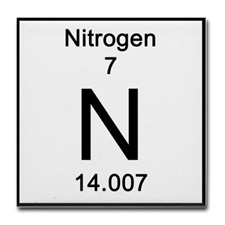
What is the number of protons that the element in this image contain?
a)
14
b)
7
c)
15
d)
18
2.
The positive particles of an atom are
a)
Electrons
b)
Positrons
c)
Neutrons
d)
Protons
3.
The central region of an atom where its neutrons and protons are is its _______.
a)
Nucleus
b)
Electron cloud
c)
Core
d)
Center
4.
An atom with atomic number 6 would have how many protons?
a)
6
b)
12
c)
3
d)
Cannot be determined
5.
Particles in an atom that are neutral and have no charge are ______.
a)
Negatrons
b)
Electrons
c)
Neutrons
d)
Protons
6.
Which of the following is a negatively charged subatomic particle?
a)
Electron
b)
Proton
c)
Neutron
d)
Quark
7.
The particles that are found in the nucleus of an atom are _____.
a)
Neutrons and electrons
b)
Electrons only
c)
Protons and neutrons
d)
Protons and electrons
8.
The atomic number of an elements is the total number of which particles in the nucleus?
a)
Neutrons
b)
Protons
c)
Electrons
d)
Protons and electrons
9.
Most of the mass in an atom is concentrated in the _____.
a)
Electrons
b)
Nucleus
c)
Protons
d)
Empty space
10.

What are the 3 particles that make-up the atom?
a)
Protons, neutrons, and isotopes
b)
Neutrons, isotopes, and electrons
c)
Positives, negatives, and electrons
d)
Protons, neutrons, and electrons
11.

A group of friends gather around a fire to stay warm.
a)
conduction
b)
convection
c)
radiation
12.
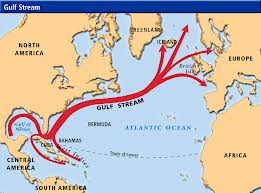
The Gulf Stream is a current that brings warm ocean water from the south to the north.
a)
conduction
b)
convection
c)
radiation
13.

Walking on the warm sand sand with your bare feet.
a)
conduction
b)
convection
c)
radiation
14.

The man goes to take the hot pot off the stove with his bare hands.
a)
conduction
b)
convection
c)
radiation
15.
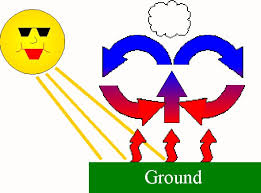
Warm air rises and the cool air sinks.
a)
conduction
b)
convection
c)
radiation
16.
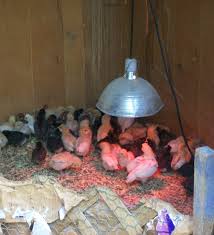
The baby chickens are kept warm from the heat lamps.
a)
conduction
b)
convection
c)
radiation
17.
Where is magma?
a)
inside
b)
outside
18.
What is the most common Intrusive Igneous rock?
a)
Basalt
b)
Gabbro
c)
Diorite
d)
Granite
19.
If a rock is formed from lava, what will the grains be?
a)
coarse
b)
fine
20.
How do Intrusive Igneous rocks cool?
a)
quickly
b)
slowly
c)
really fast
21.

Coarse or Fine
a)
coarse
b)
fine
22.

Is this igneous rock, porphyry, fine-grained or coarse-grained?
a)
fine-grained
b)
coarse-grained
23.

Is this igneous rock, obsidian, fine-grained or coarse-grained?
a)
fine-grained
b)
coarse-grained
24.
Sedimentary rocks may contain fossils.
a)
True
b)
False
25.
Sedimentary rock type made from bits of minerals and other Earth material that were weathered and moved is _?_ sedimentary rock.
a)
clastic
b)
chemical
c)
organic
26.
What is the correct order of making and dropping off of sediments?
a)
weathering, erosion, deposition
b)
erosion, weathering, deposition
c)
weathering, deposition , erosion
27.
What has the highest albedo?
a)
the oceans
b)
glacial ice
c)
the ground
d)
roads
28.

Why does land heat up and cool down faster than water?
a)
Water has a higher albedo to reflect the heat.
b)
Water does not heat up fast, but holds heat well.
c)
Land has a lower specific heat and does not take as much energy to heat.
d)
All are correct.
29.
Melting ice caps will cause the poles to have a ____________ albedo.
a)
higher
b)
lower
c)
same
30.
If the ice caps continue to melt, then there is less albedo at the poles. This process will continue to melt more ice and have less albedo. This is an example of a...
a)
fruit loops
b)
loop di loop
c)
negative feedback loop
d)
positive feedback loop
31.
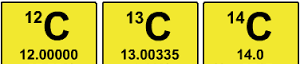
What do these isotopes of carbon all have in common?
a)
neutrons & mass number
b)
atomic number and neutrons
c)
atomic number and electrons
d)
protons, atomic number, and mass number
32.
What quantities vary between isotopes of an element?
a)
protons, electrons, and atomic mass
b)
protons, electrons, and atomic number
c)
neutrons and electrons
d)
neutrons and atomic mass
33.
How many neutrons in C-14?
a)
6
b)
7
c)
14
d)
8
34.
How many neutrons does an atom of the isotope Neon-22 have?
a)
12
b)
10
c)
22
d)
20
35.

a)
2
b)
3
c)
5
36.

a)
2
b)
8
c)
3
d)
13
37.

a)
12
b)
7
c)
8
d)
14
38.
How many electrons does the first shell hold?
a)
1
b)
2
c)
4
d)
8
39.

What is the atomic mass of Potassium?
a)
8
b)
19
c)
39
d)
39.0983
40.
Wind is part of what sphere of Earth?
a)
Windosphere
b)
Atmosphere
c)
Hydrosphere
d)
Airosphere
41.
An example of a connection between ATMOsphere and HYDROsphere is:
a)
rain
b)
rivers
c)
lakes
d)
rocks
42.

This volcano is an example of something you would find in the:
a)
Atmosphere
b)
Biosphere
c)
Hydrosphere
d)
Geosphere
43.

The Four Spheres of Earth
a)
are all connected
b)
have nothing to do with one another
c)
exist on Venus and Mars
d)
don't affect human life
44.
What is Half-life?
a)
The amount of time it takes for some of the nuclei in a sample of the isotope to decay
b)
The amount of time it takes for half the electrons in a sample of the isotope to decay
c)
The amount of time it takes for half the nuclei in a sample of the isotope to decay
d)
the amount of time it takes to double the nuclei in a sample of the isotope to decay
45.
After the third half-life, how much of the sample is left?
a)
1/2
b)
1/3
c)
1/16
d)
1/8
46.
If the half-life of uranium-232 is 70 years, how many half-lives will it take for 10 g of it to be reduced to 1.25 g?
a)
1 half-life
b)
2 half-lives
c)
3 half-lives
d)
4 half-lives
47.
Metamorphic rocks form from ___.
a)
igneous rocks
b)
other metamorphic rocks
c)
sedimentary rocks
d)
all types of rocks
48.
What are the two main types of metamorphic rocks and how are they different?
a)
intrusive and extrusive; intrusive rocks are formed inside the earth and extrusive rocks are formed on the surface
b)
foliated and nonfoliated; foliated rocks do not have visible bands/layers and nonfoliated rocks do have visible bands/layers
c)
intrusive and extrusive; intrusive rocks are formed on the earth's surface and extrusive rocks are formed in the Earth
d)
foliated and nonfoliated; foliated rocks have visible bands/layers and nonfoliated rocks do not have visible bands/layers
100 %

