wayground logo

Free Printable Worksheets

Font size

S
M
L
XL
Worksheets

Asexual/Sexual Reproduction

Total questions: 81

Worksheet time: 2hrs 6mins

Name
Class
Date
1.
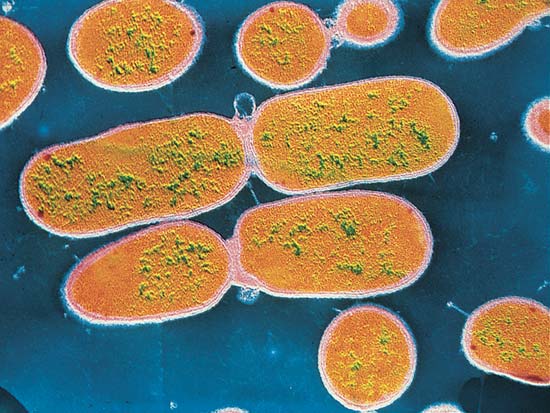
Which type of asexual reproduction is taking place?
A planarian is a non-parasitic flatworm.  If a planarian was injured by a predator, it could re-grow its body parts.  If the body parts were not eaten by the predator, the part could re-grow into a whole new planarian as well.
a)
Budding
b)
Fission
c)
Vegetative propagation
d)
Regeneration
2.
The offspring from asexually reproduced organisms are?
a)
Different than their parents
b)
Identical to parents
c)
Like a combination from both parents
d)
A different species
3.
Prokaryotes (bacteria) reproduce asexually via -
a)
spore formation
b)
bud creation
c)
vegetative propagation
d)
binary fission
4.
The offspring from asexually reproduced organisms are?
a)
Different than their parents
b)
Identical to parents
c)
Like a combination from both parents
d)
A different species
5.

Requires two parents

a)

sexual

b)

asexual

6.
Sexual reproduction requires _____ parents and asexual reproduction requires ___ parents
a)
1,1
b)
2,2
c)
2,1
d)
1,2 
7.

Penguins lay 1-2 fertilized eggs that the male and female take turns incubating on their feet. What type of reproduction does this example represent?

a)

Sexual reproduction

b)

Asexual reproduction

8.

This process is NOT a type of asexual reproduction ...

a)

fusion

b)

binary fission

9.
Which reproduction requires a mate?
a)
asexual
b)
sexual
c)
neither
10.
Passes genetic information
onto future generations
a)
sexual reproduction
b)
asexual reproduction
c)
both
11.

Which of the following is not a benefit of asexual reproduction?

a)

Offspring will be successful in an unchanged environment.

b)

Good at adapting to changing environments.

c)

Only requires one parent to produce offspring.

d)

Can reproduce rapidly.

12.
Asexual reproduction's advantage is_______
a)
no mate needed 
b)
variety
13.
Type of reproduction?
a)
sexual; binary fission
b)
asexual; binary fission
c)
sexual; budding
d)
asexual; budding
14.
Type of reproduction?
a)
sexual; budding
b)
asexual; budding
c)
asexual; regeneration
d)
asexual; binary fission
15.
Type of reproduction?
a)
asexual; budding
b)
asexual; regeneration
c)
sexual; budding
d)
sexual; regeneration
16.
The smallest unit of life...
a)
atom
b)
organism
c)
tissue
d)
cell
17.

What type of asexual reproduction is taking place?

a)

Binary Fission

b)

Budding

c)

Fragmentation

d)

Regeneration

e)

Vegetative Reproduction

18.

What type of asexual reproduction is taking place?

a)

Binary Fission

b)

Budding

c)

Fragmentation

d)

Regeneration

e)

Vegetative Reproduction

19.

What type of asexual reproduction is taking place?

a)

Binary Fission

b)

Budding

c)

Fragmentation

d)

Regeneration

e)

Vegetative Reproduction

20.

What type of asexual reproduction is taking place?

a)

Binary Fission

b)

Budding

c)

Fragmentation

d)

Regeneration

e)

Vegetative Reproduction

21.

Asexual Reproduction has _________

a)

One Parent

b)

Two Parents

22.

Sexual Reproduction has _________

a)

One Parent

b)

Two Parents

23.

the is a picture of

a)

Binary Fission

b)

Budding

c)

Vegetative Propagation

d)

Regeneration

24.

This is a picture of

a)

Budding

b)

Binary Fission

c)

Vegetative Propagation

d)

Regeneration

25.

This is a picture of _______

a)

Binary Fission

b)

Budding

c)

Vegetative Propagation

d)

Regeneration

26.

Cutting a piece of a plant and putting it back in the ground is called _____

a)

Binary Fission

b)

Budding

c)

Vegetative Propagation

d)

Regeneration

27.

DNA is inside of the

a)

Cell Membrane

b)

Mitochondtia

c)

Nucleus

d)

Vacuole

28.

DIVERSE

a)

characteristic

b)

reproduction

c)

offspring

d)

different

29.

OFFSPRING

a)

babies or children

b)

different

c)

the same

d)

a characteristic that describes you

30.

TRAIT

a)

different

b)

a characteristic that describes you

c)

babies or children

d)

the same

31.

UNIFORM

a)

babies or children

b)

the same

c)

different

d)

a characteristic that describes you

32.

Cutting a bud from a potato and planting it is called

a)

binary fission

b)

budding

c)

vegetative propagation

d)

regeneration

33.
Moves water UP
a)
Xylem
b)
Phloem
34.

The part of the plant

that is generally

under the ground

and in the soil

a)

Reproductive System

b)

Transpiration

c)

Shoot System

d)

Root System

35.

The part of the plant

that is generally above the ground including stems, leaves, buds and reproductive structures

a)

Stem System

b)

Leaf system

c)

Shoot system

d)

Xylem

36.

In general, leaves, roots, stems and flowers

a)

Plant Systems

b)

Plant Cells

c)

Plant Organs

d)

Plant Organisms

37.

Vascular tissue (tubes) responsible for the transportation of water and minerals up from the roots and around the plant.

a)

Stomata

b)

Transpiration

c)

Phloem

d)

Xylem

38.

Vascular tissue (tubes) responsible for the transportation of glucose down and around in a plant.

a)

Transpiration

b)

Xylem

c)

Phloem

d)

Root Hairs

39.

I provide plant cells their rigid shape. I am the...

a)

Basketball that Nic Quarne left in Mr. Woller's room last week

b)

Cytoskeleton

c)

Cell Membrane

d)

Cell Wall

40.

identify the cell part

a)

cytoplasm

b)

chloroplast

c)

centrioles

d)

golgi body

41.

What type of cell is this?

a)

Plant

b)

Animal

42.

Where does photosynthesis occur?

a)

mitochondria

b)

stomata

c)

xylem

d)

chloroplast

43.
I store water in both plant and animal cells. What am I?
a)
cytoplasm
b)
ribosomes
c)
vacuole
d)
lysosomes
44.
A rigid layer that lies outside the cell's  membrane is...
a)
Cytoskeleton
b)
Cilia
c)
Cell Wall
d)
Flagella
45.
What type of tropism response to light? 
a)
Gravitropism
b)
Thigmotropism
c)
Phototropism
d)
Hydrotropism
46.
What type of tropism response to gravity?
a)
Hydrotropism
b)
Phototropism
c)
Thigmotropism
d)
Gravitropism
47.
What type of tropism response to water? 
a)
Hydrotropism
b)
Gravitropism
c)
Thigmotropism
d)
Phototropism
48.
What type of tropism response to touch? 
a)
Gravitropism
b)
Phototropism
c)
Thigmotropism
d)
Hydrotropism
49.

Wilting is a plant's response to:

a)

High turgor pressure

b)

Low turgor pressure

c)

Gravity

d)

Sunlight

50.
Asexual reproduction in organisms produce offspring that are______________
a)
different from the parent plant
b)
identical to the parent plant.
c)
highly charged organism
d)
not like the parent plant.
51.
A plant’s roots grow thicker near the stream than away from the stream.  To what stimulus is the plant responding? 
a)
thigmotropism
b)
hydrotropism
c)
phototropism
d)
gravitropism
52.
Through which process do plants obtain energy?
a)
Transpiration
b)
Photosynthesis
c)
Respiration
d)
Precipitation
53.
Look at the picture.
A dog that sits when told to.
a)
inherited
b)
learned
54.
Look at the picture.
Eye color.
a)
inherited
b)
acquired
55.
Look at the picture.
The ability to play basketball.
a)
inherited
b)
learned
56.
Look at the picture.
Purple hair.
a)
inherited
b)
learned
57.
Look at the picture.
A baby crying when its hungry.
a)
inherited
b)
learned
58.
Look at the picture.
Birds migrating south for the winter.
a)
inherited
b)
learned
59.
Look at the picture.
Speaking different languages.
a)
inherited
b)
learned
60.
Look at the picture
Dog playing guitar.
a)
instinct
b)
learned
61.
What word means "not living"?
a)
acquired
b)
abiotic
c)
biotic
d)
community
62.
What word means "living"?
a)
acquired
b)
abiotic
c)
biotic
d)
community
63.
Temperature, light, air, water, and soil are all  _____  parts of the environment
a)
alive
b)
biotic 
c)
abiotic
d)
living
64.
Which is an example of a single-celled organism?
a)
bird
b)
cricket
c)
snake
d)
bacteria
65.
Which is an example of a multicellular organism?
a)
amoeba
b)
bacteria
c)
worm
d)
fungi
66.
Which is an example of a multicellular organism?
a)
bacteria
b)
bear
c)
algae
d)
yeast
67.
Almost all of a cell's genes are found where?
a)
ribosomes
b)
mitochondria
c)
nucleus
68.
The star fish has the ability to reproduce asexually in a process called_______
a)
budding
b)
binary fission
c)
regeneration
69.
Organisms that reproduce asexually generally have offspring that are 
a)
unicellular. 
b)
multicellular. 
c)
genetically varied. 
d)
genetically identical. 
70.

Creates diversity in the DNA

a)

Asexual

b)

Sexual

71.

Requires a partner

a)

Asexual

b)

Sexual

72.

Identify the type of asexual reproduction shown in the image.

a)

vegetative propogation

b)

cloning

c)

binary fision

d)

budding

73.

Identify the type of asexual reproduction shown in the image.

a)

vegetative propogation

b)

cloning

c)

binary fision

d)

budding

74.

Identify the type of asexual reproduction shown in the image.

a)

vegetative propogation

b)

cloning

c)

binary fision

d)

budding

75.

Identify which type of reproduction the organism shown performs.

a)

asexual

b)

sexual

76.

Identify which type of reproduction the organism shown performs.

a)

asexual

b)

sexual

77.

Classify this as asexual or sexual reproduction: (if asexual give the type)

a)

Asexual, budding

b)

Asexual, fragmentation

c)

Sexual, humans

d)

Asexual, lizards

78.
What is the TISSUE that carries food from a plant's leaves to its cells?
a)
xylem
b)
phloem
c)
photsynthesis
d)
vascular tissue
79.
What is TISSUE that carries water and nutrients from the roots to every part of the plant?
a)
xylem
b)
pholem
c)
gymnosperm
d)
angiosperm
80.
What part of the plant cell is the control center of the cell?
a)
chloroplast
b)
ribosome
c)
nucleus
d)
cell wall
81.
What part of the plant cell stores water?
a)
nucleus
b)
vacuole
c)
chloroplast
d)
ribosome

Similar Resources on Wayground