wayground logo

Free Printable Worksheets

Font size

S
M
L
XL
Worksheets

Dollars Ch 5 Savings

Total questions: 66

Worksheet time: 28mins

Name
Class
Date
1.
How is wealth defined?
a)
How much money you have in your Checking and Saving accounts
b)
Debts - Assets
c)
All assets, including money in the bank + retirment
d)
Assets - Debts
2.

Which of the following is FALSE about saving and investing?

a)

Saving doesn't outpace inflation; investing usually does

b)

Both saving and investing generally have low returns

c)

Saving is for short-term; investing is for the long-term

d)

Saving has more risk; investing has less risk

3.
Which is NOT a typical goal for a savings account?
a)
To create an emergency fund
b)
To pay for higher education
c)
To save for a new car
d)
To buy groceries for this week
4.
What is a general rule of thumb on how much you should save?
a)
5% of your income
b)
10% of your income
c)
20% of your income
d)
30% of your income
5.
What is a 529 account?
a)
A type of retirement account for teens & younger adults
b)
A special type of saving account for minors
c)
A tax exempt fund that lets your savings grow for school
d)
A special type of saving account for college students only
6.
What is a good strategy to help you save?
a)
1st, spend money on all expenses; put the rest into saving
b)
Tap into your savings on a regular basis to purchase small items, like snacks
c)
Pay yourself first - set aside money for savings each month
d)
Keep your spending and saving money together in 1 account
7.

What is a reason for why so many Americans live paycheck-to-paycheck?

a)

Many people are paying themselves first and then spending

b)

Many people only buy what they NEED, not what they WANT

c)

Many people impulse shop

d)

Many people spend within their budget
8.
What is a benefit of opening up a Health Savings Account (HSA)?
a)
The funds expire only every 5 years
b)
You earn interest, but it's taxed
c)
You can use the funds for retirement once you're 75
d)
You can use pre-tax $ to pay for out-of-pocket costs
9.
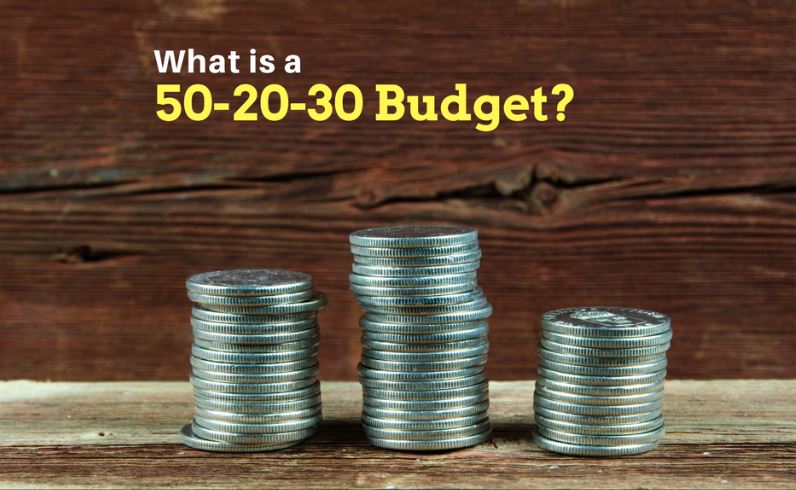
How does the 50-20-30 rule distribute your income?
a)
50% expenses, 20% flexible spending, 30% saving
b)
50% expenses, 20% saving, 30% flexible spending
c)
50% flexible spending, 20% saving, 30% expenses
d)
50% saving, 20% flexible spending, 30% expenses
10.
How is compound interest different than simple interest?
a)
It is simple interest - interest earned on that interest
b)
It is double the simple interest earned on an investment
c)
It is simple interest + interest earned on that interest
d)
It's not different; they are one and the same
11.

Which is TRUE about online saving accounts?

a)

Usually have higher interest rates than non-online accounts

b)

They usually have lower costs compared to brick-and-mortar banks

c)

Online accounts are not FDIC insured

d)

You can withdraw money an unlimited # of times
12.
Assuming a rate of growth of 8%, in how many years will your $ double?
a)
3 years
b)
6 years
c)
9 years
d)
12 years
13.
Saving accounts differ from checking accounts in that...
a)
Money in a saving account can be used to fund a bank's loans
b)
Saving accounts let you withdraw $ an unlimited # of times
c)
Saving accounts come with more fees than checking accounts
d)
Checking accounts offer higher interest rates
14.

What might you need to open a savings account?

a)

Minimum opening deposit

b)

Your previous year's tax returns (or your parents')

c)

The routing number to a checking account

d)

Identification

15.
How does inflation impact the money in your savings account?
a)
Inflation decreases only the $ you earn in interest
b)
Inflation increases the value of the money in your account
c)
Inflation has no impact on $ in your savings account.
d)
The purchasing power of your money decreases over time
16.
True or False: You need a checking account to open a savings account.
a)
True
b)
False
17.

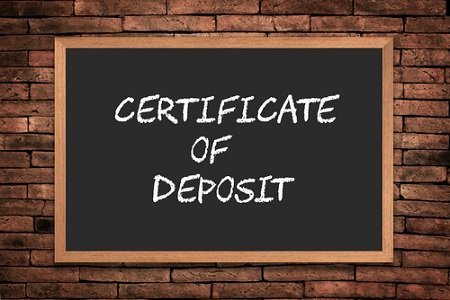
Which is TRUE about Certificates of Deposit (CDs)?

a)

You agree to keep $ in a CD for an undetermined period of time

b)

You pay the bank some interest to keep $ in the CD

c)

The bank can loan out the $ in your CD

d)

The bank pays you interest in return

18.
Most Americans have an emergency fund and money saved for retirement
a)
True
b)
False
19.
The power of compound interest works BEST the longer an investment is allowed to grow
a)
True
b)
False
20.
A savings account should be used for daily purchases
a)
True
b)
False
21.
If your savings account rate is lower than the inflation rate -you will make money
a)
True
b)
False
22.
If you deposit $200 into a CD @ 1% for 3 years, how much simple interest will you earn ?
a)
$1
b)
$5
c)
$6
d)
$35
23.
To successfully open a savings account, which of the following is NOT required?
a)
Evidence of a job
b)
Minimum deposit (if applicable)
c)
A legal form of identficiation
d)
If under 18, a guardian's signature
24.
Elizabeth is investing her money into an account that gives her an interest rate of 4%. How many years will it take her money to double?
a)
10
b)
12
c)
15
d)
18
25.

Which one of these account types requires you keep your money deposited for a fixed amount of time?

a)

Money market account (MMA)

b)

Savings account

c)

Certificate of deposit (CD)

d)

Checking account

26.
With compound interest what increases year after year
a)
Nothing
b)
The Interest rate
c)
The principal amount getting the interest rate
d)
Both the interest rate and principal amount
27.
Fill in each blank with one word:
Research has shown that the more money you ____________, the _________ you feel.
a)
Spend, Better
b)
Earn, Happier
c)
Save, Sadder
d)
Save, Happier
28.
Which of the following is an effective strategy for personal saving?
a)
Wait until the end of the month and save whatever is left
b)
Save a certain percentage of each paycheck & do DD
c)
Cover all wants and needs and save whatever is left over
d)
Take out a loan
29.
Liz is investing her money with a rate of 4%. How many years will it take her money to double?
a)
10
b)
18
c)
15
d)
24
30.
Defined contribution retirement account that is taken out of your paycheck before you pay any taxes on this income.
a)
IRA
b)
Roth IRA
c)
401K
d)
Pension
31.
An account that pays interest on a specific sum of money that a person has deposited for a specific period of time. If withdrawn before that time,the bank imposes a penalty fee.
a)
Savings Account
b)
Certificate of Deposit (CD)
c)
Checking Account
d)
Money Market Account
32.
Interest paid periodically and paid on the principal plus interest earned.
a)
Simple Interest
b)
Compound Interest
c)
Hard Interest
d)
Double Interest
33.
The percentage rate that is used when calculating the interest (money) paid on a savings, money market, or investment account.
a)
Rule of 72
b)
Interest rate
c)
Simple Interest
d)
Rate of Return
34.
Money paid to you by a financial institution when you deposit funds there.
a)
Allowance
b)
Income
c)
Interest
d)
Tips
35.
Act of purchasing assets (stocks, bonds, property) with expectation that they will increase in value over time.
a)
Withdrawing
b)
Depositing
c)
Time Value of Money
d)
Investing
36.
Retirement account that allows investors to make tax-deductible contributions. Individuals are responsible for setting up and managing the account.
a)
401K
b)
IRA
c)
403B
d)
Social Security
37.
A type of bank account where the bank invests the money in government and corporate securities in order to pay a higher interest rate than a regular savings account. You typically have to have a large minimum balance in order to have such an account.
a)
Savings Account
b)
Money market account
c)
Checking Account
d)
CD
38.
A plan in which an employer guarantees a certain sum of money to the employee based on the number of years of service upon retirement.
a)
401K
b)
Defined Contribution Plan
c)
Pension
d)
IRA
39.
Refers to the likelihood that an investment will decrease in value.
a)
Chance
b)
Gamble
c)
Stake
d)
Risk
40.
A portion of your income that you do not spend on your current needs, but instead set aside for future needs.
a)
Collateral
b)
Discretionary Income
c)
Savings
d)
Net Worth
41.
An account you set up at a depository institution where you put funds for future use.
a)
Checking Account
b)
Christmas Fund
c)
Vacation Fund
d)
Savings account
42.
A quick way to estimate the amount of time it will take for your money to double when placed in a savings account at a given interest rate. 72 divided by interest rate.
a)
Rule of 27
b)
Rule of Doubles
c)
20/10 Rule
d)
Rule of 72
43.
The phrase "Not putting all your eggs in one basket" means to
a)
invest in the same stock.
b)
invest in dairy stock
c)
invest in livestock
d)
invest in different types of stock.
44.
The phrase "pay yourself first" means to
a)
Treat yourself to something you want before spending any other money.
b)
Set money aside for your Christmas savings fund.
c)
put at least 10% of your income in a savings account before spending any money.
d)
Make sure all of your bills and other expenses are paid before saving money.
45.
A low risk investment offered by the government that has the most predictable income.
a)
Certificate of Deposit (CD)
b)
U.S. Savings Bond
c)
Money market account
d)
Corporate Bonds
46.
Which of the following is the most liquid asset?
a)
Stocks
b)
Savings Bonds
c)
Checking Account
d)
Certificate of Deposit (CD)
47.

What is the name for point #1?

a)

peak

b)

trough

c)

recession

d)

expansion

48.

What is the name for point #2?

a)

peak

b)

trough

c)

recession

d)

expansion

49.

What is the name for point #3?

a)

peak

b)

trough

c)

recession

d)

expansion

50.

What is the name for point #4?

a)

peak

b)

trough

c)

recession

d)

expansion

51.

A depository institution account that is designated to hold money not spent on current consumption.

a)

Certificate of Deposit

b)

Checking Account

c)

Money Market Deposit Account

d)

Savings Account

52.

An account at a depository institution that is used for a fixed period of time and allows restricted access to the funds deposited.

a)

Certificate of Deposit

b)

Checking Account

c)

Money Market Deposit Account

d)

Savings Account

53.

An account at a depository institution that provides an easy method for withdrawing and depositing money.

a)

Certificate of Deposit

b)

Checking Account

c)

Money Market Deposit Account

d)

Savings Account

54.

An account at a depository institution that usually has minimum balance requirements and tiered interest rates.

a)

Certificate of Deposit

b)

Checking Account

c)

Money Market Deposit Account

d)

Savings Account

55.

Which two are reasons savings tools ideal for storing emergency savings? (Check all that apply)

a)

Secure

b)

Insecure

c)

Not Liquid

d)

Liquid

56.

Which type of savings tool typically earns the HIGHEST Interest?

a)

Savings

b)

Checking

c)

Certificate of Deposit

d)

Money Market Account

57.

Reduces the need to carry large amounts of cash.

a)

Certificate of Deposit

b)

Checking Account

c)

Money Market Deposit Account

d)

Savings Account

58.

Easily accessible, but less liquid than checking accounts.

a)

Certificate of Deposit

b)

Checking Account

c)

Money Market Deposit Account

d)

Savings Account

59.

May require a minimum balance or have a limited number of

withdrawals each month.

a)

Certificate of Deposit

b)

Checking Account

c)

Money Market Deposit Account

d)

Savings Account

60.

Penalties are most likely assessed if funds are withdrawn early.

a)

Certificate of Deposit

b)

Checking Account

c)

Money Market Deposit Account

d)

Savings Account

61.

Time length usually ranges from seven days to ten years.

a)

Certificate of Deposit

b)

Checking Account

c)

Money Market Deposit Account

d)

Savings Account

62.

Less liquid than savings accounts but earns higher interest rates.

a)

Certificate of Deposit

b)

Checking Account

c)

Money Market Deposit Account

d)

Savings Account

63.

Glenn recently graduated from college and accepted his first career position. He received a signing bonus of $1,000 for his new job. He plans to buy a new car in one year and has decided to save that $1,000 to use as a down payment on a new car. Which savings tool would you recommend Glenn

utilize and why?

a)

Checking Account because he can quickly access his funds daily and it is the MOST liquid option.

b)

Certificate of Deposit because he can earn a higher interest rate and doesn't need the money for a year

64.

Micah is a high school senior who works part‐time earning $500 per month. He is responsible for paying several of his own expenses including entertainment, automobile insurance and eating out. He needs a flexible account which allows him easy access to his money. Which savings tool would you recommend Glenn utilize and why?

a)

Checking Account because he needs access to his funds often.

b)

Savings account because he can overdraft into savings as needed.

c)

Certificate of Deposit because he does not need access to his funds often

d)

Money Market Account because does not need access to his funds often

65.

José and Gabriela were recently married. They received $1,500 from wedding presents and want to use the money wisely. They have decided to save $1,000 and use it to take a vacation next year for their one‐year anniversary. They want the remaining $500 to be the start of an emergency fund for

their new life together. Which savings tool(s) would you recommend José and Gabriella utilize and why?

a)

$1000 in savings account because it earns a higher interest rate and he doesn't need it for a year and $500 in money market account because it can easily accessible when needed.

b)

$1000 in checking account because it earns a higher interest rate and he doesn't need it for a year and $500 in savings because it can easily accessible when needed.

c)

$1000 in CD because it earns a higher interest rate and he doesn't need it for a year and $500 in savings because it can easily accessible when needed.

d)

$1000 in CD because it earns a higher interest rate and he doesn't need it for a year and $500 in money market account because it can easily accessible when needed.

66.

What is this lesson about?

a)

Taxes

b)

Savings Tools

c)

Depository Institutions

d)

Spending Plans