wayground logo

Free Printable Worksheets

NEW

Font size

S
M
L
XL
Worksheets

7.3 Bonding in Metals

Total questions: 20

Worksheet time: 25mins

Name
Class
Date
1.

Why are alloys generally used to make everyday objects?

a)

Alloys are often stronger and less active than pure metals.

b)

Alloys have different melting point than pure metals.

c)

Alloys are less expensive to produce than pure metals.

d)

Alloys have ionic bonds instead of metallic bonds.

2.

Metallic bonding is...

a)

a type of covalent bond.

b)

a type of ionic bond.

c)

an attraction between positive and negative ions.

d)

an attraction between positive ions and electrons.

3.
Which of the following is NOT a property of a metal?
a)
ductile
b)
good electrical conductor
c)
good thermal insulator
d)
malleable
4.
At room temperature, most metals are
a)
liquid
b)
solid
c)
gas
d)
an alloy
5.
Metals are often used to make wire because they are 
a)
malleable
b)
ductile
6.
Metals are used in electrical wires because they have a high ____________conductivity. 
a)
 electrical
b)
thermal
7.

All alloys are mixtures.

a)

True

b)

False

8.

The most common element added to iron to create steel alloy is ...

a)

tungsten

b)

vanadium

c)

chromium

d)

carbon

9.

Rusting is the corrosion of:

a)

Zinc

b)

Iron

c)

Lithium

d)

Nickel

10.
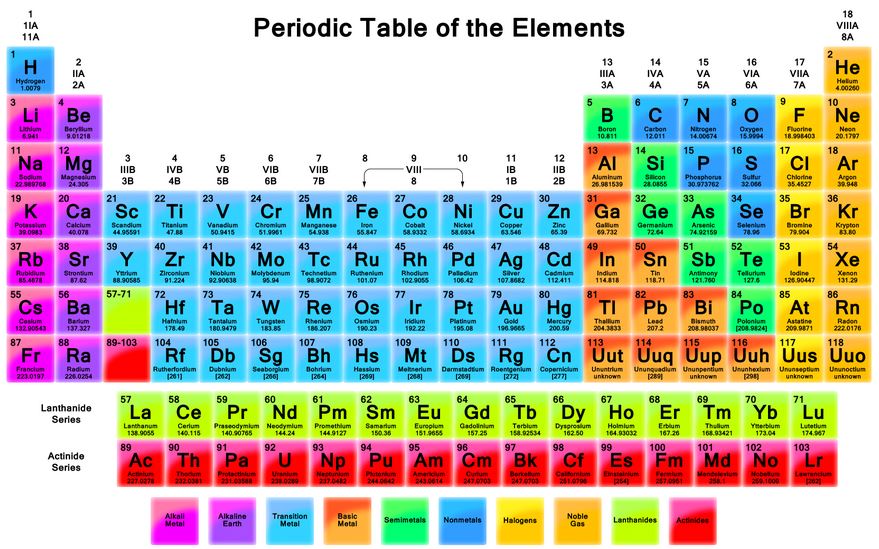
Which of the following has a full valence shell?
a)
Oxygen
b)
Neon
c)
Barium
d)
Carbon
11.
Elements on the LEFT side of the periodic table will most likely form:
a)
Positive ions
b)
Negative ions
c)
Neutral Ions
d)
None of these
12.
Bonds that form between two metals are called ______________ bonds.
a)
ionic 
b)
covalent
c)
metallic
d)
pervasive
13.
Which of these is NOT an alloy?
a)
bronze
b)
copper
c)
brass
d)
stainless steel
14.
Electrons that are free to move in metals
a)
delocalized electrons
b)
oxidation number
c)
chemical bond
d)
salts
15.
Why do metals conduct
a)
They are shiny
b)
The electrons are held tightly within the lattice
c)
The electrons are delocalised and able to move
d)
The electrons are shared between two metal ions
16.
What is the basis of a metallic bond?
a)
the attraction of neutral metal atoms.
b)
the attraction between protons and neutrons.
c)
the attraction between positive metal ions and interlocking electrons.
d)
the attraction between positive metal ions and free floating electrons.
17.
What type of bond is illustrated above?
a)
Metallic
b)
Ionic
c)
Covalent
d)
Wiggly
18.

Which crystal structure does the picture show?

a)

BBC (British Broadcasting Company)

b)

FCC (Face-Centered Cubic)

c)

SC (Simple Cubic)

d)

BCC (Body Center Cubic)

19.

Which crystal structure does the picture show?

a)

BBC (British Broadcasting Company)

b)

FCC (Face-Centered Cubic)

c)

SC (Simple Cubic)

d)

BCC (Body Center Cubic)

20.

Which crystal structure does the picture show?

a)

BBC (British Broadcasting Company)

b)

FCC (Face-Centered Cubic)

c)

HCP (Hexagonal Close-Packed)

d)

BCC (Body Center Cubic)