
 Worksheets
Periodic table review
Total questions: 67
Worksheet time: 1hrs 6mins

Vertical columns of elements that DO share chemical properties (react the same) because they have the same number of VALENCE ELECTRONS in their outer shells.
Groups
Periods

Horizontal rows of elements that share the same number of ENERGY LEVELS but DO NOT share chemical properties.
Groups
Periods

The periodic table is arranged by increasing ______ ______, which is equal to the number of protons.
atomic mass
atomic number
The mass number is the ______________ + ____________ in the atom.
neutrons + electrons
protons + electrons
protons + neutrons
electrons
The chemical symbol for Carbon is?
C
Ca
K
Cl
What particles make up the nucleus?
electrons and protons
electrons and neutrons
electrons, protons, and neutrons
protons and neutrons
What particles are not in the nucleus of an atom?
protons
electrons
neutrons
protons and neutrons
Electrons are particles that..
have a positive charge
have a negative charge
have no charge
have a Visa charge card
Protons are particles that..
have a positive charge
have a negative charge
have no charge
have a Visa charge card
Neutrons are particles that..
have a positive charge
have a negative charge
have no charge
have a Visa charge card


What is the symbol for the element with the atom number of 31?
P
Ge
S
Ga
What family is Fluorine (F) in?
Alkali Metals
Alkaline Earth Metals
Halogens
Noble Gases
Which family of elements is the least reactive?
Alkaline metals
Alkaline Earth Metals
Halogens
Nobel Gases
Which number on the periodic table tells you how many protons are in an element?
Atomic Number
Mass Number
Group Number
Period Number
MULTIPLE SELECT. Where do you find the valence electrons of an atom?
Outer Energy level
Lowest energy level
Highest energy level
No energy level
How many valence electrons does Lithium have?
1
3
None
2
MULTIPLE SELECT: Which is true for Chlorine?
It is in the Halogen Family
It is in Group 17
In is in period 4
It has 18 neutrons
None of the above
If an element is shiny and malleable, would it be classified as:
A metal
A nonmetal
A metalloid
Is Silicon a
metal
nonmetal
metalloid
Which Lewis electron-dot diagram represents a nitrogen atom in the ground state?


An atom in the ground state has a total of 7 electrons, 7 protons, and 7 neutrons. Which Lewis electron-dot diagram represents this atom?


Nonmetals are more reactive
On the right side of the periodic table
On the left side of the periodic table
Metals are more reactive
On the right side of the periodic table
On the left side of the periodic table
Which Alkali Metal is the most reactive?
Lithium
Sodium
Potassium
Rubidium
Which group has the lowest ionization energy?
Group 1
Group 2
Group 17
Group 18


What's a valence electron?
electrons in the second energy level
electrons in the outermost energy level
the atomic number
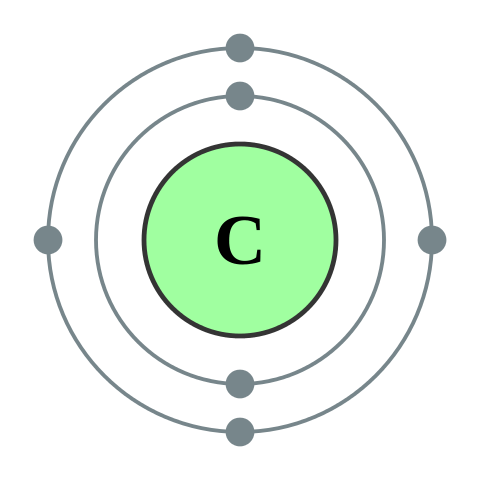
How many valence electrons does carbon have?
4
5
6

How many valance electrons does Si contain? (click to see image)
4
28
None of these

How many valence electrons are found in atoms of Calcium?
4
5
2
As you move from left to right on the periodic table, the number of valence electrons.......
Increases
Decreases
Remains the same
As you move down a group on the periodic table, the number of valence electrons....
Increases
Decreases
Remains the same
Which of the following reasons explains why there is a decimal for most atomic masses?
The mass of one atom can have a fraction.
Since electrons are very small mass they only add a little bit, usually only a decimals worth.
It is the average mass of all the potential isotopes of an atom.
Neutrons have a mass of 1.1 meaning that fractions are common.
Electronegativity __________ from left to right within a period and __________ from top to bottom within a group.
decreases, increases
increases, increases
increases, decreases
stays the same, increases
Atomic radius generally increases as we move __________.
down a group and from right to left across a period
up a group and from left to right across a period
down a group and from left to right across a period
up a group and from right to left across a period
An element has the following natural abundances and isotopic masses: 90.92% abundance with 19.99 amu, 0.26% abundance with 20.99 amu, and 8.82% abundance with 21.99 amu. Calculate the average atomic mass of this element.
19.23 amu
22.70 amu
20.16 amu
21.09 amu
Calculate the elemental atomic mass of Mg if the naturally occurring isotopes are 24Mg, 25Mg and 26Mg. Their masses and abundances are as follows:
Isotope Atomic Mass Isotopic Abundance
24Mg 23.98504 amu 78.70%
25Mg 24.98584amu 10.13%
26Mg 25.98259 amu 11.17%
25.435 amu
24.309 amu
23.257 amu
21.020 amu

