
NEW
Font size
 Worksheets
Vision
Total questions: 45
Worksheet time: 32mins
Wave height
frequency
wavelength
amplitude
wave speed
what color is visible when all color is absorbed?
black
white
dark white
a rainbow
what color is visible when all colors are reflected
light black
dark white
rainbow
white
how can we see color?
the color we see is the only color absorbed, and the rest is reflected off.
all the colors are absorbed, and the color we see is the reflected color.

What does the picture below illustrate?
Visible Light Spectrum
Electromagnetic Spectrum
Frequency Indicator
Color Line
Of the visible spectrum, what color has the longest wavelength?
Blue
Green
Yellow
Red
Violet
Light is a type of energy that travels as an ______________ ____________.
Longitudinal Wave
Electric Current
Electromagnetic Wave
Magnetic Wave
A blue dish appears blue because it
absorbs blue light
absorbs white light
reflects white light
reflects blue light
___________ is a form of energy that we can see with our eyes.
Radio Waves
Visible Light
Ultraviolet
Reflection
What is visible light used in?
Light Bulbs, TVs, Lasers
Nothing, Visible light cannot be used
Sound
When we Breathe


A leaf is green. What does this tell you about the light that is being absorbed?
The light is a UV ray.
The light is not a part of the light spectrum.
All colors are reflected except green.
All colors are absorbed except green
All of the following are needed to perceive vision except:
Olafactory nerve
Light
Brain
Eyes
Of the visible spectrum, what color has the shortest wavelength?
Magenta
Red
Green
Blue
Yellow
A very bright light would be measured by
A large (tall) amplitude
A large (long) wavelength
A small (short) amplitude
A small (short) wavelength
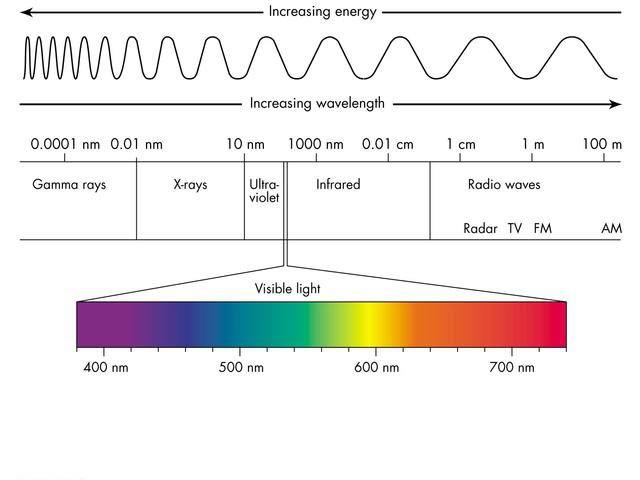
What is the correct order of the visible light spectrum starting with the longer wavelength?
Red, yellow, orange, blue, violet, indigo
Violet, indigo, blue, green, yellow, orange, red
Green, yellow, blue, indigo, red, orange
Red, orange, yellow, green, blue, indigo, violet
Which light wave on the electromagnetic spectrum is visible with the use of a black light?
Microwaves
Visible light waves
Ultra Violet (UV) light waves
X-Rays
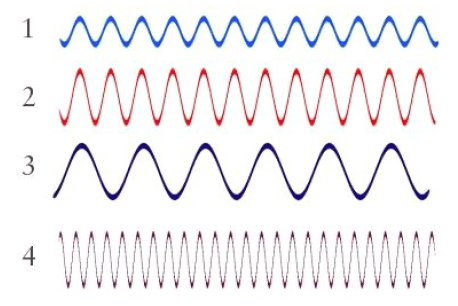

A specific wavelength will be demonstrated by an object’s
Color
Shape
Brightness
Movement
The tendency of an object to absorb more frequencies then others is ___________ absorption.
Cool
Selective
Color
Wave
Regulates the amount of light entering the eye and gives the eye its color.
Iris
Lens
Pupil
Retina


region of the sharpest vision
cornea
scelera
optic disc
Fovea
What is responsible for allowing us to see black/white?
choroid
rods
lens
cones
All of the following are complimentary color pairs according to the opponent process theory except:
Green/Red
Black/White
Red/Blue
Yellow/Blue
The trichromatic Theory of vision is based on color perception in all of the following cones except:
Yellow
Red
Green
Blue
The photopigment in rods (responsible for a negative afterimage when bleached) is called
chlorophyll
rhodopsin
chromophore
photoreceptors

