
 Worksheets
Stars & Galaxies in the Universe
Total questions: 25
Worksheet time: 8mins
Name
Class
Date
1.

What is the theory that states the universe began with a huge explosion?
a)
Apparent Magnitude
b)
Light year
c)
Big Bang Theory
d)
Galaxy
2.

What is the distance that light can travel in one year?
a)
Light year
b)
Irregular Galaxy
c)
Supernova
d)
Quasar
3.

What is a small, hot, dim star that is the leftover center of an old star?
a)
Spiral Galaxy
b)
Supernova
c)
White Dwarf
d)
Black Hole
4.
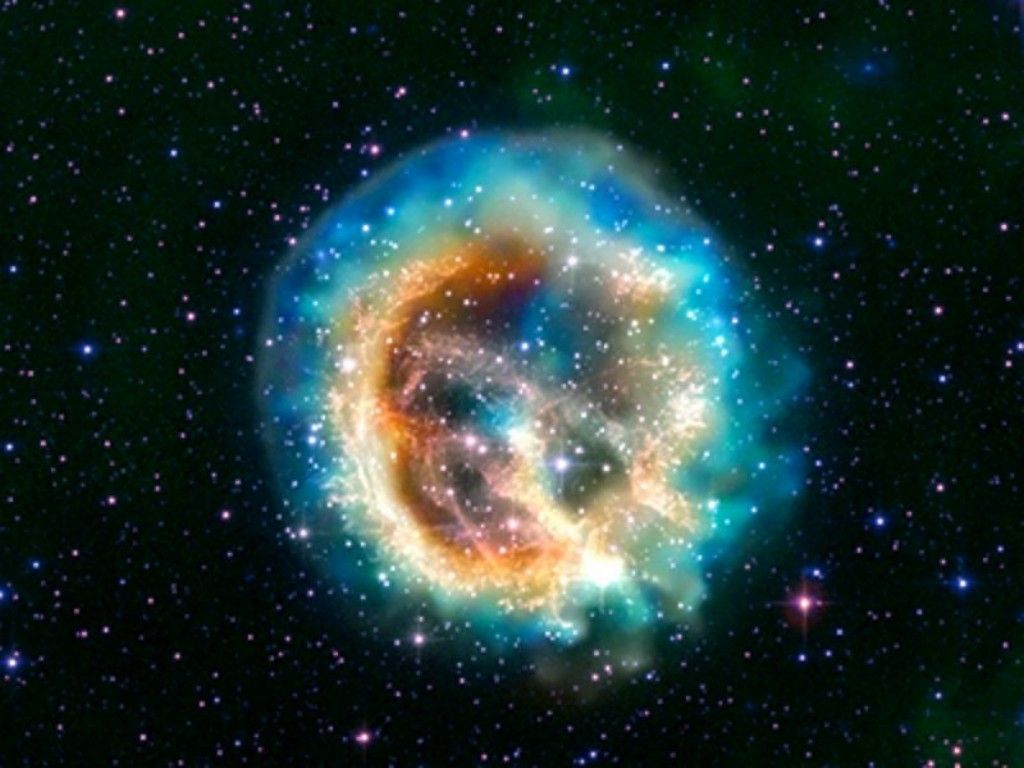
What is gigantic explosion that causes the death of a massive star?
a)
Supernova
b)
Nebula
c)
Red Giant
d)
White Dwarf
5.
What is an object that is so massive and dense that even light can not escape its gravity?
a)
Main-sequence
b)
black hole
c)
Apparent Magnitude
d)
Comet
6.

What is a large grouping of stars, dust, and gas bound together by gravity?
a)
Nebula
b)
Galaxy
c)
Cosmology
d)
Gravity
7.

What is a large cloud of dust and gas where new stars are formed or stars explode?
a)
quasar
b)
black hold
c)
supernova
d)
nebula
8.
What is the study of the origin, structure, and future of the universe?
a)
Cosmology
b)
Cosmetology
c)
Astronomy
d)
Botony
9.

The Milky Way Galaxy is most likely
a)
an irregular galaxy
b)
a spiral galaxy
c)
an elliptical galaxy
d)
a nebula
10.

Which is the hottest?
a)
a red giant
b)
small, white dwarf
c)
main-sequence yellow star
d)
main-sequence blue star
11.

A student notices that the moon looks larger than the stars. Why?
a)
The moon is reflecting light from the sun
b)
The moon is closer to Earth then the stars
c)
The moon is much larger than the stars
d)
The moon is much larger than Earth
12.

Venus appears bright in the night sky because...
a)
it has a gravitational field
b)
is the largest planet
c)
is the closest planet to Earth
d)
has a high surface temperature
13.
The sun appears brighter than other stars because
a)
it is the largest star in the universe
b)
it is the hottest star in the universe
c)
able to radiate more energy than other stars
d)
is closer to Earth than other stars
14.
Which of the following is not a type of galaxy?
a)
Irregular
b)
Triangular
c)
Spiral
d)
Elliptical
15.

The color of a star depends on its
a)
size
b)
temperature
c)
shape
d)
magnitude
16.

What color are the hottest stars?
a)
red
b)
yellow
c)
orange
d)
blue
17.
What stage comes after a supergiant?
a)
Protostar
b)
Pulsar
c)
Supernova
d)
Black hole
18.
What is a huge group of solar systems, dust, and gas held together by gravity?
a)
protostar
b)
nebula
c)
black hole
d)
galaxy
19.
A low-mass or medium-mass star will become a ________ after the white dwarf stage
a)
black hole
b)
black dwarf
c)
protostar
d)
supernova
20.
What does a light year measure?
a)
Temperature
b)
Distance
c)
Brightness
21.
The coolest stars are blue in color
a)
True
b)
False
22.
Scientists think that the Milky Way probably is
a)
a spiral galaxy
b)
an elliptical galaxy
c)
an irregular galaxy
d)
a nebula
23.
What are the three major types of galaxies identified by Edwin Hubble?
a)
spiral, triangular, irregular
b)
spiral, elliptical, irregular
c)
spiral, triangular, elliptical
d)
triangular, elliptical, irregular
24.

What type of galaxy is Galaxy Y
a)
Spiral
b)
Irregular
c)
Elliptical
25.
What layer of a star does nuclear fusion take place
a)
The photosphere
b)
The radiation zone
c)
The convection zone
d)
The core
100 %

