
 Worksheets
Vocabulary Review
Total questions: 51
Worksheet time: 28mins
Organizations and individuals who have rights to rule over a group of people.
entrepreneur
government
profit
civics
An account of an event created by someone who took part in or witnessed the event.
textbook
primary source
secondary source
world map
The knowledge, beliefs, customs, and values of a group of people.
civics
government
history
culture
The pattern of weather conditions in a certain area over a long period of time.
archaeology
artifacts
climate
weather
Someone who organizes, manages, and assumes the risk of a business.
employee
entrepreneur
business
manager
Information gathered by someone who did not take part or witness an event.
interview
secondary source
primary source
artifacts
The study of the past based on what people left behind.
archaeology
civics
government
history
The money a business has left after paying all expenses.
taxes
profit
wealth
trade
The study of citizenship and government.
economics
arcaeology
civics
trade
A system of producing, selling, and buying goods and services.
trade
economy
government
civics
People's wants are unlimited, yet resources are limited. This may lead to a
profit.
mixed economy.
excess wealth.
scarcity.
A dynasty can be defined as
an election of religious leaders.
rulers from the same family.
a group of wealthy landowners.
people who elect their representatives.
A set of laws that citizens are expected to follow is called a
monarchy.
democracy.
constitution.
entrepreneur.

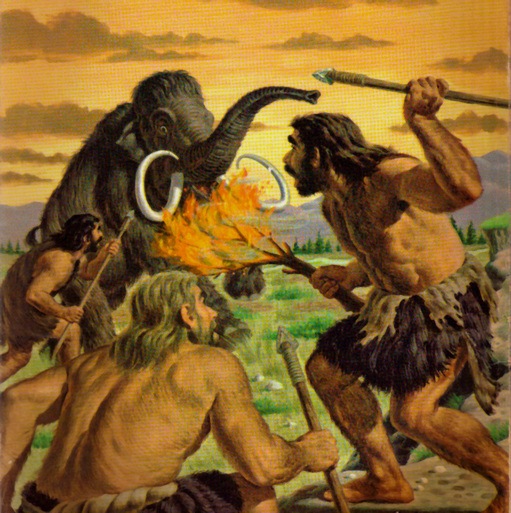
What is the Paleolithic Era?
a time period of meat eaters
when the earliest humans collided with the Ice Age
The Old Stone - a period that lasted from about 2.5 million to 8000 BCE
the practice of determining the age of a fossil

What is the time period before a written language was created?
History
Climate
Prehistory
Environment

The era also known as the "New Stone Age".
Mesolithic Era
Neolithic Era
Paleolithic Era
Mesozoic Era

A person who moves from place to place in search of food.
Pull Factors
Nomad
Domestication
Secondary Source

What does domesticate mean?
To tame wild animals and plants.
A person that mostly eats berries and game meats.
A person who studies the past.
The first known group of people that domesticated animals.

What does Mesolithic mean?
Middle Stone Age
Between Stone Age
Mixed Stone Age
Last Stone Age

What is the proper name for people who hunted animals and gathered wild plants, fruits, and nuts to survive?
hunter-gatherers
cavemen
early humans
wanderers

The continent where the FIRST species began was:
Australia
Antarctica
Africa
Europe

What is technology?
Tools and techniques that people use to accomplish things.
iPads and computers
Electronics
Skills and knowledge that people use to waste time

What does specialization mean?
to concentrate on a specific job or duty
to become super special
to be a nomad
to be a hunter gatherer
A person skilled at making things by hand
silt
ritual
artisan
a pyramid-shaped temple with a shire on top
ziggurat
irrigtaion
plotheism
religious ceremony
tribute
cuneiform
ritual
an extreme shortage of food
irrigation
silt
famine
a group of different lands and people governed by one ruler
city-state
empire
ziggurat
a belief in many gods and goddesses
ploytheism
tribute
ritual
a self-governing city, often with surrounding lands and villages
ziggurat
empire
city-state
a type of writing made up of wedge-shaped markings
cuneiform
scribe
polytheism
an especially fine and fertile soil
irrigation
tribute
silt
a person who specializes in writing and serves as a record keeper
scribe
cuneiform
empire
when land has the nutrients and water to be able to grow crops
surplus
basin
fertile
shadoof

What is the system in which people were ranked based on their occupation?
social hierarchy
city-state
monarchy
barter
Large arc of rich and fertile farmland; location of first civilization
Empire
Cuneiform
Fertile Crescent
Ziggurat
Picture symbols that represented objects/words/phrases
Cuneiform
Ziggurat
Irrigation
Pictographs
A System that Divides People into Jobs
Division of Labor
Irrigation
Social Hierarchy
Surplus

King of the Akkad, who created the first empire in history
Gilgamesh
Hammurabi
Sargon
Sourgoat

