
NEW
Font size
 Worksheets
Lesson 2-French Revolution-Radical Revolution and Reaction
Total questions: 18
Worksheet time: 12mins

Nobles are granted the use of lands that legally belong to their king, in exchange for their loyalty, military service, and protection of the people.
National Assembly
The Estates
New Regime
Feudalism

Statement of revolutionary ideals adopted by France's National Assembly.
Declaration of the Rights of Man and of Citizen
Declaration of Independence
Constitution
Articles of Confederation

Radical political club during the French Revolution that wanted to remove the king and establish a republic. Both middle class men and women joined.
Sans-Cullotes
Radicals
Emigres
Jacobins

A radical group of Parisian wage-earners and small shopkeepers who wanted a greater voice in government, lower prices and an end of food shortages.
Sans-Cullotes
Moderates
Emigres
Jacobins

A machine for beheading people used as a means of execution during the French Revolution.
Beheader
National Razor
Guillotine
Head chopper-offer 3000

Leader of the Committee of Public Safety, he and his followers tried to wipe out all traces of France's past monarchies.
Louis XVI
Maximillien Robespierre
Jean-Paul Marat
Napoleon Bonaparte

A committee established during the French Revolution to identify "enemies of the republic."
Committee of Public Safety
National Assembly
Legislative Assembly
Estates General

The period from mid-1793 to mid-1794, when Maximilien Robespierre ruled France nearly as a dictator and thousands of political figures and ordinary citizens were executed.
Great Fear
French Revolution
Reign of Terror
Tennis Court Oath
The political faction who feared the sans-culottes and wanted to avoid a trial for the king
Mountain
Girondins
Jacobins

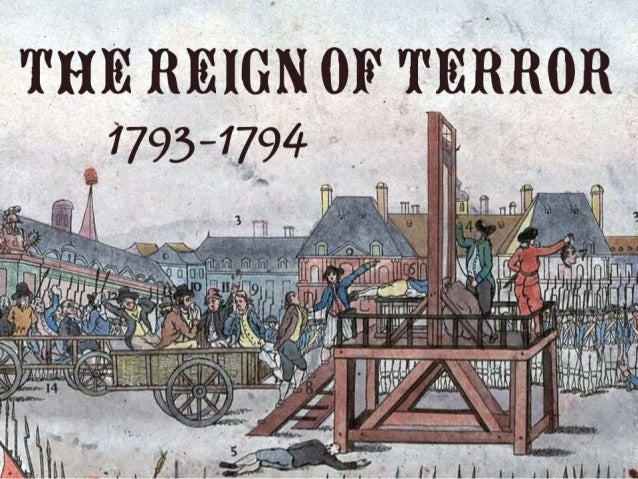
The Reign of Terror set up revolutionary courts to prosecute
Austrian prisoners
The sans-culottes and other member of the Paris Commune
Counter-revolutionaries and traitors
Robespierre's followers

What is the name of the general who emerges as a strong leader to lead France into its next phase of revolution in 1795?
Napoleon
Hannibal
Robespierre
Sieyes

What is the name of the individual who oversaw the Reign of Terror. He was eventually named a traitor himself and guillotined.
Maximilien Robespierre
Olympe de Gouge
Napoleon Bonaparte
Jean-Jacques Rousseau
Napoleon spread the ideas of the French Revolution throughout Europe by doing all of the following except
establishing constitutional democracies across Europe.
establishing public schools.
creating a class system which allowed peasants to keep lands taken during the French Revolution.
controlling prices and encouraging industrial growth.

