
NEW
Font size
 Worksheets
Chemical Bonding
Total questions: 25
Worksheet time: 19mins
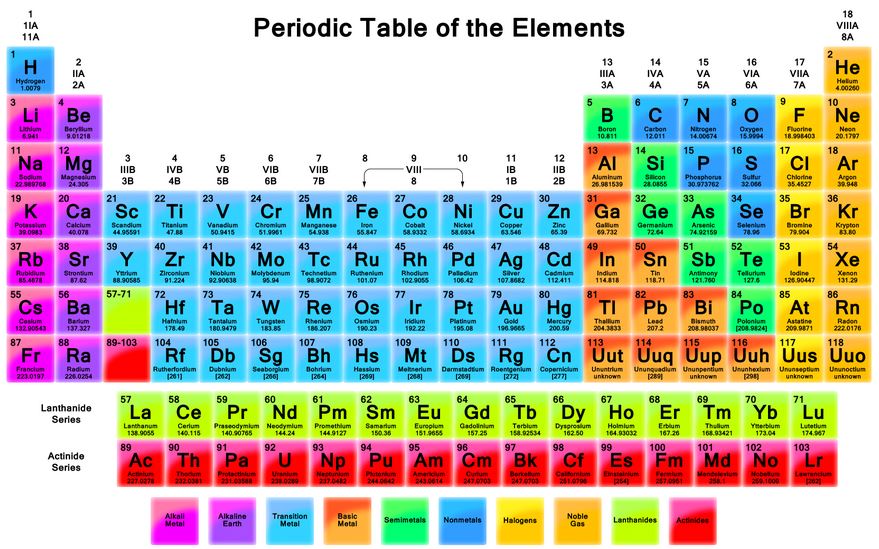
Elements on the LEFT side of the periodic table will most likely form...
Positive ions
Negative ions
Neutral Ions
None of these
Which type of bond requires the transfer of electrons from one atom to another?
Polar Covalent
Non Polar Covalent
Ionic
Metallic
All chemical bonds involve sharing electrons between two atoms.
True
False
Chemical bonds form when atoms...
combine nuclei
give up neutrons
share or transfer protons
share or transfer electrons
Ionic bonding is between a...
non-metal and non-metal
metal and non-metal
metal and metal
Depends on the situation
Covalent bonding is between a...
non-metal and non-metal
metal and non-metal
metal and metal
It depends on the situation
Predict the bond that will form between Be and F.
Ionic
Covalent
Metallic
Predict the bond that will form between Se and Cl.
Ionic
Covalent
Metallic
________ molecules are found in nature as single atom elements
Polyatomic
Monatomic
Elemental
Diatomic
______ molecules are found in nature as pairs of two atoms of the same type covalently bonded together.
Diatomic
Monatomic
Polyatomic
Network

A solid substance is an excellent conductor of electricity. The chemical bonds in this substance are most likely to be...
ionic, because the outer electrons are shared between atoms
covalent, because the outer electrons are delocalised
metallic, because the outer electrons are stationary
metallic, because the outer electrons are delocalised
Ionic compounds are held together by...
intermolecular forces
electrostatic forces
magnetic forces
the transfer of electrons from one atom to another
A compound that is a poor conductor and has low melting and boiling points is most likely...
ionic
metallic
simple covalent
none of the above
Which compound would have a very low melting point?
Sodium chloride (NaCl)
Copper (II) sulfate (CuSO4)
Sulfur dioxide (SO2)
Aluminum (Al)
Which solid would be a good conductor?
Sodium chloride (NaCl)
Copper (II) sulfate (CuSO4)
Glucose (C6H12O6)
Aluminum (Al)
Which compound would be a good conductor when in solution?
Aluminum (Al)
Sulfur dioxide (SO2)
Ammonia (NH3)
Sodium nitrate (NaNO3)
What is a metallic bond?
The electrostatic attraction between a lattice of positive metal ions and delocalised electrons.
The electrostatic attraction between protons and neutrons.
The electrostatic attraction between a lattice of positive metal ions and interlocking electrons.
What does malleable mean?
Able to be shaped.
Will break easily.
Can be used for wire.
Is shiny.
Why are alloys generally used to make everyday objects?
Alloys are often stronger and less reactive than pure metals.
Alloys have higher melting point than pure metals.
Alloys have ionic bonds instead of metallic bonds.
Why are metals malleable?
The disordered layers of metal ions in the lattice can slide over each other.
The electrons are delocalised and can move through the lattice.
The ordered layers of non-metal atoms in the lattice can slide over each other.

