Wayground logo

Free Printable Worksheets

Font size

S
M
L
XL
Worksheets

Reading My View Unit 2.4

Total questions: 40

Worksheet time: 44mins

Name
Class
Date
1.

What does fragmented mean?

a)

Together

b)

Divided

c)

Numerous

d)

Growing

2.

What does transmitter mean?

a)

Headphones for hearing

b)

Equipment that sends and receives messages

c)

Old fashioned TV antennas

d)

News broadcasts

3.

What does nocturnal mean?

a)

Invisible

b)

Active at night

c)

Clearly disguised

d)

Ordinary

4.

What does burrows mean?

a)

Environments

b)

Tunnels

c)

Rocks

d)

Towers

5.

What does iconic mean?

a)

Disliked

b)

Representative

c)

Misunderstood

d)

Not well known

6.

Not whole

a)

Impolite

b)

Impossible

c)

Incapable

d)

Incomplete

7.

Not moving

a)

Irregular

b)

Impossible

c)

Inability

d)

Inactive

8.

Not fancy

a)

Immortal

b)

Impossible

c)

Incredible

d)

Informal

9.

Careless or thoughtless

a)

Irresponsible

b)

Inresponsible

c)

Imresponsible

d)

ilresponsible

10.

Hidden

a)

Incorrect

b)

Imperfect

c)

Incredible

d)

Invisible

11.

What are examples of graphic sources?

a)

maps

b)

charts

c)

timelines

d)

pictures

e)

all of the above

12.

What are graphic sources for?

a)

to help you understand more about what is being read

b)

to grab your attention

c)

to show you pictures

13.

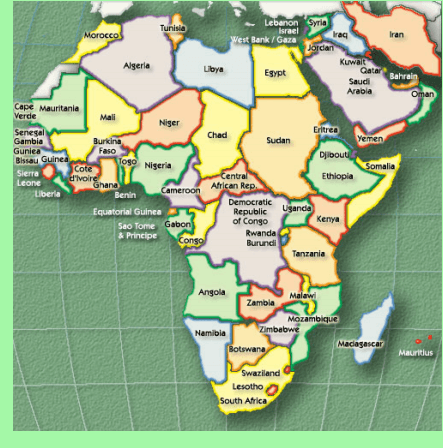
What graphic source is this?

a)

map

b)

timeline

c)

chart

d)

picture

14.
What type of graphic feature is this?
a)
Diagram
b)
Photograph
c)
Illustration
d)
Map
15.
What type of graphic feature is this?
a)
Illustration
b)
Map
c)
Diagram
d)
Photograph
16.
This feature explains what the illustration/photograph is.
a)
  Glossary
b)
Index
c)
Table of contents
d)
Caption
17.
This feature informs the reader of important words/vocabulary found within the paragraph.
a)
Glossary
b)
Bold words
c)
Captions
d)
Table of contents
18.
What text feature gives the definitions of important vocabulary words?
a)
Captions
b)
Index
c)
Glossary
d)
None of the above
19.
A list of chapters in a book and the page numbers where each chapter starts.
a)
Index
b)
Table of Contents
c)
Glossary
d)
Framed Text (Text Box, Insert)
20.
What graphic feature is shown in this example?
a)
photograph
b)
table
c)
map
d)
diagram
21.
This is an example of a ___________?
a)
Index
b)
Table of contents
c)
Graph
d)
Caption
22.
Which type of text structure describes an issue and at least one way to solve it?
a)
Chronological
b)
Cause & Effect
c)
Problem & Solution
d)
Compare/Contrast
23.
Which type of text structure answers the questions what happened and why?
a)
Chronological
b)
Cause & Effect
c)
Problem & Solution
d)
Compare/Contrast
24.
Which type of text structure shows how two or more things are alike and different?
a)
Chronological
b)
Cause & Effect
c)
Problem & Solution
d)
Compare/Contrast
25.
Which type of text structure describes events in sequential order?
a)
Chronological
b)
Cause & Effect
c)
Problem & Solution
d)
Compare/Contrast
26.

This is a ________________.

a)

caption

b)

diagram

c)

map

d)

label

27.

Which text feature would tell you the major topic or main idea in one chapter of a text?

a)

the title

b)

the caption

c)

the glossary

d)

the table of contents

28.

If a word is in bold, italics, or underlined, it might be _______.

a)

a less important detail

b)

spelled correctly

c)

information you should skip

d)

a new word to learn

29.

Which text feature would you use to find the names of all chapters in a book and the pages where they started?

a)

a title

b)

captions

c)

the table of contents

d)

the glossary

30.

Cynthia doesn't understand what's going on in a picture in her book. What can she do?

a)

look in the table of contents

b)

look for a graph

c)

read the caption

d)

stare at it for three minutes

31.

Nonfiction books never contain text features?

a)

True

b)

False

32.
What is a bold word?
a)
A main idea
b)
An important vocabulary word
c)
A title
d)
An author
33.

Found under pictures to help the reader better understand the picture of diagram.

a)

Illustrations

b)

Captions

c)

Glossary

d)

Chart

34.

What are text features?

a)

Doodles the author had to put in.

b)

Information to throw the reader off-track.

c)

Parts of a reading passage.

d)

Extra information not important enough to write a whole paragraph about.
35.
True/False: We should ALWAYS look at the text features.
a)
True
b)
False
36.
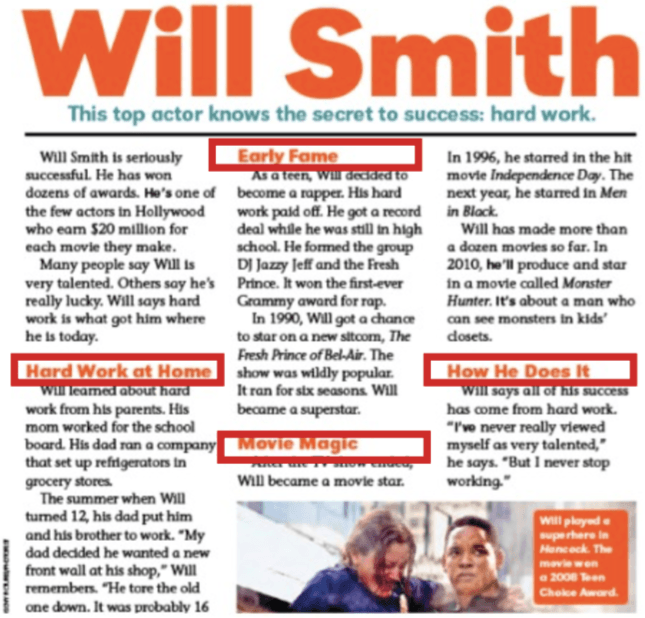
What is the purpose of these subheadings?
a)
To help the reader understand the author’s opinion 
b)
To help the reader visualize the information 
c)
To help the reader find the main ideas in each section
d)
To help the reader place events in order 
37.

What is the main idea?

a)

Its the authors point of view

b)

Is what the passage is mostly about

c)

It is the sequence of the story.

d)

Character thoughts

38.
You should determine the main idea by combining the supporting details.
a)
True
b)
False
39.

Look at this book cover, what do you think the main topic will be?

a)

cars, trains, planes

b)

barbie dolls

c)

Animals and plants

d)

Planets

40.

Now look at this book cover, what might one of your key details be?

a)

dolphins live in the ocean

b)

2nd graders take a field trip to the YMCA

c)

Volcanoes

d)

Desert plants