
 Worksheets
European Partitioning of Africa
Total questions: 25
Worksheet time: 19mins

What does partitioning mean?
to divide up
to take over
to cause conflict
to teach
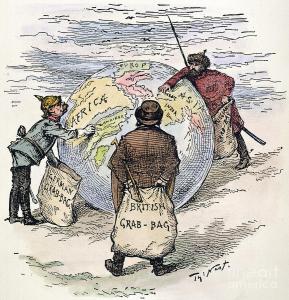
What is Imperialism?
when one nation is able to control other, usually smaller or weaker, nations
loyalty and devotion to a nation especially as expressed in a glorifying of one nation above all others
shared or governmental ownership and administration of the means of production and distribution of goods

(select all that apply) Why did Europeans set up colonies in Africa?
No country wanted to be without colonies (considered “weak”)
They wanted to solve ethnic and tribal disputes
To build ports along the trade route between Europe and Asia
They wanted raw materials found in Africa

(select all that apply)
The European division of Africa caused:
Tribal conflicts
Civil war
Desire for independence
Economic inequality
Long-lasting peace

The modern day political boundaries, civil wars, and conflicts found in Africa can often be traced back to which of the following event?
European partitioning and colonization
Ancient African trading empires
European cooperation in the late 1800s
Asian invasions in the 1800s
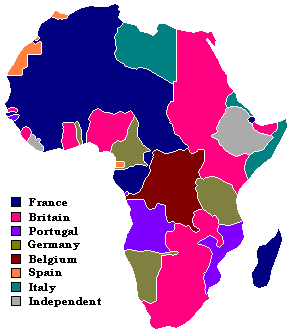

True or False?: European countries failed to consider differences in ethnic groups, cultures, and political traditions when making artificial political borders in Africa.
True
False

In 1963, Kenya gained independence from:
Great Britain
France
Germany
Belgium

What two European countries gained the most land in Africa during the time of Imperialism?
Spain and Germany
Great Britain and France
United States and Great Britain
China and Japan

What is decolonization?
removing colonization from the losing side of WWII
withdrawing from a former colony, leaving it independent
French word for colonies in NE Africa
European powers racing for power in Africa

Which phrase below best describes the following statement: "European nations took control of almost all African territory"?
Discovering the New World
The Age of Exploration
Scramble for Africa
Assimilating Africans to European Culture

The purpose of the Berlin Conference was to discuss:
World issues and conflicts
The best trade routes from Germany
America’s independence from Britain
The partitioning of Africa

How many African countries were invited to the Berlin Conference?
0
1
5
30

Which of the following are valuable natural resources found in many African countries?
diamonds
gold
oil
copper

Which European powers colonized South Africa?
Dutch
British
Germans
Belgians
French

Which political party came to power in 1948 and created the first apartheid laws?
National Party
African National Congress
Democratic Alliance
Freedom Front Plus

Which of the following created poor quality homelands for black South Africans which they couldn't leave without a passbook?
Bantu Authorities Act
Nuremberg Laws
Indian Appropriations Act
Jim Crow Laws

What is the African National Congress?
One of the main groups that fought against apartheid
A social club for Afrikaners
The party that came to power in 1948 and started apartheid
F.W. de Klerk's political party

Who does all of the following describe?:
-anti-apartheid freedom fighter
-first black president of South Africa
-recipient of the Nobel Peace prize
Nelson Mandela
F.W. de Klerk
Oliver Tambo
Walter Sisulu

What was the peaceful protest in South Africa that turned violent when policemen opened fire killing 69 people?
Sharpeville Massacre
Boston Massacre
My Lai Massacre
Tiananmen Square Massacre

Which of the following are true of Mandela's experience in prison?
forced to do hard manual labor
could only have 1 visitor every 6 months
lasted 27 years
died before being released

What is the newest country in the world?
South Sudan
Nigeria
Kenya
Egypt

In 1924, the ________ divided the region into two territories: the Arabic-speaking Muslim north, and the mostly English-speaking Christian and Animist south.
British
French
Germans
Belgians

In the 1940s, Great Britain merged the two areas together to be one nation with a northern government and ________ as the official language.
Swahili
Arabic
English
Afrikaans

20+ years of fighting in Sudan has led to...
lasting peace
equality for all
widespread displacement
political instability
deaths of 1.5 million people

