wayground logo

Free Printable Worksheets

NEW

Font size

S
M
L
XL
Worksheets

Lit Terms 2 Practice

Total questions: 38

Worksheet time: 1hrs 9mins

Name
Class
Date
1.

A narrative is...

a)

A type of poetry

b)

An autobiography

c)

A story

d)

A research project

2.
Which questions about the story will the setting answer?
a)
What is the author's attitude toward the characters?
b)
Where and when does the story take place?
c)
Who are the people the story is about?
Why and why did the author write the story?
3.

Which is the BEST example of a sensory detail

a)

Rattling thunder and lightening flashes

b)

Talking a mile a minute

c)

A magic wand broke in half

d)

Happy or sad

4.

The final outcome of the story, it shows how everything turned out:

a)

Falling Action

b)

Climax/Turning Point

c)

Resolution/Denouement

d)

Rising Action

5.
James got invited to his best friend's birthday party. It was the same night as the biggest Cardinals game of the season.
a)
Internal Conflict
b)
External Conflict
6.
Jenna's house was destroyed when Hurricane Katrina blew through New Orleans.
a)
Internal Conflict
b)
External Conflict
7.

Narrative writing tells a story to ........... the reader.

a)

persuade

b)

entertain

c)

inform

d)

dismiss

8.

What is the goal of writing a narrative?

a)

to create a masterpiece

b)

to have the reader make a choice

c)

to attract the readers at the beginning, keep them engaged until the end

d)

To create and ending that is always funny

9.
Time travel is exhausting. It took me 200 million years to realize that. Well, actually it only took me a few seconds, but I first realized it about 200 million years ago. That was the first time that I traveled through time. "Try it!" said the mad scientist. "History needs you," he told me. I went with my gut.
What is the point of view?
a)
first person
b)
second person
c)
third person limited
d)
third person omniscient
10.
Brandon stepped to the pitcher's mound. He held the ball in his mitt and adjusted his fingers on the seams. He could feel the pressure of the moment. It was the ninth inning. His team was up by one. The bases were loaded. "You can do it," Brandon thought to himself, but he felt hesitation in his heart. He stared at the batter. His name was Jimmy. Jimmy could sense Brandon's hesitation. He was going to capitalize on it. Jimmy knew that Brandon was going to throw it down the middle. He couldn't wait to take a swing. This was Jimmy's chance to be a hero and he had no intentions of blowing it.
What is the point of view?
a)
first person
b)
second person
c)
third person limited
d)
third person omniscient
11.
"You need to try harder, Kyle, if you want to graduate," Mr. Jenkins intoned. Kyle nodded his head, but he wasn't really listening. He was picturing himself snowboarding down a mountain while Mr. Jenkins lectured him. Somehow, Kyle knew exactly where to put the "uh-huhs" even though he wasn't listening to a word that Mr. Jenkins was saying. "Do you want to graduate, Kyle?" Mr. Jenkins asked.
"Uh-huh," replied Kyle.
What is the point of view?
a)
first person
b)
second person
c)
third person limited
d)
third person omniscient
12.
As you cross the crystal bridge, you hear the sound of two voices coming from the shores of the river. One of the voices sounds distressed. The other sounds angry. At the end of the crystal bridge is a herd of wild horses. You notice that they are stamping the ground violently. If you would like to go to the shore and find out who's talking, turn to page 47. If you'd like to approach the wild horses, turn to page 58.
What is the point of view?
a)
first person
b)
second person
c)
third person limited
d)
third person omniscient
13.
What are the two MAIN types of conflict?
a)
setting and characters
b)
internal and essential
c)
internal and external
d)
external and essential
14.
A star figure-skater must conquer her fear and get back on the ice after a terrifying accident.
a)
Character vs. Character
b)
Character vs. Nature
c)
Character vs. Society
d)
Character vs. Self
15.
When his father is badly hurt during hike deep in the Montana wilderness, a young boy must make his way back to civilization to get help.
a)
Character vs. Character
b)
Character vs. Nature
c)
Character vs. Society
d)
Character vs. Self
16.
What is the definition of an "internal" conflict?
a)
A hero in a story that saves many lives.
b)
A problem that a character has with other characters.
c)
A struggle between a character and a family member.
d)
An issue that a character faces within him/her self.
17.
Alex can't stay awake in class because she stays up all night on her phone.  She can't bring herself to turn off the phone.
a)
individual vs. nature
b)
individual vs. individual
c)
individual vs. society
d)
individual vs. technology
18.
A prince trades places with a look-alike servant so each can enjoy the other’s lifestyle.
a)
Character vs. Character
b)
Character vs. Nature
c)
Character vs. Society
d)
Character vs. Self
19.
 “Remember, Cinderella,” warned her fairy godmother, “you must leave the ball at midnight. If you stay later, everything will turn back as it was. Your coach will become a pumpkin again. Your gown will become rags. Promise me you will remember.”
“Of course, I’ll remember,” said Cinderella, but as her coach carried her toward the ball, the warning was replaced in her mind with images of dancing and music.
a)
Flashback
b)
Foreshadowing
c)
theme
d)
climax
20.
 Now that she was a princess, Cinderella often thought back to the events that brought her to the castle. In particular, she remembered the day her father first brought the woman who would become her stepmother to their home.
It was a dreary November day when Cinderella met the cold, haughty woman. “Darling,” said Father, speaking to Cinderella, “this is your new mother. I want you to love her dearly and do everything she says.”
a)
Flashback
b)
Foreshadowing
21.
Often times provides background information 
a)
Foreshadowing
b)
Flashback
c)
theme
d)
resolution
22.
A hint or clue in a story that suggests some action is to follow to create interest or suspense is called:
a)
foreshadowing
b)
stereotyping
c)
allusion
d)
flashback
23.
If the author directly tells you what the character is like, that is:
a)
direct characterization
b)
indirect characterization
24.
If the author shows you what the character is like and you have to infer, that is
a)
direct characterization
b)
indirect characterization
25.
Which of the following is an example of indirect characterization?
a)
Marcia was a good listener and wonderful friend.
b)
Marcia felt the knot in her stomach grow when she saw the number of questions on the test, and she tugged her hair anxiously. 
c)
Marcia was a nervous person.
d)
Marcia was an optimist who always believed the best about people.
26.
Which of the following is an example of direct characterization?
a)
He tapped his foot anxiously.
b)
"I wouldn't  trust that man," said Ma.
c)
Frank was a shy, quiet person.
d)
Every time he earned a high grade, he would hang the test on his wall.
27.

What does STEAL stand for?

a)

Speech, Thoughts, Effect on others, Actions, and Looks

b)

Statements, Time, Effort, Actions, and Love

c)

Solitude, Thoughts, Enthusiasm, Actions, and Loss
28.

What do you know about Jack from this sentence?

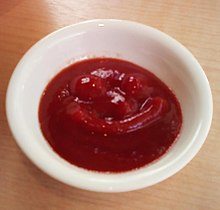
Jack looked at his sister with a strange look on his face after she put ketchup in her milk.

a)

Jack thinks his sister is making a good choice.

b)

Jack thinks his sister is weird for using ketchup in her milk.

c)

Jack doesn't care what his sister does.

29.
What character trait is revealed in this passage?
Jonathan looked at the homeless dog walking down the street of his neighborhood.  He approached the dog, slowly cautiously, with his hands stretched outward.  After gaining his trust, Jonathan took the dog home, gave him a warm bath, and big bowl of food.
a)
impulsive
b)
obsessed
c)
humble
d)
compassionate
30.
What is the "tone" of a story?
a)
The feeling the passage evokes from the reader
b)
The author, narrator, or speaker's attitude toward a subject
c)
The time and place of the story
d)
The summary of events in the story
31.
Which tone is represented in the following passage?
"Wow! With a top speed of one hundred fifty miles per hour, that car can almost fly!"
a)
Annoying
b)
Excited
c)
Calm
d)
Scary
32.
What is mood?
a)
The feeling the reader gets from a story.
b)
The dialogue in a story.
c)
The author's attitude about a topic.
d)
A type of figurative language.
33.
He approached the task with sheer determination. He had studied his plans carefully, spent hours preparing and was sure of his approach. The hours he spent practicing were grueling and exhausting but he was ready. This was the year he would win the pie eating contest at school. What is the MOOD of this passage?
a)
Humorous
b)
Serious
c)
Sad
d)
Gloomy
34.

What is a protagonist?

a)

The protagonist is the main character.

b)

The protagonist is always the good guy.

c)

The protagonist can only be one character.

d)

The protagonist is always the bad guy.

35.

What is an antagonist?

a)

The person or thing that goes against the protagonist

b)

The person or thing that is friends with the protagonist

c)

The person or thing that is the main character

d)

The person or thing that is the leader of the text

36.
Static Characters...
a)
do not change during the story
b)
have little or no detail
c)
have lots of detail
d)
change during the story
37.
Dynamic Characters...
a)
do not change during the story
b)
have little or no detail
c)
have lots of detail
d)
change during the story
38.

Even though she loved to dance, Shannon was nervous about joining the dance team. She tried out and made it, but never said a word to anyone. At each dance practice, Shannon got a little more comfortable with her team. By the end of the season, not only did she make friends, but she even taught the team a few dance moves.


What type of character is she?

a)

dynamic character

b)

static character