wayground logo

Free Printable Worksheets

Font size

S
M
L
XL
Worksheets

Interaction of Forces Practice

Total questions: 50

Worksheet time: 39mins

Name
Class
Date
1.
As electrons move, they make
a)
A. electromagnetism.
b)
B. auroras.
c)
C. ferromagnetism.
d)
D. magnetic fields.
2.
The attraction or repulsion created by spinning electric charges
a)
A. electric generator
b)
B. magnetic force
c)
C. solenoid
d)
D. electromagnet
3.
A device that increases or decreases the voltage of alternating current
a)
A. magnet
b)
B. magnetic pole
c)
C. transformer
d)
D. magnetic force
4.
A device that converts electrical energy into mechanical energy
a)
A. electromagnet
b)
B. electromagnetic induction
c)
C. electric motor
d)
D. electromagnetism
5.
A device that converts mechanical energy into electrical energy
a)
A. electric generator
b)
B. electric motor
c)
C. electromagnetic induction
d)
D. electric generator
6.
The process of creating a current in a circuit by changing a magnetic field
a)
A. electric generator
b)
B. electric motor
c)
C. electromagnetic induction
d)
D. magnet
7.
What is created when a magnet moves through a coil of wire?
a)
A. an electromagnet
b)
B. a ferromagnet
c)
C. a solenoid
d)
D. an electric current
8.
Which of the following are two effects of Earth’s magnetic field?
a)
A. compass points to geographic north, auroras seen at both poles  
b)
B. compass points to magnetic north, auroras seen at both poles
c)
C. compass points to geographic south, auroras seen at the equator
d)
D. compass points to geographic north, auroras seen at the equator
9.
Which of the following are two kinds of magnets?
a)
A. atoms, domains
b)
B. magnetic fields, magnetic poles
c)
C. ferromagnets, electromagnets
d)
D. magnesia magnets, magnetite magnets
10.
What kind of magnet can be turned on and off?
a)
refrigerator magnet
b)
electromagnet
c)
magnetite
d)
iron
11.
If you wrap more coils around an electromagnet, it will become 
a)
brighter
b)
stronger
c)
weaker
d)
invisible
12.
What is the flow of electricity?
a)
electric motor
b)
Electric current
c)
Electric eel
d)
electric circuit
13.
What is inside a toy car that turns the wheels?
a)
generator
b)
electric motor
c)
electromagnet
14.

What happens to the strength of a magnetic field as you move away from the magnet?

a)

The strength of the magnetic field increases.

b)

The strength of the magnetic field doesn't change.

c)

The strength of the magnetic field is doubled.

d)

The strength of the magnetic field decreases.

15.

Particles with opposite charges ____________ and particles with same (or like) charges ____________.

a)

attract, repel

b)

repel, repel

c)

attract, attract

d)

repel, attract

16.

What happens when an electric current flows through a wire?

a)

The wire begins to spin.

b)

Nothing happens.

c)

A field of gravity is created around the wire.

d)

A magnetic field is created around the wire.

17.

The south ends of two magnets will _________ each other.

a)

repel

b)

attract

18.

________________ are the attractive and repulsive forces between two poles.

a)

Magnetic forces

b)

Electric forces

c)

Magnetic charges

d)

Electric charges

19.

What does this image show?

a)

Parallel circuit

b)

Series circuit

c)

Magnet

d)

Electromagnet

20.

The area of magnetic force around a magnet is known as its ____________.

a)

magnetism

b)

magnetic current

c)

magnetic field

d)

electric current

21.

How do you increase the strength of an electromagnet?

a)

Add a motor and/or light bulbs

b)

Add more light bulbs and wire coils

c)

Add more wire coils

d)

Increase the voltage

22.

A _______________ is a current-carrying coil of wire with many loops.

a)

magnet

b)

electromagnet

c)

solenoid

d)

compass

23.

How can a magnet be used to produce an electric current?

a)

Hold a magnet next to a piece of wire.

b)

Wrap wire around a magnet.

c)

Spin the magnet around inside a coil of wire.

24.

Increasing the number of coils in an electromagnet will _________ the power of the magnet.

a)

decrease

b)

increase

c)

not affect

25.

The strongest parts of the magnet are ...

a)

fronts

b)

backs

c)

poles

d)

middle

26.

Every magnet has a:

a)

East and West pole

b)

North and South pole

c)

East and South pole

d)

North and West pole

e)

Chicago and Saint pole

27.
What is true about electricity and magnetic fields?
a)
Electricity is needed to create any magnet.
b)
Electricity always creates a magnetic field.
c)
Electricity is stronger than a magnetic field.
d)
Electricity prevents magnetic fields from occurring.
28.
Are the magnetic field lines in the picture correct?
a)
Yes, because they point from north to south.
b)
No, because they point from north to south (they're supposed to go the other way).
c)
Yes, because the North pole is on the left in all pictures.
d)
No, because the North pole is on the left in all pictures (it's supposed to be on the right).
29.
Why does a compass needle point north?
a)
The compass is a bar magnet
b)
Because north is up
c)
Because it's magic
d)
It lines up with the Earth's magnetic field
30.

When running a current through a wire, what do the blue lines represent?

a)

The wire spinning

b)

A magnetic field that was created

c)

Electrons leaving

d)

Electricity

31.
Which components do you need to build an electromagnet?
a)
a wire, a conductor, a battery and some paper clips.
b)
a wire, a compass, a battery and some paper clips.
c)
wool, a conductor, a battery and some paper clips.
32.

Which electromagnet is the strongest?

a)
b)
c)
d)
33.
Static electricity is:
a)
electricity flowing in a wire
b)
the buildup of electric charges on an object
c)
when protons move between objects
34.
What's the difference between a solenoid and an electromagnet?
a)
Solenoids do not use a power source.
b)
Electromagnets include a nail inside the coils.
c)
Solenoids include a nail inside the coils.
d)
Electromagnets do no use wire.
35.

Using the right hand grip rule, A represents the direction of the

a)

current

b)

magnetic field

36.

Using the right hand grip rule, B represents the direction of the

a)

current

b)

magnetic field

37.
The sum of all forces acting on an object and direction
a)
Contact Force
b)
Balanced Force
c)
Unbalanced Force
d)
Net Force
38.
Are forces balanced or unbalanced when a car is moving at a constant speed in a straight line?
a)
Balanced
b)
Unbalanced
39.
Are forces balanced or unbalanced when a marble speeds up rolling down a ramp?
a)
Balanced
b)
Unbalanced
40.
Forces have both _________ and direction.
a)
Magnitude
b)
Gravity
c)
Speed
d)
Height
41.
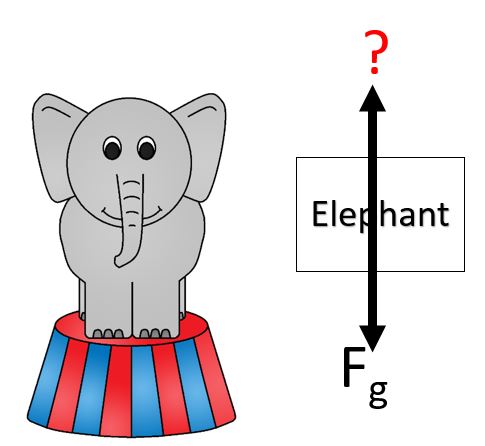
Name the missing force...
a)
weight force
b)
normal force
c)
applied force
d)
frictional force
42.
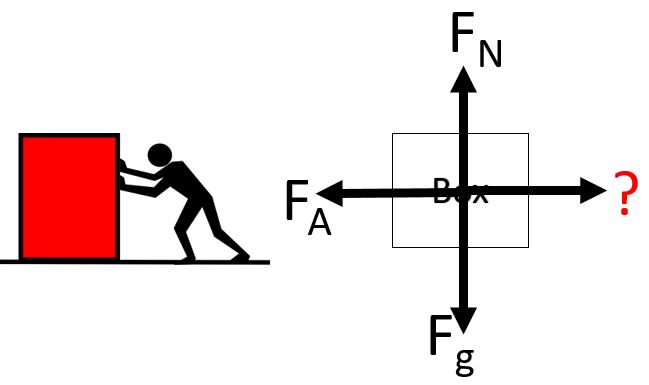
Name the missing force...
a)
frictional force
b)
weight force
c)
thrust
d)
buoyant force
43.
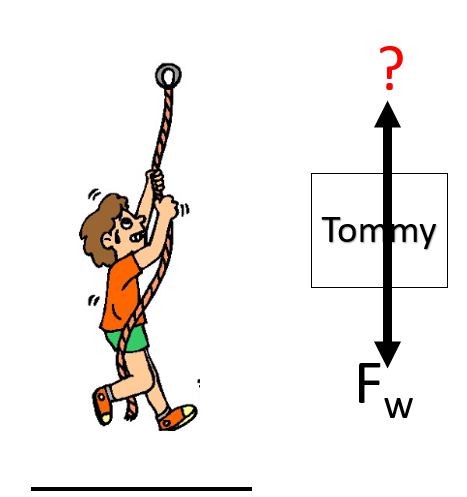
Name the missing force...
a)
push
b)
weight force
c)
tension force
d)
drag
44.
Name the missing force...
a)
tension force
b)
gravitational force
c)
normal force
d)
applied force
45.

A hockey puck glides to the right across the ice at a constant speed.

a)
b)
c)
d)
46.

A rightward force is applied to a dresser to accelerate it to the right across the bedroom floor.

a)
b)
c)
d)
47.

The force that keeps objects on top of surfaces instead of letting them sink into the surface is known as:

a)

normal

b)

abnormal

c)

static

d)

inertia

48.

In a force diagram the size/length of the arrow tells you this about the force:

a)

the strength of the force

b)

the distance of the force

c)

the direction of the force

49.

The force exerted by ropes and chains is called

a)

tension

b)

normal

c)

elastic

d)

mechanical

50.

In a force diagram, or free-body diagram, the pointy-end of the arrow tells you this about the force:

a)

relative strength

b)

relative distance

c)

relative direction