
Font size
 Worksheets
Translations of Functions
Total questions: 45
Worksheet time: 1hrs 1mins


TRUE OR FALSE:
The vertex of the function (-4, 0) is also the x-intercept.
false
true


Where is the y-intercept of this function?
(0, 1)
(0, 4)
(0, -3)
(0, -4)
this function does not have a y-intercept
What does the transformation f(x) → f(x+1)−9 do to the graph of f(x) ?
translates it left one unit and down 9 units
translates it right one unit and down 9 units
translates it up one unit and right 9 units
translates it down one unit and left 9 units


Which parent function matches the graph?
f(x) = x
f(x) = x2
f(x) =2x
f(x) =|x|

Name the parent function.
quadratic
exponential
linear
absolute value

Name the parent function.
linear
quadratic
absolute value
exponential

What is the range of this graph?
(the x and y axis intervals are 1 unit per box)
y≥−21
y>−3
y≥−3
y exists in all real numbers
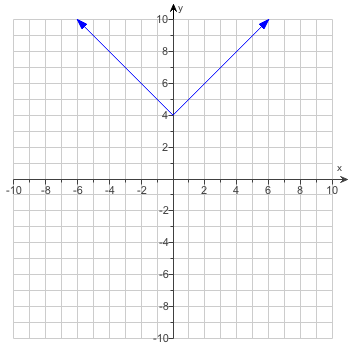
What is the vertex of the absolute value function?
(4, 0)
(0, 4)
it doesn't have one
all real numbers

Select all true statements about the function.
y≥4 is the range of this function.
The domain of the function is x exists in all real numbers.
f(x)= |x| + 4 is the equation of the function.
This function shows a vertical translation from the parent.
If f(x)=x100 is moved 10 spaces right and 11 spaces down, what is the equation of the function?
g(x)=(x−11)100−10
g(x)=(x+10)100−11
g(x)=(x−10)100−11
g(x)=(x+11)100−10
What is the y-intercept of g(x)?
f(x) = 2x -----> g(x) = 2x + 4
(0, 0)
(0, 4)
(4, 0)
(0, -4)
Describe the transformation of the graph f(x) = 2x ----> g(x) = (2)x + 6
Right 6
Left 6
Up 6
Down 6
Which equation would represent a move of 2 units up for parent function f(x) = 7x
g(x) = 9x
g(x) = 7x + 2
g(x) = 7(x+2)
g(x) = 7(x-2)
What transformations have happened to f(x) = 2x if the new equation is g(x) = 2(x+3) -6
It stayed the same
up 3, left 6
right 3, down 6
left 3, down 6
Where is the vertex of g(x)?
f(x) = x2
g(x) = (x + 4)2
(0, 4)
(4, 0)
(-4, 0)
(0, -4)
The function rule for vertical shifts is _________________.
f(x) + k
f(x + k)
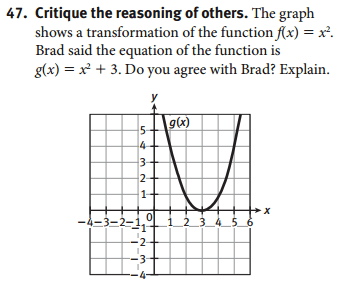
Select all the equations that show a vertical shift from its parent function.
y=∣x+1∣
y=2x+4
y=x−10
y=(x−3)2
y=x2−1
Select all equations that show a horizontal shift from its parent function.
y=∣x−4∣
y=2(x−9)
y=x2+8
y=∣x∣−5
y=2x+1
Select all functions that have a domain that exists in all real numbers.
y=2x−5
y=x2−1
y=5x−6
y=∣x+10∣
y=(x−4)2
Select the equations that have an absolute minimum.
y=x2−8
y=2x+6
y=2x−3
y=∣x−5∣
Select any of the functions that have a vertex at (-7, 2).
f(x) = (x+7)2−2
f(x) = ∣x−2∣+7
f(x) = (x+7)2+2
f(x) = ∣x−7∣−2
f(x)=∣x+2∣+7
What is the equation of the asymptote?
f(x) = 2x+7
y = 7
y = 2
y = 0
y = 5
What is the equation of the asymptote?
f(x) = 2(x+1)−10
y = 9
y = -9
y = -10
y = -1
y = 0
What is the domain of the function?
f(x) = ∣x+3∣−2
x exists in all real numbers
x≥3
x≤−3
x<−2
What is the vertex of a quadratic shifted 5 units right and 2 units down?
(5, -2)
(2, -5)
(-5, 2)
(-2, 5)
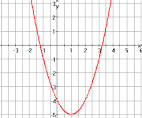

What is the range of the function?
y≤4
y≤0
y≥4
y≥1
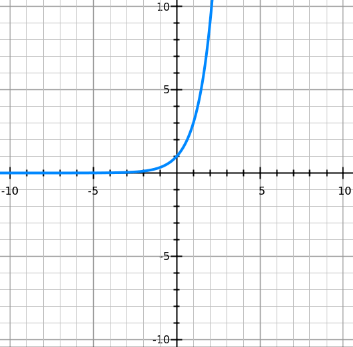

Select all the true statements about the function.
This function shows a vertical shift from the parent.
This function shows a horizontal shift from the parent.
The asymptote of this function is the same as the asymptote of the parent function.
y>0 is the range of this function.
y >−1 is the range of this function.
Select the parent function(s) that pass through the origin.
linear
quadratic
absolute value
exponential
Select the parent functions that exist only in Quadrants 1 and 2.
linear
absolute value
quadratic
exponential
Assume the functions f(x) = 2x−3 and g(x) = 2x+14 are graphed together on a coordinate plane. How many spaces away vertically are the asymptotes of both functions?
17 units away
14 units away
11 units away
The function rule for horizontal shifts is _________________.
f(x)+k
f(x + k)
The vertex of a quadratic function is (-1, 1). What is the equation of the function?
f(x) = (x−1)2−1
f(x) = (x+1)2+1
f(x) = (x+1)2−1
f(x) = (x)2+1

