

Wayground logo

Free Printable Worksheets

Font size

S
M
L
XL
Worksheets

PROPERTIES OF MATTER

Total questions: 25

Worksheet time: 25mins

Name
Class
Date
1.

What is matter?

a)

Anything that takes up space

b)

Anything that has mass

c)

Anything that has mass and takes up space

d)

I don't know Ms.Pou, I did not take any notes

2.
The state of matter in which a substance has a definite volume but no definite shape.
a)
gas
b)
liquid
c)
solid
d)
matter
3.
The state of matter in which a substance has a definite shape and definite volume.
a)
solid
b)
gas
c)
atom
d)
liquid
4.
The state of matter in which a substance does not have a definite shape or volume.
a)
element
b)
compound
c)
gas
d)
liquid
5.

The particles in a solid are...

a)

loose and have high energy

b)

tightly packed and have very little energy

c)

move freely and have lots of energy

d)

I dont know Ms. Turner, I didnt take notes
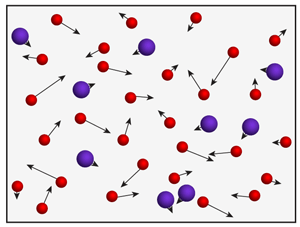
6.

The particles in a liquid are...

a)

loose and have high energy

b)

tightly packed and have very little energy

c)

move freely and have lots of energy

d)

I dont know Ms. Turner, I didnt take notes

7.

The particles in a gas are...

a)

loose and have high energy

b)

tightly packed and have very little energy

c)

move freely and have lots of energy

d)

I dont know Ms. Turner, I didnt take notes

8.
Color, flexibility, texture and shape are examples of 
a)
physical properties
b)
solids 
c)
gases
d)
mixtures 
9.
The 3 State of Matter are?
a)
Idaho, Texas, and Florida
b)
Matter, Mass, and Weight
c)
Solids, Liquids, and Gas
d)
Steel, Copper, and Brass
10.
The measure of the energy of motion in the particles of matter, which we feel as how hot or cold something is.
a)
matter
b)
gas
c)
temperature
d)
atomic theory
11.
A change in which the form or shape of a substance changes but the chemical makeup of the substance remains the same.
a)
chemical change
b)
reaction
c)
physical change
d)
solution
12.

What happens to the atoms of a substance in a physical change?

a)

Atoms get bigger

b)

Atoms change their arrangement and motion

c)

Atoms get smaller

d)

Atoms bond together differently

13.
The boiling point of water is ______________.
a)
0° C
b)
50° C
c)
200° C
d)
100° C
14.
When a gas turns into a liquid, it is called ___________________.
a)
Condensation
b)
Evaporation
c)
Melting
d)
Freezing
15.
What is the volume of the rock? The water level is displaced from 20 mL to 23 mL with the rock.
a)
3 mL
b)
23 mL
c)
20 mL
d)
43 mL
16.
Mass is the measurement of the amount of
a)
weight
b)
inertia
c)
force
d)
matter
17.
What are the physical properties of matter?
a)
color
b)
texture
c)
taste
d)
all of the above
18.
This tool could be used to determine the _______ of an object. 
a)
mass
b)
temperature
c)
magnetism 
d)
density
19.
Weight is the measure of the pull of ________ on the mass of an object. 
a)
magnetism
b)
the Earth
c)
volume
d)
gravity
20.
As a substance heats up, its molecules ___________________.
a)
slow down and get closer together
b)
slow down
c)
speed up and get farther apart
d)
stop
21.
Which one is not a physical change?
a)
paper ripping
b)
chopping wood
c)
gold melting into a liquid
d)
a match burning
22.
What is the volume of the rock? The water level is displaced from 20 mL to 23 mL with the rock.
a)
3 mL
b)
23 mL
c)
20 mL
d)
43 mL
23.
Which tool would you use to determine the mass of matter?
a)
Graduated Cylinder
b)
Triple Beam Balance
c)
Thermometer
d)
Stop Watch
24.
What happens when two north poles of a magnet are placed together?
a)
they repel
b)
they attract
c)
they cancel each other out
d)
the strength of the magnet is doubled
25.
The magnet's shown will
a)
not move
b)
attract
c)
repel
d)
all of the above
