

wayground logo

Free Printable Worksheets

Font size

S
M
L
XL
Worksheets

Landforms and Soil Review

Total questions: 33

Worksheet time: 37mins
Name
Class
Date
1.
A student made a mixture of rocks, sand, a few bugs, and some leaves.  This student has modeled —
a)
how landforms are created.
b)
the life cycles of plants.
c)
how rocks change over time.
d)
the formation of soil.
2.
What land form is this?
a)
plain
b)
valley
c)
mountain
d)
canyon
3.
What land form is this?
a)
valley
b)
canyon
c)
mountain
d)
plain
4.
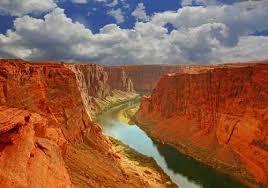
This canyon is a result of
a)
water erosion
b)
glaciers
c)
wind
5.
Layers of sediment forming at the bottom of the ocean floor
a)
Weathering
b)
Erosion
c)
Deposition
6.
Water getting into cracks, freezing, and breaking the rocks or pavement apart
a)
Weathering
b)
Erosion
c)
Deposition
7.

What is the process where rock is broken into sediment?

a)

Erosion

b)

Cementation

c)

Weathering

d)

Deposition

8.
What does erosion mean?
a)
to break apart
b)
to settle in new spot
c)
to move
d)
to sit still
9.
What does deposition mean?
a)
to settle in a new spot
b)
to break apart
c)
to sit still
d)
to move
10.

How do deltas change over time?

a)

More sediment will build up where a river meets an ocean and a river will develop more branches.

b)

Water erosion will continue and oceans will wear away the land.

c)

Wind will continue to move sediment into the ocean, creating big deltas.

11.
What landform is this?
a)
valley
b)
delta
c)
river
d)
canyon
12.
The sudden movement downhill of rock and soil.
a)
landslide
b)
volcano
c)
lava
13.
What caused a crack in the sidewalk to widen during the winter?
a)
A snowman sitting on it
b)
water expands when it turns into ice
c)
cracks get bigger when the air is cold
d)
the sun
14.
The effects of this fast process are the surface of the ground shakes, roads and buildings become damaged, and large cracks appear. What is the cause?
a)
Flood
b)
Volcanic Eruption
c)
Earthquake
d)
Landslide
15.
The effects of this fast process are that lava burns and destroys everything in its path and leaves large amounts of dust and ash in the air making it hard to breathe. What is the cause?
a)
Earthquake
b)
Landslide
c)
Volcanic Eruption
d)
Flood
16.

All of the following cause landslides EXCEPT--

a)

Earthquake

b)

Loose Soil

c)

Sand Dunes

d)

Heavy Rain

17.
The top layer of soil is called ________.
a)
bedrock
b)
topsoil
c)
subsoil
d)
grass
18.
This is found in the topsoil and is made of decaying plants and animals. 
a)
dirt
b)
water
c)
humus
d)
subsoil
19.

Which type of soil is sticky when wet, hard when dry, and reddish in color?

a)

clay

b)

silt

c)

sand

d)

gravel

20.
What physical property of soil determines if it retains water?
a)
color
b)
particle size
c)
texture
d)
weight
21.

What are small rocks that can be smooth or coarse in texture?

a)

silt

b)

clay

c)

gravel

d)

topsoil

22.
If soil particles are large, then 
a)
more water is retained
b)
less water is retained
23.
How do you determine the texture of soil?
a)
use a spring scale
b)
observe color of particles
c)
rub particles between fingers
d)
taste particles
24.

Which of the following is NOT a property of soil?

a)

Color

b)

Texture

c)

Where it's located

d)

Ability to retain water

25.

Which type of soil can retain the greatest amount of water?

a)

sand

b)

silt

c)

clay

d)

gravel

26.

Which soil would retain the least amount of water?

a)

gravel

b)

silt

c)

sand

d)

clay

27.

Is an earthquake considered a fast change or slow change?

a)

Fast Change

b)

Slow Change

28.

How is a sand dune created?

a)

It appears randomly.

b)

Wind deposits sand into mounds.

c)

People move the sand from one place to another.

29.

What creates a u-shaped valley?

a)

glacier

b)

sand

c)

river

d)

wind

30.

What causes this duck's body to appear the way it does?

a)

light is being refracted

b)

light is being reflected

c)

light is being absorbed

d)

light is being transmitted

31.

Which lists particles of sediment correctly in decreasing order?

a)

Sand, gravel, clay, silt

b)

gravel, sand, silt, clay

c)

sand, gravel, silt, clay

d)

gravel, sand, clay, silt

32.

Which of these statements is false?

a)

Many deltas form in a triangular shape.

b)

Most deltas are created by sediment blown by the wind.

c)

Deltas are formed from the erosion and deposition of sediments.

d)

Deltas form as rivers and streams empty into larger bodies of water.

33.

What happens when light hits an object that it cannot pass through?

a)

The light is reflected or absorbed.

b)

The light is refracted or reflected.

c)

The light is refracted or absorbed.

d)

The light is refracted or curved.
