wayground logo

Free Printable Worksheets

Font size

S
M
L
XL
Worksheets

Fall Semester Exam Review

Total questions: 198

Worksheet time: 3hrs 33mins

Name
Class
Date
1.
The south is an example of which type of region?
a)
Perceptual
b)
nodal
c)
functional
d)
formal
2.
An area distinguished by one or more unique characteristics is a:
a)
biome.
b)
region.
c)
landscape.
d)
uniform unit.
3.
The division of the U.S. into nine regions by the Census Bureau is an example of a:
a)
climatic region.
b)
formal region.
c)
functional region.
d)
vernacular region.
4.
Climate is ...
a)
the type of weather an area has over a long period of time.
b)
the type of weather in one day.
c)
the people who live there.
5.

"Extracting of coal from mine". Determine which sector this activity belongs to?

a)

Tertiary Sector

b)

Service Sector

c)

Secondary Sector

d)

Primary Sector

6.

What is the full form of GDP?

a)

General Development Process

b)

Gross Domestic Project

c)

Gross Domestic Product

7.
Sam loves science and wants to become a doctor but he is learning how to make clay bricks like his father and grandfather.
a)
Free Market
b)
Traditional
c)
Mixed
d)
Command
8.
Mary Ann runs a car dealership selling only government produced cars.  At the end of the month Mary Ann must give all of the money she made back to the government.
a)
Traditional 
b)
Free Market
c)
Mixed
d)
Command
9.
Joe owns a shoe store.  At the end of the month Joe decides what to do with his profits.
a)
Command
b)
Free Market
c)
Traditional
10.
Nike and Under Armour sell similar products.  This leads to a decrease in price and an increase in quality.
a)
Free Market
b)
Command
c)
Traditional
11.
Sally works in a private company that has to follow government rules for public safety.
a)
Free Market
b)
Command
c)
Mixed
d)
Traditional
12.

Two plates come together or collide at what boundary?

a)

Convergent

b)

Divergent

c)

Transform

13.

Two plates spread or move apart at what boundary?

a)

Convergent

b)

Divergent

c)

Transform

14.

Two plates slide past each other at what boundary?

a)

Covergent

b)

Divergent

c)

Transform

15.

New oceanic crust (sea floor) is created at this boundary.

a)

Divergent Oceanic

b)

Divergent Continental

c)

Convergent Oceanic

d)

Transform

16.
The volcanoes on the Hawaiian Islands form due to which of the following?
a)
Divergent Boundary
b)
Hot Spot
c)
Subduction Boundary
d)
Transform Boundary
17.
The average number of people per square mile
a)
population distribution
b)
population density
c)
urbanization
d)
population rate
18.
The movement of people from place to place
a)
Migration
b)
Urbanization
c)
Modernization
d)
Industrialization
19.
A large cluster of cities
a)
Megalopolis
b)
Ghetto
c)
Rural area
d)
Neighborhood
20.

This population pyramid shows...

a)

Rapid growth

b)

Slow growth

c)

Negative growth

21.

This population pyramid shows...

a)

Rapid growth

b)

Slow growth

c)

Negative growth

22.

This population pyramid shows...

a)

Rapid growth

b)

Slow growth

c)

Negative growth

23.

Countries with a rapidly growing population are..

a)

Developed

b)

Developing

24.

Which of the following leads to a decrease in birthrates among women?

a)

Higher Education

b)

High Infant Mortality Rate

c)

No Prenatal Care

d)

No contraceptives

25.
The number of babies out of 1,000 that die during their first year of life is called
a)
infant mortality
b)
growth rate
c)
demography
26.

What is the exact spot on Earth where a geographic feature is found?

a)

relative location

b)

absolute location

c)

approximate location

27.

Which is not a physical feature

a)

trees

b)

fence

c)

hill

d)

mountain

28.

This shows how distances on a map compare to actual distances on land

a)

compass rose

b)

scale

c)

key

d)

title

29.

Type of map that shows natural features such as rivers, lakes, and oceans.

a)

political map

b)

populatios map

c)

physical map

d)

topographic map

30.

Type of map that shows borders that divide nations from one another as well as cities

a)

political map

b)

physical map

c)

population map

d)

transportation map.

31.

Which of the following would be an example of a functional region?

a)

the area covered for deliveries by a single pizza place

b)

the Rocky Mountains

c)

the American Southwest

32.
Why do the majority of people in Latin America speak Spanish and practice Catholicism?
a)
language and beliefs come from one indigenous group
b)
colonized by same European country
c)
established by leaders of independence
d)
colonized by the same African country
33.

Which ancient civilization was located in central Mexico?

a)

Aztec

b)

Inca

c)

Maya

d)

Cancún

34.

How did the Napoleonic wars (which happened in Europe) play a part in Latin American's regaining independence from Spanish rule?

a)

Napoleon spoke to the indigenous tribes of Latin America and encouraged them to rebel.

b)

Spain was distracted and weakened, and attention was diverted away from its colonies.

c)

All of the conquistadors went back to Spain for reinforcements

d)

Napoleon took control of Spain and was not interested in having Latin American colonies

35.

Which of the following was NOT one of the indigenous peoples of Latin America?

a)

Aztec

b)

Inca

c)

Mestizo

d)

Maya

36.

A command economy usually exists in which type of government?

a)

Democratic

b)

Communist

c)

Socialist

d)

Republic

37.

Rule by one

a)

Dictatorship and Constitutional Monarchy

b)

Dictatorship & Communism

c)

Dictatorship & Absolute Monarchy

d)

Absolute Monarchy & Republic

38.

People elect leaders who then vote on the laws for society.

a)

Dictatorship

b)

Absolute Monarchy

c)

Communism

d)

Republic

39.

Power is not inherited, but usually taken by force. A leader has absolute power.

a)

Constitutional Monarchy

b)

Republic

c)

Dictatorship

d)

Absolute Monarchy

40.

A small group have told stores to stop sales of electronics & told families they could have only one child.

a)

Constitutional Monarchy

b)

Communism

c)

Dictatorship

d)

Absolute Monarchy

41.

In a Republic, who votes on bills that eventually become laws?

a)

all the people

b)

the president

c)

no one

d)

the representatives

42.
What type of government is based on the power of religious authority?
a)
Theocracy
b)
Democracy
c)
Oligarchy
d)
Junta
43.
Which government type exists where there are actually no existing government structures or laws in society. People live under absolute freedom. 
a)
Autocracy
b)
Anarchy
c)
Theocracy
d)
Hinduism
44.
What is a metropolitan area?
a)
A. a major city and its surrounding suburbs
b)
B. the downtown or central business district of a city
c)
C. a ring of suburbs surrounding a city's urban core
d)
D. the small towns, farms, and open spaces that lie just beyond a city's suburbs
45.
What mode of transportation allowed city workers to live in far away suburbs and commute to their jobs?
a)
A. streetcars
b)
B. horses
c)
C. cars
d)
D. trains
46.

The ______________ side of a mountain is cool and wet.

a)

Windward

b)

Leeward

47.

The __________ side of a mountain is warm and dry.

a)

windward

b)

leeward

48.

Near the equator, ocean currents send out _________ water

a)

warm

b)

cool

49.
Due to the orographic effect, the leeward side of mountains
a)
receives heavy rain or snowfall because of prevailing winds.
b)
dry because of the rain shadow.
c)
dry because of prevailing winds.
d)
force clouds to rise, cool, and drop all of their moisture.
50.
a moving mass of air
a)
El Niño
b)
front
c)
blizzard
d)
rain shadow
51.
a weather pattern created by the warming of the waters off the west coast of South America
a)
continentality
b)
El Niño
c)
hurricane
d)
rain shadow
52.
the climate factor that deals with the relative location to water
a)
front
b)
El Niño
c)
pressure cells
d)
continentality
53.
either of two times of the year when the sun’s rays shine directly overhead at noon at the furthest points north or south of the equator; either the shortest or longest day of the year
a)
solstice
b)
equinox
c)
eclipse
d)
Tropic of Cancer
54.
Bobby observed that a metal trash can was covered with rust.  What type of weathering caused the rust on the trash can?
a)
Mechanical weathering 
b)
Wind weathering
c)
Chemical weathering
d)
Erosion weathering
55.
Which kind of weathering is the transformation of rock into one or more compounds?
a)
physical
b)
chemical
56.
What is the process of breaking things down called?
a)
composition
b)
compression
c)
erosion
57.
Which of these can not cause physical weathering?
a)
wind
b)
ice
c)
plants
d)
acid rain
58.
Which kind of weathering involves the breakdown of rocks through direct contact with atmospheric conditions such as heat, water, ice and pressure?
a)
physical
b)
chemical
59.

A mixture of gases that surrounds the Earth like a blanket.

a)

atmosphere

b)

troposphere

c)

ozone

d)

nitrogen

60.

Gas in the atmosphere that protects the Earth from the Sun's rays

a)

atmosphere

b)

troposphere

c)

ozone

d)

nitrogen

61.

This is an example of

a)

rain shadow effect

b)

lifting

c)

wind funnel

62.
What is the outermost layer of earth?
a)
inner core
b)
outer core
c)
mantle
d)
crust
63.
The lithosphere is made up of which two layers?
a)
Upper and Lower Mantle
b)
Upper Mantle and Crust
c)
Core and Mantle
d)
Crust and Uppermost Mantle
64.

Which layer is represented by the yellow layer?

a)

inner core

b)

outer core

c)

mantle

d)

crust

65.
What divides the world into the
Eastern and Western Hemispheres?
a)
Equator
b)
Prime Meridian
c)
International Date Line
d)
Northern Hemisphere
66.
Which of the following words
means, "half of a sphere"?
a)
Prime Meridian
b)
Equator
c)
Latitude
d)
Hemisphere
67.
What divides the world into the
Northern and Southern
Hemispheres?
a)
Hemisphere
b)
Prime Meridian
c)
Equator
d)
Northern Hemisphere
68.
_____ lines run the same way on
a map as the Equator.
a)
Latitude
b)
Hemisphere
c)
Longitude
d)
Prime Meridian
69.
An important line of longitude is
________.
a)
Arctic Circle
b)
Prime Meridian
c)
Equator
d)
Antarctic Circle
70.

Bolivar's main goal was to establish ________ in South America.

a)

A utopian society

b)

Thriving industry and commerce

c)

A strong military

d)

Independent, democratic nations

71.

If you were a colonist who supported Bolivar, which of the following would be least likely to convince you to join his cause?

a)

His eloquent speeches and manifestos

b)

His record of military victories

c)

The fact that he was educated in Spain

d)

His admiration for George Washington

72.

Why would South American revolutionaries choose the Peninsular War as their moment to strike against the Spanish?

a)

They knew France would help them out with military aid

b)

They sensed that Spanish citizens would sympathize with their struggle

c)

They felt Spain would be distracted by its fight with France

d)

They believed the U.S. would intervene to keep European powers out of the Western Hemisphere

73.

All of the following modern-day countries were liberated by Simon Bolivar, EXCEPT:

a)

Chile

b)

Venezuela

c)

Colombia

d)

Ecuador

74.

If each stack of coins in the above graphic is ~25 years, which of the following is the green arrow demonstrating?

a)

A Baby Boom

b)

A Population Explosion

c)

An Echo Boom

d)

A high Total Fertility Rate, or TFR

e)

This country's doubling time

75.

The United States prohibited all imports and exports to and from Cuba in the 1960s.

a)

Tariff

b)

Quota

c)

Embargo

76.

China placed a 25% tax on imported American chicken.

a)

Tariff

b)

Quota

c)

Embargo

77.

The United States does not trade with North Korea because of their nuclear weapons.

a)

Tariff

b)

Quota

c)

Embargo

78.

Argentina has placed a tax on foreign milk imports to protect their dairy farmers.

a)

Tariff

b)

Quota

c)

Embargo

79.

Brazil will not trade with Venezuela because of their Communist dictatorship.

a)

Tariff

b)

Quota

c)

Embargo

80.
A ban on trade 
a)
Embargo
b)
Tariff
c)
Sedition
d)
Protective Tariff
81.
Also known as a tax,
a)
Embargo 
b)
Impressment 
c)
Sedition
d)
Tariff
82.

The air on the windward side of a mountain is moist because it is close to

a)

an ocean

b)

a puddle

c)

a desert

d)

a river

83.

Most moisture falls on the _________ side.

a)

leeward

b)

windward

c)

rain shadow

d)

altitude

84.

The leeward side is _____________ a body of water.

a)

facing

b)

next to

c)

not near

d)

around

85.

As air moves down the leeward side of a mountain it gets

a)

colder

b)

warmer

c)

moister

d)

thicker

86.

As altitude increases, the air gets

a)

hotter

b)

wetter

c)

thicker

d)

cooler

87.

What is the measure of distance in degrees north and south from the equator?

a)

latitude

b)

longitude

c)

elevation

d)

topography

88.

Which sentence best describes how latitude and temperature are related?

a)

LOWER latitude = COLDER air temperature

b)

HIGHER latitude = COLDER air temperature

c)

HIGHER latitude = WARMER temperatures

89.
One of the Mayans' many creations that we use today is
a)
365 day calendar
b)
Human Sacrifice
c)
The Wheel
90.
What kind of farming technique did the Mayans use in the Mountains?
a)
crop rotation
b)
terraces (staircase)
c)
raised-earth platforms
d)
they didn't
91.
What is the Aztec capital?
a)
Mexico
b)
Tenochtitlan 
c)
Tlatelolco
d)
Calpolli
92.
"Each picture stood for an object and/or a sound."  This refers to the Mayan writing system that we call ___________. 
a)
Sanskrit
b)
Hieroglyphs
c)
Arabic
d)
Cyrillic
93.
The Aztecs built chinampas. What were they?
a)
Mexican food
b)
walls
c)
pyramids
d)
floating gardens
94.
Who was the Spanish explorer that arrived in 1519?
a)
Cortez
b)
Pizzaro
c)
Marc Anthony
d)
Vespucci
95.
The conquered city of Tenochtitlan is now the modern day city of:
a)
Valdez
b)
Cortez City
c)
Mexico City
d)
San Jose
96.

Lived in small villages in southern Mexico. Developed the first system of writing and studied the stars. They created an accurate calendar that is still usable today.

a)

Aztecs

b)

Mayas

c)

Incas

d)

Powhatan

97.

This group was known for using terrace farming to grow their crops. The mountains made farming difficult, but they made a step system to get some food!

a)

Aztecs

b)

Mayas

c)

Cherokee

d)

Incas

98.

Their capital city was Cuzco, in modern day Peru.

a)

Aztecs

b)

Incas

c)

Mayans

d)

Mexicans

99.

Which level of development is a country where most people work at the subsistence level?

a)

More Developed

b)

Newly Industrialized

c)

Less Developed

100.

Countries where many people work in research and development are in this level of economic development.

a)

More Developed

b)

Newly Industrialized

c)

Less Developed

101.

Country where there are factories that make products mainly for export are in which level of economic development.

a)

More Developed

b)

Newly Industrialized

c)

Less Developed

102.

Countries with high levels of literacy and higher education are in which level of economic development?

a)

More Developed

b)

Newly Industrialized

c)

Less Developed

103.

Countries where the infant mortality rate is beginning to improve and the life expectancy is starting to rise are in which level of economic development?

a)

More Developed

b)

Newly Industrialized

c)

Less Developed

104.

Countries with strong infrastructure [transportation/ communication/ healthcare/ education systems] would be which level of economic development?

a)

More Developed

b)

Newly Industrialized

c)

Less Developed

105.

Countries that are improving their infrastructure [communication/ transportation/ healthcare/ education systems], but still have both strong and weak areas are in which level of economic development?

a)

More Developed

b)

Newly Industrialized

c)

Less Developed

106.

Countries in this level of economic development have most of their people living in rural areas.

a)

More Developed

b)

Newly Industrialized

c)

Less Developed

107.

Which level of economic development are countries where people are beginning to move from rural to urban areas in search of factory jobs?

a)

More Developed

b)

Newly Industrialized

c)

Less Developed

108.

Most people in developing nations earn their living by —

a)

farming.

b)

hunting and fishing.

c)

working in manufacturing

industries.

d)

working in service industries.

109.

What is the order of the sectors (levels) of economics?

a)

Primary Tertiary, Quaternary, Secondary

b)

Secondary, Tertiary, Secondary, Quaternary

c)

Primary, Secondary, Tertiary, Quaternary

110.

In the primary sector...

a)

raw materials are obtained.

b)

raw materials are transformed into products.

c)

jobs are provided in research.

111.

In the secondary sector workers...

a)

work in shops.

b)

obtain raw materials.

c)

transform raw materials into products.

112.
What is per capita income?
a)
the total amount of money a country makes in a year
b)
the average amount of money earned by each person in a country
c)
the amount of capital a person owns
d)
none of the above 
113.
Which sector has grown in the fastest in developed countries?
a)
primary
b)
secondary
c)
tertiary
114.

Which of the following can be used to measure the level of development of a country?

a)

Life expectancy

b)

Gross National Income

c)

Literacy Rates

d)

Access to healthcare

e)

All are correct

115.

As less developed countries start developing economically, fewer citizens work in the ______________ economic sector because _____________ ?

a)

Tertiary; the need for services is greater in poor countries

b)

Secondary: developed countries send their manufacturing industries overseas.

c)

Primary: a country’s resources are being used up as it develops

d)

Primary: technology makes these jobs more efficienct

e)

Secondary: as a country’s wealth increased, fewer factories are needed.

116.
elevation above which it is too cold for trees to grow
a)
timberline
b)
chinook
c)
tar sands
d)
fishery
e)
overfishing
117.
a seasonal warm wind that blows down the Rockies in late winter and early spring
a)
timberline
b)
chinook
c)
tar sands
d)
fishery
e)
overfishing
118.
an area in which fish and other sea animals are caught
a)
timberline
b)
chinook
c)
tar sands
d)
fishery
e)
overfishing
119.
Quebec's French-speaking inhabitants
a)
aquaculture
b)
Inuit
c)
First Nation
d)
dominion
e)
Quebecois
120.
a partially self-governing country with close ties to another country
a)
aquaculture
b)
Inuit
c)
First Nation
d)
dominion
e)
Quebecois
121.
one of the indigenous peoples of Canada who are neither Inuit nor Métis
a)
aquaculture
b)
Inuit
c)
First Nation
d)
dominion
e)
Quebecois
122.

Identify #1 on the map.

a)

Appalachian Mountains

b)

Rocky Mountains

c)

Hudson Bay

d)

Gulf of Mexico

e)

Lake Superior

123.

Identify #2 on the map

a)

Appalachian Mountains

b)

Rocky Mountains

c)

Hudson Bay

d)

Gulf of Mexico

e)

Lake Superior

124.

Identify #3 on the map

a)

St. Lawrence River

b)

Mississippi River

c)

Lake Michigan

d)

Lake Superior

e)

Gulf of Mexico

125.

Identify #4 on the map

a)

St. Lawrence River

b)

Mississippi River

c)

Lake Michigan

d)

Lake Superior

e)

Gulf of Mexico

126.

Identify #5 on the map

a)

Hudson Bay

b)

Gulf of Mexico

c)

Lake Superior

d)

Lake Michigan

e)

Mississippi River

127.

Identify #6 on the map

a)

St. Lawrence River

b)

Lake Michigan

c)

Gulf of Mexico

d)

Rocky Mountains

e)

Appalachian Mountains

128.

Identify #8 on the map

a)

Hudson Bay

b)

Gulf of Mexico

c)

Lake Superior

d)

Lake Michigan

e)

St. Lawrence River

129.
a)
Californoa
b)
New Mexico
c)
Arizona
d)
Utah
130.
a)
Iowa
b)
Missouri
c)
Indiana
d)
Illinois
131.
a)
Indiana
b)
Ohio
c)
Wisconsin
d)
Michigan
132.

1

a)

California

b)

New Mexico

c)

Texas

d)

North Dakota

133.
What Country is #3?
a)
Cuba
b)
Dominican Republic
c)
Haiti
d)
Argentina
134.
What Country is #7?
a)
Colombia
b)
Venezuela
c)
Brazil
d)
Chile
135.
What Country is #11?
a)
Argentina
b)
Brazil
c)
Bolivia
d)
Chile
136.
What Country is #12?
a)
Argentina
b)
Brazil
c)
Bolivia
d)
Chile
137.

Identify #1 on the map

a)

Lake Titicaca

b)

Greater Antilles

c)

Lesser Antilles

d)

Amazon River

e)

Andes Mountains

138.

Identify #4 on the map

a)

Andes Mountains

b)

Caribbean Sea

c)

Amazon Rainforest

d)

Greater Antilles

e)

Lesser Antilles

139.
After WWII, the newly created UN awarded Palestine to:
a)
The Jews
b)
Two states, both Jews and Palestinians
c)
The Palestinians
d)
The British
140.
The main thing these two groups of people are fighting over is:
a)
Land
b)
Religion
c)
Ethnicity
d)
Free Wifi
141.

What is the term to describe the movement promoting the establishment of a Jewish homeland?

a)

Judaism

b)

Nationalism

c)

Zionism

d)

Isolationism

142.

What do Judaism, Christianity and Islam all have in common?

a)

They believe Jesus was the son of God

b)

The holy book cannot be translated

c)

They are all monotheistic god of Abraham

d)

They are all polytheistic Trinity

143.
What amount of the water on the earth is salt water?
a)
25%
b)
72%
c)
97%
d)
99%
144.
What is the main reason why water is not desalinated?
a)
don't know how
b)
too expensive
c)
difficult to transport
d)
inaccessible
145.
Why is water the most important substance on the planet?
a)
It Dilutes
b)
Drives Climate
c)
Sustains Life
d)
It's Pretty
146.

Around what year did the conflict escalate into war between Palestine and Israel?

a)

1920

b)

2021

c)

1948

d)

2018

147.
What caused the Persian Gulf War?
a)
The U.S was bombed by Saudi Arabia
b)
Iraq invaded Kuwait hoping to have control of the oil
c)
The Stock Market crashed
d)
The Japanese bombed North Korea
148.
Who was the Iraqi leader?
a)
Hunter Walker
b)
Saddam Hussein
c)
George H.W. Bush
d)
Adolph Hitler
149.
This war is also known as Desert Storm and involved leader Saddam Hussein. He invaded Kuwait in order to capture it's valuable oil fields.
a)
Iraq War
b)
World War I
c)
Persian Gulf War
d)
World War II
150.
Who was President of the United States during Operation Desert Storm?
a)
George Bush III
b)
George Bush Jr.
c)
George Bush Sr.
d)
Orwell Ruchenbarker
151.
Why was OPEC created?
a)
To regulate the supply and price of oil
b)
to help the Palestinians in their problems with Israel
c)
to design new machinery to get oil out of the ground
d)
to keep countries that are not members from producing any oil
152.
What happens to the price of oil when OPEC countries decide to limit production?
a)
prices rise
b)
Prices Drop
c)
prices stay the same
d)
oil stops being sold
153.
Who became Supreme Leader of Iran after the Revolution?
a)
Mohammad Reza Shah Pahlavi
b)
Reza Pahlavi
c)
Grand Ayatollah Ruhollah Khomeini
d)
Mulla Sadra
154.
Which form of government does Iran currently have?
a)
Monarchy
b)
Democracy
c)
Theocracy
d)
Rule of Law
155.
What happened to the Shah and his family in 1979?
a)
They were killed
b)
They were imprisoned
c)
They were exiled
d)
They fled to Iraq
156.
What is the dominant type of Islam in Iran?
a)
Sunni
b)
Sufi
c)
Shi'ah
d)
Khawarij
157.
I am the Shah Mohammad Reza Pahlavi & I took control of my country in 1953
a)
Egypt 
b)
Iran 
158.
The Shah of this country had secret police known as the SAVAK, who helped ban political groups.
a)
Egypt 
b)
Iran 
159.
Tensions with this country and the United States remain high due to potential nuclear weapons
a)
Egypt 
b)
Iran 
160.

Sunni & Shia conflict in Iraq and Syria

Kurdish nationalism

Israeli Jew & Palestinian Arab Conflict


Which THEME unites the items above?

a)

US Involvement in the Middle East

b)

Land & Religion conflicts in the Middle East

c)

Conflicts prior to WWI

d)

Anti-Semitism and the Holocaust

161.

Why are the Sunni and Shia in conflict in Iraq and Syria today?

  • more than 1 correct answer
a)

The Shia believe the leader should be Muhammad's bloodline and the Sunni do not.

b)

The Sunni are the minority group that are more strict.

c)

The Sunni believe Christ is divine while the Shia do not.

d)

They were lumped together reluctantly after WWI.

162.
The civil war in Syria began:
a)
With teenagers writing down with the gov't in graffiti 
b)
When Isis took over some cities.
c)
When United States wanted to control oil supply from Saudi Arabia.
d)
The Kurds wanted to take control of the government.
163.
How did the Syrian government forces respond to the protests?
a)
With understanding
b)
With violence
c)
With hugs and kisses
d)
With pizza
164.

In the Syrian Civil War, ______________, Iran and the Lebanese terrorist group Hezbollah have supported the Baathist government (President Bashar al-Assad) against Sunni and Kurdish opposition forces.

a)

Russia

b)

Israel

c)

Iraq

d)

United States

165.
How has water in Southwest Asia become a regional issue(problem)?
a)
Water pollution and shortages have made water a scarce resource
b)
Abundance of water means countries get along better
c)
There is too much water in Southwest Asia causing flooding
d)
Water is used in religious rituals
166.
Which country in Southwest Asia is landlocked?
a)
Afghanistan
b)
Turkey
c)
Israel
d)
Saudi Arabia
167.
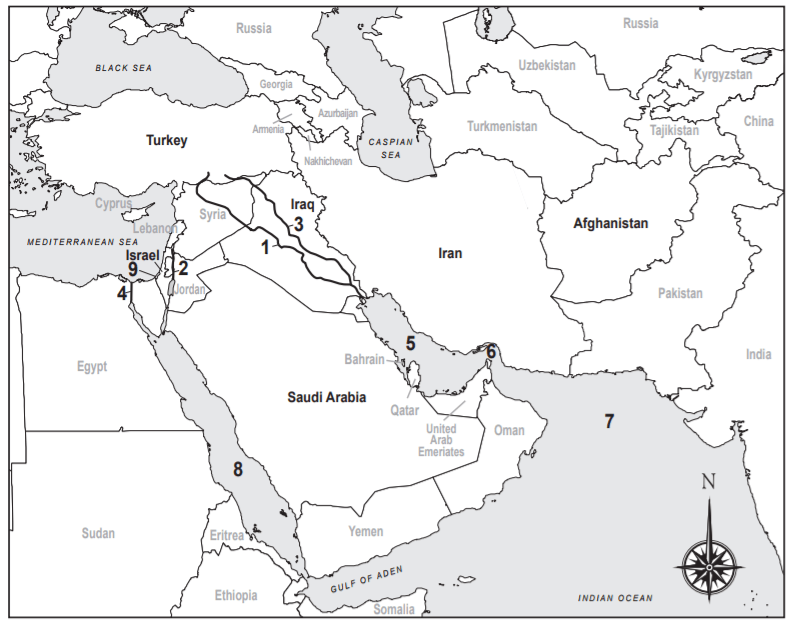
Which Marks the Suez Canal?
a)
1
b)
2
c)
3
d)
4
168.
Which marks the Red Sea?
a)
5
b)
6
c)
7
d)
8
169.
Which number marks Iraq?
a)
2
b)
3
c)
4
d)
6
170.
Which number marks Saudi Arabia?
a)
1
b)
4
c)
5
d)
6
171.
Which country is marked by a “6”?
a)
Iran
b)
Turkey
c)
Jordan
d)
Afghanistan
172.
Which number marks Israel?
a)
1
b)
2
c)
3
d)
4
173.
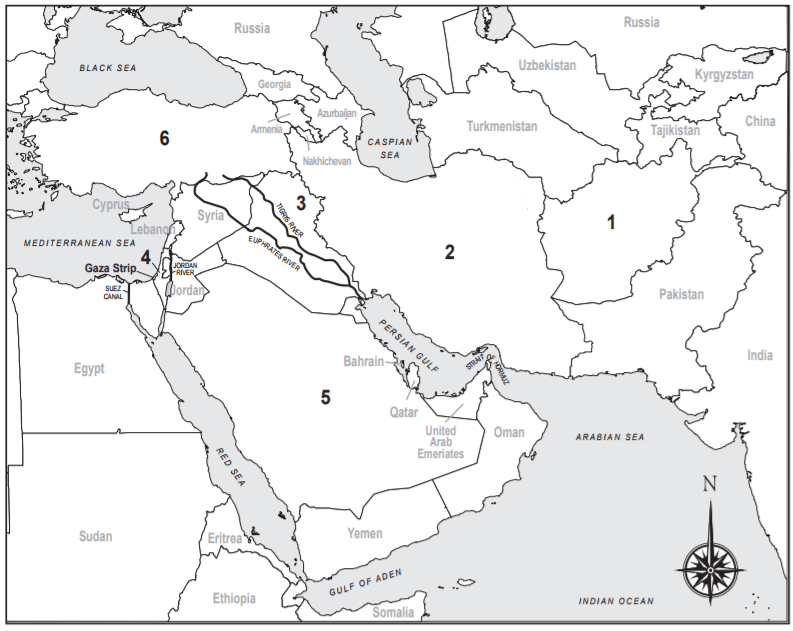
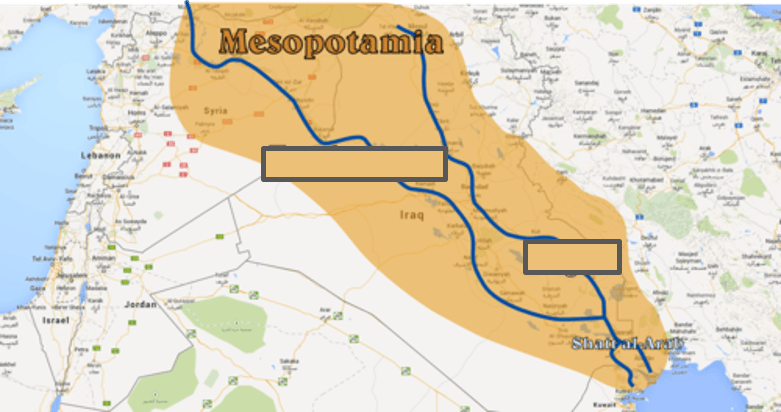
Name these two rivers, located in a region known as Mesopotamia. 
a)
Andes-Amazon
b)
Danube-Volga
c)
Tigris-Euphrates
d)
Arabian-Iraqi
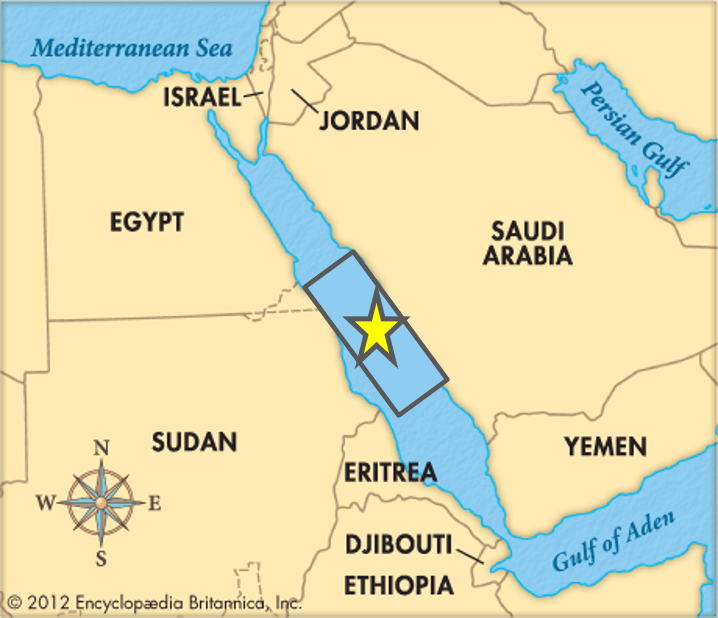
174.
What feature is represented by the letter H?
a)
Arabian Sea
b)
Pacific Ocean
c)
Persian Gulf
d)
Red Sea
175.
What feature is represented by the letter G?
a)
Persian Gulf
b)
Strait of Hormuz
c)
Red Sea
d)
Arabian Sea
176.
What country is represented by number one?
a)
Iran
b)
Iraq
c)
Afghanistan
d)
Israel
177.
Which body of water is this?
a)
Red Sea
b)
Persian Gulf
c)
Strait of Hormuz
d)
Mediterranean Sea
178.
What country is this?
a)
Iraq
b)
Iran
c)
Israel
d)
Egypt
179.
What country is highlighted in red?
a)
Iraq
b)
Iran
c)
Syria
d)
Kuwait
180.
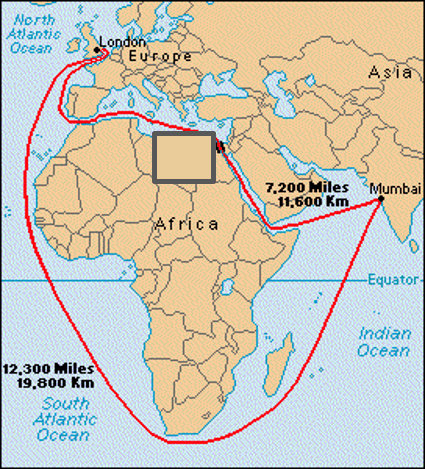
The ____, located in Egypt, cut the distance from Western Europe to India by five thousand miles and several months. 
a)
Suez Canal
b)
Panama Canal 
c)
Tigris Euphrates Rivers
d)
English Channel 
181.
I am a sea which lies between Africa and the Arabian Peninsula. Egypt, Sudan, and Saudi Arabia border me. 
a)
Mediterranean Sea
b)
Persian Gulf 
c)
Red Sea
d)
Baltic Sea
182.
Wadi and Oasis are geographical features that you might find where? 
a)
Mountains
b)
Desert
c)
Plains
d)
Coastal Plain 
183.
Landlocked body of water between Israel and Jordan
a)
Dead Sea
b)
Red Sea
c)
Mediterranean Sea
d)
Sea of Galilee
184.

Which resource is most abundant in Texas, Alaska, and Alberta?

a)

Lumber

b)

Oil

c)

coal

d)

uranium

185.

In which climate would you find the Everglades?

a)

Mediterranean

b)

Tropical wet and dry

c)

Humid subtropical

d)

Humid continental

186.

What river is shown below?

a)

Mississippi River

b)

Rio Grande River

c)

Atlantic Ocean

d)

Pacific Ocean

187.

Which mountain range is shown in red?

a)

Appalachian Mountains

b)

Rocky Mountains

c)

Great Mountains

d)

North America Mountains

188.

Which number on the map represents the Pacific Ocean?

a)

5

b)

1

c)

6

d)

4

189.

What mountain range is in the EASTERN part of the U.S.?

a)

K. Garcia's Mountains

b)

Appalachian Mountains

c)

Rocky Mountains

d)

Sierra Nevada Mountains

190.

Which state can claim to have the highest spot in the United States?

a)

California

b)

Washington

c)

Colorado

d)

Alaska

191.

What major chain of mountains in South America is the world's longest at over 4,400 miles and has the highest mountains outside of Asia?

a)

The Andes

b)

The Rockies

c)

The Sierra Madres

d)

The Alps

e)

The Himalayas

192.

What river in South America is the world's 2nd longest and carries 20% of Earth's river water?

a)

The Amazon River

b)

The Orinoco River

c)

El Rio de la Plata

d)

The Parana River

e)

The Paraguay River

193.

What desert in South America is the world's driest hot desert?

a)

The Atacama Desert

b)

The McMurdo Dry Valleys

c)

The Sonoran Desert

d)

The Gobi Desert

e)

The Sahara Desert

194.

What cool, dry, temperate plain in Southern Argentina is good for grazing sheep?

a)

Patagonia

b)

Pampas

c)

Altiplano

d)

Llanos

e)

Guyana

195.

What warm, rainy, subtropical temperate plain in eastern Argentina, Uruguay, and southern Brazil is good for ranching cattle and farming crops?

a)

Patagonia

b)

Pampas

c)

Altiplano

d)

Llanos

e)

Guyana

196.

What high altitude plain is suitable for grazing llamas, alpacas, and vicunas?

a)

Patagonia

b)

Pampas

c)

Altiplano

d)

Llanos

e)

Guyana

197.

Which waterfall, the world's tallest from top at bottom at over 3,200 feet, cascades down the side of the Auyán Tepui in Venezuela?

a)

Angel Falls

b)

Victoria Falls

c)

Niagara Falls

d)

Iguazú Falls

198.

What country in South America has the world's largest oil reserves?

a)

Venezuela

b)

Colombia

c)

Chile

d)

Argentina

e)

Brazil