
 Worksheets
Gilded Age and Westward Expansion
Total questions: 37
Worksheet time: 19mins
What was the primary purpose of the assembly line in manufacturing?
To increase the speed of production
To reduce the need for labor
To improve communication between workers
To enhance transportation of goods
What did the term "Robber Baron" refer to during the Gilded Age?
Business leaders who gained wealth through fair practices
Business leaders who gained wealth by exploiting workers
Government officials who promoted economic reforms
Entrepreneurs who invested in new technologies
How did the Bessemer Process impact steel production?
It made steel production slower and more expensive
It made steel production faster and cheaper
It eliminated the need for steel in manufacturing
It introduced oil as a primary material for production
Who was a prominent "Captain of Industry" known for his work in steel production?
J.P. Morgan
John D. Rockefeller
Andrew Carnegie
Edwin L. Drake
How did the Transcontinental Railroad impact westward expansion?
It made transportation more expensive
It slowed down the settlement process
It made moving west safer and easier
It reduced the number of homesteads
What was Manifest Destiny?
The establishment of the Transcontinental Railroad
A gold rush in Alaska
A law encouraging Native American assimilation
The belief that America should expand to the Pacific Ocean
What is an example of a Push Factor from the list provided?
Gold Rush
Land for farming
Poor Economy
Independence
What was a key feature of the Gilded Age’s "free enterprise" system?
High levels of government regulation
Extensive government control of businesses
Minimal government interference with business operations
Government ownership of major industries
What significant event occurred at the Battle of Wounded Knee?
TruThe end of the open range
The massacre of Native Americans by U.S. troops
The discovery of gold in California
The signing of the Dawes Act
Which event had a significant impact on the growth of cities during the Gilded Age?
The rise of rural communities
The increase in cattle ranching
The decline in technological advancements
The expansion of industrialization and railroads
" That to secure these rights,
__________________
are instituted among Men, deriving their just powers from the
___________________
of the governed,"
courts / approval
institutions / decisions
laws / will
governments / consent
Which amendment applies to this... "A reporter publishes an article critical of politicians?"
1st
4th
5th
6th
Which amendment applies to this situation... "A man on trial refuses to testify against himself?"
1st
4th
5th
6th
Which amendment applies to this situation.... "A woman asks to see a lawyer before answering questions from the police?"
1st
4th
5th
6th
Which amendment applies to this situation.... "A man refuses to have his car searched without permission or a warrant?"
1st
4th
5th
6th
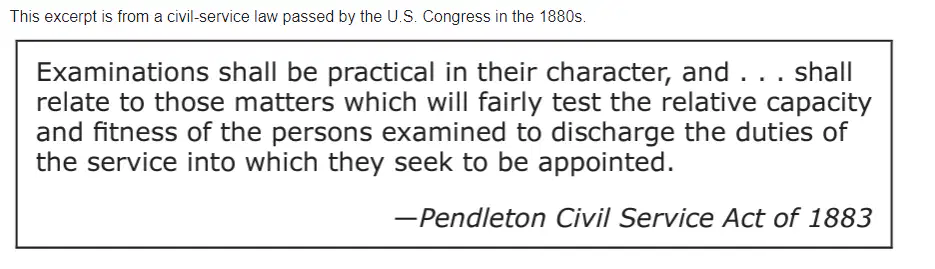
Based on the excerpt and your knowledge of U.S. history, why did lawmakers believe that this type of reform was needed?
To address reluctance among citizens to join the military
To address the fact that many diplomats refused to perform their assigned tasks
To address concerns about the job skills of recent university graduates
To address the practice of elected officials awarding jobs to their political allies
Which statement describes the role of laissez-faire practices involving businesses during the Industrial Revolution?
Business monopolies in control of the production of goods were dismantled.
The U.S. government mandated that businesses allow unions for workers.
Businesses that lacked worker safety regulations were required to shut down.
The U.S. government did not regulate how private businesses operated.
How did the completion of the Transcontinental Railroad affect the United States in the late 1800s?
It reduced economic hardships for many American Indian tribes.
It allowed for the construction of textile mills across the West.
It decreased the need for the country to be reunified.
It encouraged people to establish settlements beyond the western frontier.
How did the federal government attempt to assimilate American Indians in the late nineteeth century? Select two correct answers.
American Indians children were sent to boarding schools
American Indian artifacts were on display in public places
American Indians were denied access to basic goods
American Indian were allowed to return to their native lands
American Indian tribal lands were divided into individual plots
The invention of the lightbulb contributed to industrial growth in the United States by making it possible for –
Production to continue at night
Workers to light their homes
Electric companies to raise their prices
Cities to reduce crime by lighting city streets
Which statement describes one way the Bessemer Process contributed to the economic development of the country?
The demand for iron decreased, and iron mines closed
The increase of telephone lines reduced time to communicate over long distances
The mass production of steel allowed the contruction of taller buildings
The development of vaccines lowered the cost of medical care
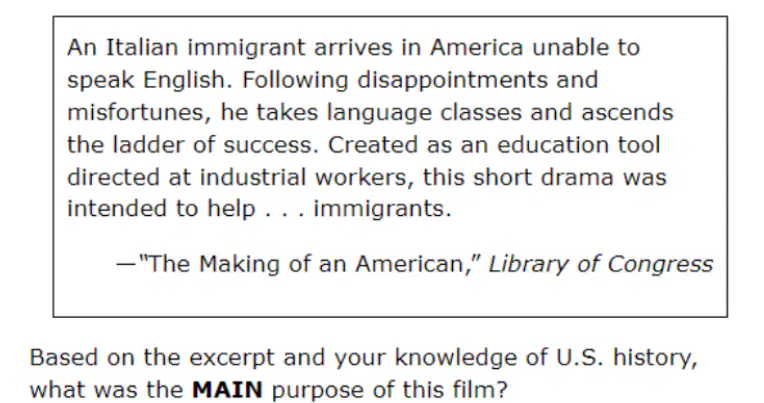
Based on the excerpt and your knowledge of U.S. history, what was the MAIN purpose of this film?
To instruct immigrants about technology
To promote the cultures of immigrants
To encourage immigrants to assimilate
To inspire the creativity of immigrants
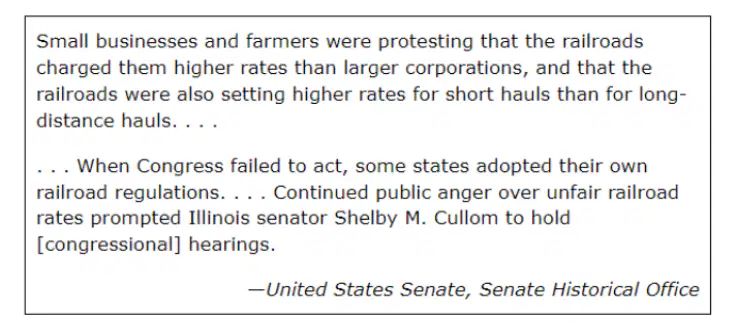
Which statement describes a direct result of these actions?
Congress passed a law allowing farmers to charter railroad companies.
Congress passed the Sherman Anti-Trust Act to encourage competition among railroad companies.
Congress passed the Interstate Commerce Act to regulate railroad prices.
Congress passed a law allowing railroads to sue farmers for exposing railroad prices
Which of the following caused the Irish to immigrate to the United States?
Poverty, Famine, Political oppression
Religious freedom, economic opportunity, war
Political revolution, trade disputes, religious persecution
Small Pox, economic downturn, lack of land rights
What is it called when a wealthy person buys up many companies to control an entire industry?
Forming cooperatives
Establishing trade zones
Expanding global markets
Creating monopolies
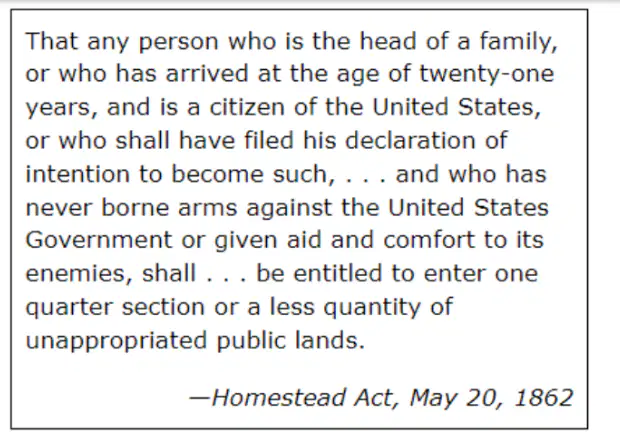
Which phrase describes the purpose of this law?
To establish grant programs for universities
To encourage cooperation with native populations
To encourage western migration
To expedite the naturalization process
Which of the following are associated with nativism, political machines, sweatshops, and tenement dwellings?
labor unions
immigration
manifest destiny
federal government
How did the federal government attempt to assimilate native americans?
By creating Boarding schools and dividing tribal land among individual native americans
By granting full voting rights and encouraging tribal leadership in Congress
By providing military training and allowing Native Americans to form their own militias
By establishing cultural exchange programs and exempting Native Americans from U.S. laws
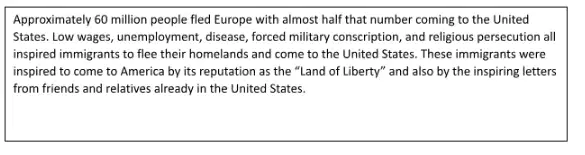
According to the Functionalist perspective, what is the focus of religion?Which statement best describes an effect of the passage –
Many immigrants came to America to escape prosperity
Many feared sedition in America
Many natives worried that immigrants would take their jobs
Reasons for relocation of the Native American Indian tribes to reservations
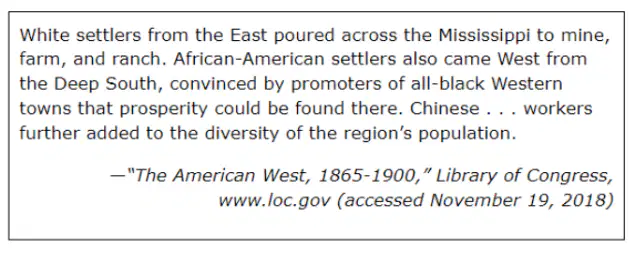
Which factor contributed to the population shift described in the reading?
The granting of citizenship to American Indians
The relaxation of immigration quotas
The introduction of sharecropping
The building of the Transcontinental Railroads
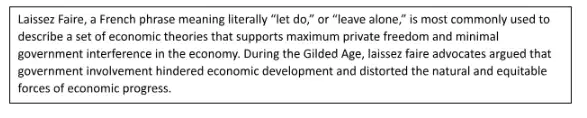
Which statement best reflects the supporters of "laissez-faire?"
Private corporations should not be trusted to do what is right in a free market economy
The government should set regulations to enhance economic productivity
The economy is healthiest when production is based entirely on what is best for business owners (supply and demand)
The government should exercise complete control over all industry
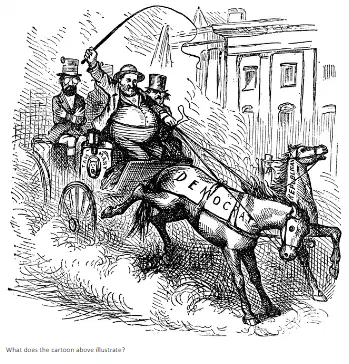
What does this cartoon illustrate?
The government ensured that big businesses met their expected earnings
The Democratic and Republican party often competed against each other to gain profit
Political bosses had control over the political parties and then decision-making
The laws created by the government had to be carried out by political bosses
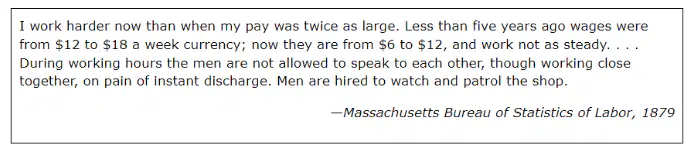
In the late 1800s, which action taken by American workers was MOST successful in addressing the problems described in this excerpt?
Seizing the means of production from the business owner
Joining the organized labor union movement
Organizing investigations into the use of child labor
Protesting to force the government uto eliminate tariffs

Based on the excerpt, the purpose of the Dawes Act was to –
Promote cultural assimilation of American Indians
Turn American Indian reservations into corporate farmland
End warfare between American Indians and the U.S. military
Promote American Indian investment in private industry
What organizations during the Gilded Age were best known for corruption, graft, and bribes?
Bureau of Indian Affairs
Land Offices
Labor Unions
Political Machines
Which of these is an effect of Industrialization during the Gilded Age?
Consumer goods became available at lower prices
Women were increasingly excluded from the work force.
Factory owners were limited by shortages of available labor.
Immigrants became extremely wealthy

The excerpt addresses which of the following issues?
The minimum wage
Private education
Day care
Child labor

