Wayground logo

Free Printable Worksheets

Font size

S
M
L
XL
Worksheets

Science-_-

Total questions: 25

Worksheet time: 1hrs 28mins

Name
Class
Date
1.

Eat only plants

a)

Herbivore

b)

Carnivore

c)

Omnivore

2.

Eat only meat

a)

Herbivore

b)

Carnivore

c)

Omnivore

3.

I eat bamboo leaves and stems.

a)

Herbivore

b)

Carnivore

c)

Omnivore

4.

I eat seals, walrus, and fish.

a)

Herbivore

b)

Carnivore

c)

Omnivore

5.
Which form of matter does not take the shape of its container?
a)
liquid
b)
gas
c)
solid
d)
air
6.
How is a gas defined?
a)
Indefinite shape, indefinite volume
b)
Definite shape, definite volume
c)
Found in stars
d)
Definite volume, indefinite shape
7.

Which organelle is responsible making food (Glucose) using sunlight?

a)

Ribosomes

b)

Nucleus

c)

Chloroplast

d)

Mitochondria

8.

Select all that are raw materials for Photosynthesis.

a)

Water

b)

Carbon Dioxide

c)

Oxygen

d)

Sunlight (Light Energy)

e)

Glucose (Sugar/food)

9.
Plants need ________ for photosynthesis
a)
oxygen
b)
soil
c)
carbon dioxide
d)
sugar
10.
What are the products of photosynthesis?
a)
water and carbon dioxide
b)
oxygen and glucose
c)
oxygen and carbon dioxide
d)
oxygen and water
11.
Plants take in ________from the air as one key ingredient for photosynthesis
a)
oxygen
b)
soil
c)
carbon dioxide
d)
sugar
12.
The main source of energy for all life comes from ____.
a)
the Earth
b)
the moon
c)
the sun
d)
the food we eat/make
13.

Abiotic means

a)

living

b)

nonliving

14.
Biotic means
a)
living
b)
nonliving
15.

What is the difference between the biotic and abiotic factors?

a)

Biotic factors are living things and abiotic factors are nonliving things.

b)

Biotic factors are nonliving things and abiotic factors are living things.

16.

Temperature is an example of what kind of factor?

a)

biotic

b)

abiotic

c)

dead

d)

living

17.

What is a example of a abiotic factor?

a)

Panda

b)

Bacteria

c)

Butterfly

d)

Weather

18.
A living or once-living organisms in an ecosystem is a
a)
population
b)
biotic factor
c)
abiotic factor
d)
community
19.
What is the definition of orbit?
a)
the spinning of the earth on its axis
b)
when the lit part of the moon increases
c)
all of the planets, moon, and other space objects going around the sun
d)
the imaginary line that goes through the north and south poles that the earth spins on
20.
What is the center of our solar system?
a)
moon
b)
earth
c)
sun
d)
Jupiter
21.
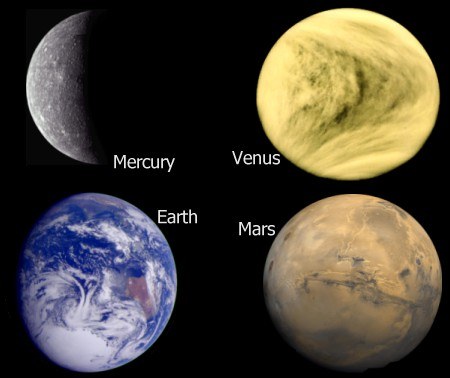
Earth and the other planets closest to the Sun are made mostly of _______
a)
gas
b)
metal
c)
water
d)
rock
22.

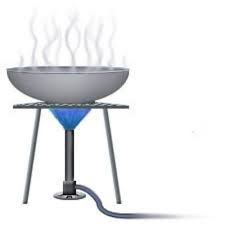
Name the separation technique shown in the diagram.

a)

evaporation

b)

distillation

c)

filtration

23.

solute + solvent =

a)

solution

b)

equation

24.
Which is an example of a solvent?
a)
Salt
b)
Egg whites
c)
Water
d)
Sugar
25.
Which is an example of a solute?
a)
Egg whites
b)
Sugar
c)
Water
d)
Acetone